
For every survivor of genocide, there is at least one day that irreversibly shatters their life—a day so harrowing that its full gravity can only be understood by those who endured it. For my wife, Shiki, her brothers, our dear friend Frida, and many others, that day is May 7. It is the day they lost their loved ones.
Most people outside Rwanda may be unfamiliar with the full story of the 1994 genocide.
In April of that year, Rwanda’s majority ethnic group—the Hutu, who made up about 84% of the country’s seven million people—together with their Hutu supremacist government, launched a coordinated plan to exterminate the Tutsi, a minority comprising roughly 14% of the population. Their goal was to wipe out every Tutsi in the country. Over the course of 100 days, more than one million Tutsi—around 85% of the Tutsi population within Rwanda—were systematically slaughtered.
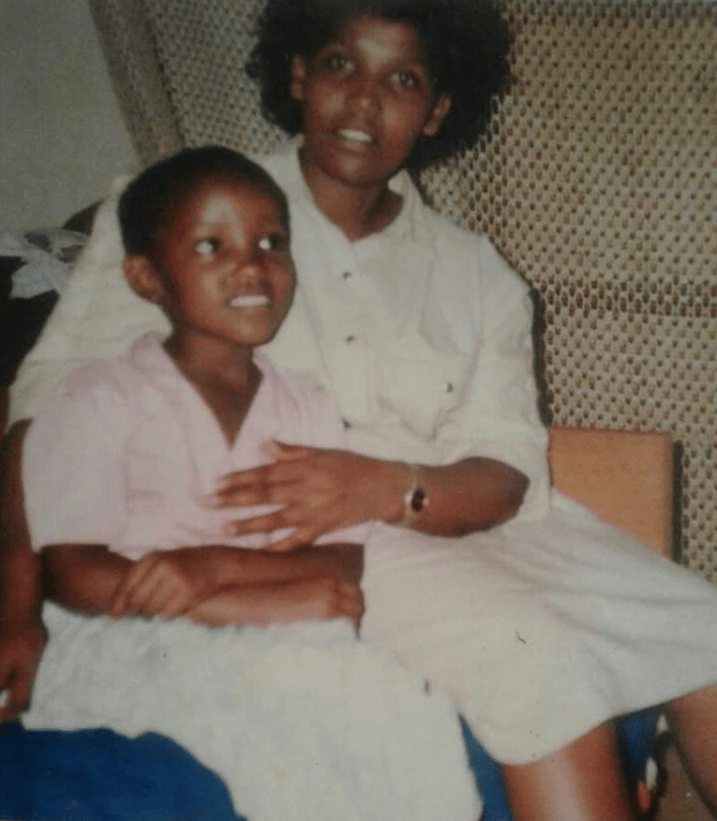
On May 7, 1994, my wife narrowly escaped death when Hutu killers attacked her home in Kagarama, a neighborhood in Rwanda’s capital, Kigali. Her mother was not so fortunate. Armed with rifles, the killers fired indiscriminately at everyone in the house and left them lying in front of their home, presumed dead. The haunting image of her mother’s lifeless body on the ground—surrounded by her wounded children—is a memory my wife cannot forget. She was only seven years old at the time, and she still relives the terror of that day. Covered in blood and severely injured, she and her brother, Aristarque, got up and started walking into the unknown. How they survived is a story for another day.
The call to wipe out Tutsi lives resonated in every corner of Rwanda—from Kigali to distant districts like Nyanza in the south. There was no place where the blood of Tutsi was not shed. Our close friend Frida, who was in Nyanza at the time, shares this same dark date with my wife. She witnessed her entire family being brutally butchered with machetes; she herself was buried alive in a pit with her relatives. Frida alone survived. Her story of courage and resilience is covered in a memoir she re-published in 2017.
The brutality my wife experienced at the hands of Hutus on that Saturday of May in 1994, left deep visible and even deeper invisible scars in her life.
Today, visible scars are healing. She got used to doing everything with one hand. She successfully learned how to write again using a different hand. She drives a car. She is even faster than me at typing.

It is impossible, though, for her to forget that she once had a normal life before the dark date of May 7. Impossible to forget that she was once able to tie her hair or peel vegetables without any help. Impossible to forget this dark day that robbed all her childhood’s innocence.
The invisible wounds, however, will apparently stay with genocide survivors as long as they live. Nightmares and flashbacks of the terrible images my wife and many other survivors witnessed haunt them on a regular basis.
‘’This makes me sometimes wonder if surviving in itself is a good thing or NOT. It is difficult to live with such a heavy burden of memory on my weak shoulders.” My wife, Shiki, told me recently.
The dark day of May 7, 1994, robbed me a chance to ever see a hero that gave life to my wife. My children will never afford the luxury of having a grandmother. The Hutus took her life so soon, so young.
Although I never met her before, I see her every day through her beautiful daughter that I married. We talk about her all the time. Her love, her courage and above all, her resilience against all odds.
She endured what no one should experience in life.
Three years before the genocide of 1994, her husband, my father-in-law, was killed in anti-Tutsi pogroms that targeted the ‘’Bagogwe’’—The Tutsi sub-group living in the Northwestern part of Rwanda. Unaware of the fate that was waiting for her and all the Tutsi in 1994, my mother-in-law fled to Kigali literally with nothing.
She raised her four children as a single mom and found a modest job, teaching in primary school during the day and at the same time, working as a private tutor in the evening to make some extra money.
May 7th took an iron woman from us. May her soul rest in peace, and may the souls of Frida’s family and all those who perished on this day 25 years ago also rest in peace. They live on because we survived to remember them.
By Albert Gasake, May 07, 2019.
Ends.



 Justice4 Survivors
Leave a comment