IGICUMBI – Voix des Rescapés du Génocide contre les Tutsi, une association internationale indépendante des Rescapés du Génocide contre les Tutsi dépossède le FPR du role usurpé de gardien de la mémoire et de l’histoire du Génocide contre les Tutsi.
Cliquez ici pour lire la Déclaration dans son intégralité: Français: Déclaration numéro 0419042025 de l’Association
IGICUMBI – Voix des Rescapés du Génocide contre les Tutsi, an independent international association of Survivors of the Genocide against the Tutsi reclaims its custodian rights to the memory and history of the genocide against the Tutsis from the RPF Government. Click here to read the full text of the Statement: English
Publiée initialement en kinyarwanda, la langue du Rwanda, le 27 novembre 2024, cette déclaration est aujourd’hui proposée en français afin d’informer le public francophone. Nous souhaitons ainsi sensibiliser le monde entier à la situation particulièrement préoccupante que vivent les Rescapés du génocide contre les Tutsis.
Ibuka Europe issued a statement on November 26, 2024, condemning the recent killings of genocide survivors in Rwanda, including Nduwamungu Pauline. Signed by representatives from its European chapters, the statement highlights the persistence of genocide ideology and calls for improved security, judicial accountability, legislative reforms, and educational initiatives to protect survivors.
While timely, many survivors view the statement as too little, too late and, in some ways, lacking meaningful impact or value. Ibuka has often remained silent on killings attributed to the government, including high-profile cases like Kizito Mihigo and the Rwigara family, as well as lesser-known victims like Jean-Paul Mwiseneza, beheaded by the government agents in 2017 for his association with Diane Rwigara.
Ibuka’s calculus for responding appears driven by political convenience: it speaks out when aligned with government interests or when reactions coincidently serve both the government and survivors. When advocating for survivors risks displeasing the government, silence prevails.
Meanwhile, the regime has exploited the killings of survivors as propaganda to target political opponents like Ingabire Victoire, branding them as genocide ideologues while positioning itself as the protector of survivors. This creates a divisive narrative, reinforcing state authority, while many killings of survivors—even those involving genocide perpetrators—are usually ignored to preserve the government’s carefully crafted image of reconciliation.
This selective outrage raises critical questions about whose interests are truly being served. Survivors deserve consistent advocacy, free from political manipulation. I encourage you to read Ibuka Europe’s statement in full to form your own perspective.
The missing head of a Genocide survivor who was murdered on November 14 in Ngoma District was found in a pit latrine where it had been thrown, a representative of IBUKA, the umbrella organization for Genocide survivors’ associations in Ngoma District, told The New Times on Monday.
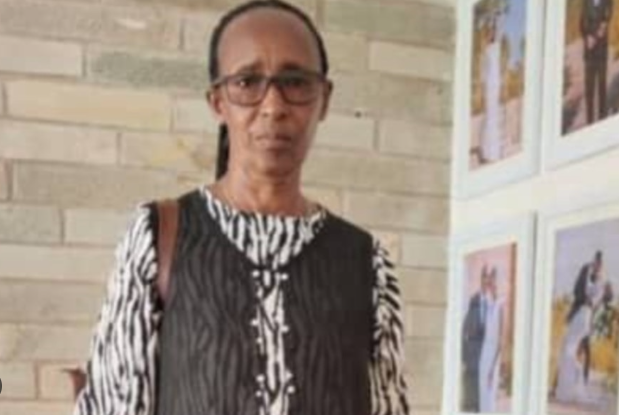
A survivor of 1994 Genocide against the Tutsi, Pauline Nduwamungu, 66, was murdered in Akabungo village, Rubago cell, Rukumberi Sector.
Nduwamungu who was beheaded between 13:00pm and 14:00 pm, lived with a school child, Omar Biseruka, the IBUKA representative in Ngoma District, explained.
Her headless body was found in a compost pit at her home.
“Investigators are helping us because they have made arrests of some suspects as part of investigation which is ongoing. Her head was found yesterday [Sunday] night in her toilet in which the killers had thrown it,” Biseruka said.
The New Times’ questions about the arrests and ongoing investigation were not answered by Rwanda Investigation Bureau (RIB).
“We are waiting for findings from Rwanda Investigation Bureau. Meanwhile, Genocide survivors should remain calm as leaders, security organs and investigators are doing their job to help us with this case. We urge residents and neighbors to share information that could lead to the arrest of to the criminals and about any other threats and attacks against Genocide survivors,” Biseruka noted.
He added that Nduwamungu had not been buried by Monday as investigation was still being carried out.
The date for her burial will be announced after the RIB investigation, he said.
The Minister of National Unity and Civic Engagement, Jean Damascene Bizimana, while addressing the 17th forum of the Unity Club Intwararumuri on Saturday at Kigali Convention Centre, called for stronger efforts to end attacks on survivors of the 1994 Genocide against the Tutsi.
“Over the past three months we have reported attacks and threats targeting Genocide survivors. Some attacks are carried out by Genocide convicts who were released after completing their sentences while others are committed by people from families of Genocide convicts,” Bizimana said, citing the case of Pauline Nduwamungu.
He said three such attacks were recorded in August in Nyaruguru, Karongi and Ruhango districts.
Trend of genocide ideology cases
The Minister said that although the number of genocide ideology and related crimes have decreased by 14 per cent of the past four years, “there are still genocide ideology and divisionism cases which we have to eradicate.”
In April this year, figures from RIB from 2019 to 2023 indicated a notable decrease in genocide ideology cases by 13 percent, Genocide denial cases by 89 percent, and cases of trivializing or minimizing the Genocide against the Tutsi by 75 percent.
In 2019, there were 128 genocide ideology cases, which decreased to 69 cases in 2020, followed by an increase to 88 cases in 2021. A drop to 56 genocide ideology cases was reported in 2022, before an increase to 87 cases in 2023.
Up to 24 cases of Genocide denial were reported in 2019, before decreasing to 11 in 2020. 12 cases were reported in 2021, 14 cases reported in 2022, and 11 in 2023.
Cases of trivialization or minimizing of the Genocide against the Tutsi followed a similar pattern, with 51 cases reported in 2019, before dropping to 26 cases in 2020. 26 cases were reported in 2021, decreasing to 18 cases in 2022, and rising to 25 cases in 2023.
However, the RIB figures indicated an increase in crimes related to concealing, destroying, eliminating, or degrading evidence or information related to the Genocide. These crimes had risen by 120 percent. These cases rose from 44 in 2019 to 97 in 2023.
The above genocide-related cases involved 3,563 suspects, RIB said.
For the first time in 30 years, the complete 1991 report of the Rwandan military commission has been made public by Justice Info. Previously, only an extract of this report was known, which the Prosecutor of the International Criminal Tribunal for Rwanda (ICTR) considered foundational evidence of a criminal conspiracy leading to the 1994 genocide against the Tutsi population.
The report was commissioned by President Juvénal Habyarimana amid the civil war waged by the Rwandan Patriotic Front (RPF) since October 1990. Chaired by Colonel Théoneste Bagosora, the commission aimed to advise on defeating the enemy “at a military, media, and political level.” The most controversial part, titled “Definition and Identification of the Enemy,” was used by the ICTR prosecutor to argue that it laid the groundwork for the genocidal plan.
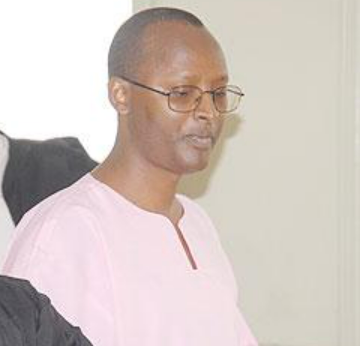
It may come as a surprise, but Rwanda’s longest-serving political prisoner is a survivor of the 1994 genocide against the Tutsi—a man who lost his entire family in the atrocities. His name is Deogratias “Deo” Mushaidi.
At 63 years old, Mushaidi remains behind bars, serving a life sentence handed down exactly 14 years ago today. His charges? Bizarre and politically motivated offenses, including “genocide ideology” and denying the very genocide against the Tutsi that he survived.
On this sad anniversary, Igicumbi—Voix de Rescapés du Génocide contre les Tutsis, the only independent survivor organization in Rwanda, has issued its annual statement drawing attention to the situation of survivors like Mushaidi.
The organization is calling on President Paul Kagame’s regime to release Deo Mushaidi and other survivors who are incarcerated on politically motivated charges.
Dr. Philippe Basabose, President of Igicumbi, emphasizes that Mushaidi is serving a life sentence simply because he exercised his right to engage in politics through a party other than the ruling Rwandan Patriotic Front (RPF).
The statement also highlights other survivors facing similar fates. Among them is Aimable Karasira Uzaramba, a university professor and YouTube political commentator who has been imprisoned since 2021. Another is Yvonne Idamange Iryamugwiza, who is serving a 15-year prison sentence for her statements on YouTube criticizing the regime’s treatment of survivors.
Dr. Basabose asserts that these individuals are detained because they have spoken out about the injustices they and their loved ones have experienced under the Kagame regime, the challenges faced by survivor organizations, or broader human rights issues in Rwanda.
“Igicumbi calls for their immediate release,” Dr. Basabose states. “Their only ‘crime’ is refusing to remain silent in the face of injustice.”
Mushaidi is imprisoned in Mpanga International Maximum Security Prison in Nyanza, located in Rwanda’s southern district. This facility is notable for housing notorious genocide perpetrators, including individuals who may have been involved in the killing of Mushaidi’s own family. The prison also accommodates eight Sierra Leonean inmates convicted of war crimes and crimes against humanity.
Similarly, Aimable Karasira and Yvonne Idamange are incarcerated in Mageragere maximum Security Prison, a few miles outside Kigali City. Karasira has reported to the court that he is in constant distress because his cell is next to that of Denis Kazungu, a notorious serial killer who murdered 14 women and was sentenced to life in 2023.
The full statement (VIDEO) from Igicumbi is also available HERE
After months of difficulty finding members willing to join its leadership committee, Ibuka-USA, a non-profit organization incorporated in Delaware, announced last week a new team of six dynamic leaders to guide the organization for the next four years. This diverse group brings fresh perspectives but faces challenges, including criticism that they, like other Ibuka chapters, are seen as extensions of the Rwandan ruling party (RPF) and are too closely aligned with the regime. This alignment complicates efforts to advocate effectively for survivors, especially when the regime’s interests conflict with those of the survivors. Can this new leadership overcome these hurdles and drive meaningful change?
At the helm of the new committee is President Marcel Mutsindashyaka, an IT executive at a college in Cleveland, Ohio. Marcel, who has been actively involved in survivor organizations in Rwanda, like AERG and GAERG, is known for his entrepreneurial drive, and as I know him, he doesn’t shy away from engaging in difficult conversations. His leadership style marks a shift from his predecessor and definitely makes him a promising choice for Ibuka-USA.
The rest of the team includes Vice President Favorite Iradukunda, a professor at the Elaine Marieb College of Nursing at the University of Massachusetts Amherst; Mireille Ishimwe, a Doctor of Pharmacy in Indianapolis, who will serve as the Social Affairs officer; Luck Ndunguye from Phoenix, Arizona, as secretary; Nicole Karekezi Umurerwa from Portland, Maine, as a committee member; and Paul Rukema as treasurer.
Ibuka-USA, founded in 2020 as a 501(c)(3) non-profit, aims to support and advocate for the genocide survivors who now live in the United States. The organization aspires to be an umbrella body for other survivor non-profits and individuals in the U.S., similar to its parent organization, Ibuka-Rwanda. This goal is not, however, universally accepted by local survivor groups in the U.S., which have long organized commemoration events and other activities for survivor welfare and genocide education independently.
Globally, there are many Ibuka chapters operating independently from each other, including in Europe, where the first Ibuka was established in 1995 in Brussels, Belgium. These chapters are credited with sustaining the commemoration of the genocide against the Tutsi by organizing annual events, working with host countries to erect memorials, combating genocide denial, and promoting genocide education through conferences and other initiatives.
However, critics argue that Ibuka groups, both in Rwanda and abroad, often align too closely with the Rwandan government, even when this alignment conflicts with the interests of survivors. For instance, Ibuka has been known to support government actions against critics but remains silent when a survivor in their membership is harmed, whether by the regime for dissent or by released genocide perpetrators.
Ibuka chapters abroad are also accused of being influenced by the Rwandan government through its embassies, which exert tight control over these groups. This relationship challenges their independence and hampers their ability to advocate effectively for survivors, especially when Ibuka-Rwanda itself operates under severe political constraints.
These dynamics have led many survivors to be hesitant about actively engaging with Ibuka chapters, often limiting their involvement to annual commemoration events. A common perception is that the group is politically aligned and lacks independence, which may explain why Ibuka-USA had difficulty attracting survivors to its leadership committee, despite considerable outreach efforts. Survivors critical of the government often face ostracism and even loss of membership, reinforcing a belief that supporting the RPF or the current government is expected, while dissent can put one’s survivor status at risk.
Additionally, Ibuka has been used to attack fellow survivors who have formed independent organizations, such as Igicumbi – Voix des Rescapés du Génocide des Tutsis, which the Rwandan regime opposes due to its lack of control. Nearly all Ibuka groups were pressured to align against this new organization, which highlights again the regime’s influence on Ibuka.
Despite these challenges, the new Ibuka-USA committee has a unique opportunity to strive for its independence and bridge political divisions among its members. They can work with the government without compromising the solidarity that binds survivors who share the immense loss and trauma of genocide.
The name “Ibuka,” meaning “remember” in Kinyarwanda, was coined by Eugene Mutabazi, a Rwandan living in Belgium during the genocide who lost many family members.
As Ibuka-USA begins this new chapter, its leadership will need to navigate these complex dynamics to effectively advocate for survivors and honor the memory of those we lost. The big question is: can these new faces on the committee overcome the longstanding challenges that have hindered Ibuka’s progress? Ends
It has been thirty years since the genocide took you from me. The journey since then has been challenging, caught between the perpetrators and their descendants who deny the genocide, as well as our supposed liberators who have turned into oppressors. In this suffocating environment, the memory of all we lost is constantly under threat.
On one hand stand the Hutu extremists, their collaborators, and tragically, some of their descendants who shamelessly deny and downplay the genocide they committed with such fervor. You recall how these perpetrators openly proclaimed their intent to exterminate us, celebrating each murder with bonfires on the hills, toasting on crates of Primus beer, and triumphant tunes on the radio after long days of work (gukora)- their euphemism for the merciless slaughter of Tutsis.
As they hunted us down, mobs cheered like excited sports fans, while our Hutu neighbors, either indifferent or pleased, participated eagerly, and keen to stripe us any last possession we had. Amidst this horror, only a few brave souls like Simeoni and Munyurangabo who hid me, dared to stand against this extermination campaign.
Now, the killers’ descendants exploit social media to spread their venom, distorting the truth and questioning the very existence of the genocide. They paint themselves as victims, blaming the RPF for Habyarimana’s assassination to justify genocide. Meanwhile, as the RPF tightens its grip on power, it cynically weaponizes the genocide to silence dissent, even targeting us survivors. They engage in futile wars, like in Congo, claiming to protect Congolese Tutsis from “ethnic cleansing” while plundering resources. Their actions only encourage the extremists, who now claim moral equivalence and demand we move on.
Thirty years later, the genocide is still disputed. We unfortunately still have to explain that you and other Tutsis were victims of a crime not of your doing but of your being. You were murdered simply for being Tutsi—a crime of existence, not of action, unrelated to any events like a plane being shot down or an invasion by the RPF rebel group then. Our little one, barely a year old, was also a victim. She did nothing to deserve such a brutal fate; she was murdered simply because she was Tutsi. The perpetrators sought to exterminate the future she represented, not because she posed any present threat. It was nothing more than that.
The deniers now treat the facts of the genocide as though they are complex equations or rocket science. They claim there were no victims, no perpetrators as if you were killed by aliens and not the ordinary Hutus with whom we shared everything. They say it was committed by faceless Interahamwe militia, even though there was no Interahamwe in Butare where we were.
Simple lived experiences and common knowledge like this have become so uncommon because the deniers are so many, and their toxic voices are so much louder than our weak ones. I see no signs of this diminishing anytime soon. They may have murdered your physical body and countless other Tutsis in 100 days, but they now seem determined to erase your memory for many years to come.
On the other hand, the RPF, once seen as our saviors, has betrayed our trust and exploited our suffering for political advantage. They present us to the world as trophies of ’their victory’while ignoring our daily hardships and withholding desperately needed reparations. They have placed impoverished survivors in “villages of reconciliation,” and force them to live alongside their killers in shared homes. These villages serve as staged spectacles for dignitaries and tourists, who are invited to photograph survivors and perpetrators embracing as if to validate the RPF’s controversial social experiments. In these cruel displays, survivors are reduced to mere exhibits in a human zoo.
Father, you are likely better off where you are now than being subjected to the inhumane experiments our supposed saviors conduct to entertain their foreign guests and political masters in the West. Interestingly, the RPF officials who engineered these villages also claim to have lost family in the genocide, yet they never placed their own relatives in these villages, which house about 5,000 survivors across six locations.
Beyond this moral outrage, the oppression extends far beyond these forced reconciliations. Any dissent is met with harsh suppression, targeting those inside Rwanda or abroad who dare to question the official narrative or expose the RPF’s wrongdoings. It reminds me of when you had to secretly listen to the RPF’s Radio Muhabura during Habyarimana’s rule. Today, survivors must be cautious about who they confide in, as even relatives are often pitted against each other based on their political affiliations (intore vs. ibigarasha, pro-RPF vs. critic).
During Kwibuka, no one dares to play Kizito Mihigo’s beautiful songs, which were once synonymous with genocide commemoration itself, due to his assassination by the regime in 2020. Survivors must also be careful about what they share on social media, how they tell their stories, mourn their loved ones, and express their true feelings, all to avoid retribution from those in power.
Marginalized
Thirty years later, we remain marginalized. Inviting a survivor representative to lay a wreath on your grave at ceremonies honoring our dead, like the 30th commemoration, seems a luxury we don’t deserve as if our presence is offensive. There may be fear of overshadowing the strongman’s fame, though fame from genocide is the last thing we want.
The remembrance of you and other Tutsi victims has become a tightly controlled state affair. Your remains may be displayed in a glass cabinet at a government-run memorial site, as I never had the chance to locate your body. No one bothered to consult me or other survivors about whether they should display parts of your remains in those cabinets or grant you a dignified burial. Official events make it seem like there’s only one recognized Genocide survivor in Rwanda—the strong man at the center of Kwibuka, a term coined by his Jewish consultants in 2014.
This one man invites dignitaries who gather around him as he lays wreaths on your graves, as they stand beside him when he lights a flame called the “flame of hope,” and speaks in a language that only his guests understand—a foreign language unfamiliar to you and many other survivors and Rwandans. Through this one-man show, no other survivor is invited to lay wreaths or play a significant role in this otherwise important tribute.
Father, despite the hardships since your loss in 1994, I don’t want to dwell on the darkness. In my next letter, I’ll share the brighter moments that sustain me – my incredible wife, whose support has been my anchor, and our beautiful children, who embody the hope and strength you fought for. They are eager to learn about you, the grandfather they never knew.
I am fortunate to have found safety abroad, where I can write without fear, but my heart breaks for those still in Rwanda. They are caught in a dire predicament, forced to live alongside those who killed their families and under an authoritarian government that demands unquestioning loyalty.