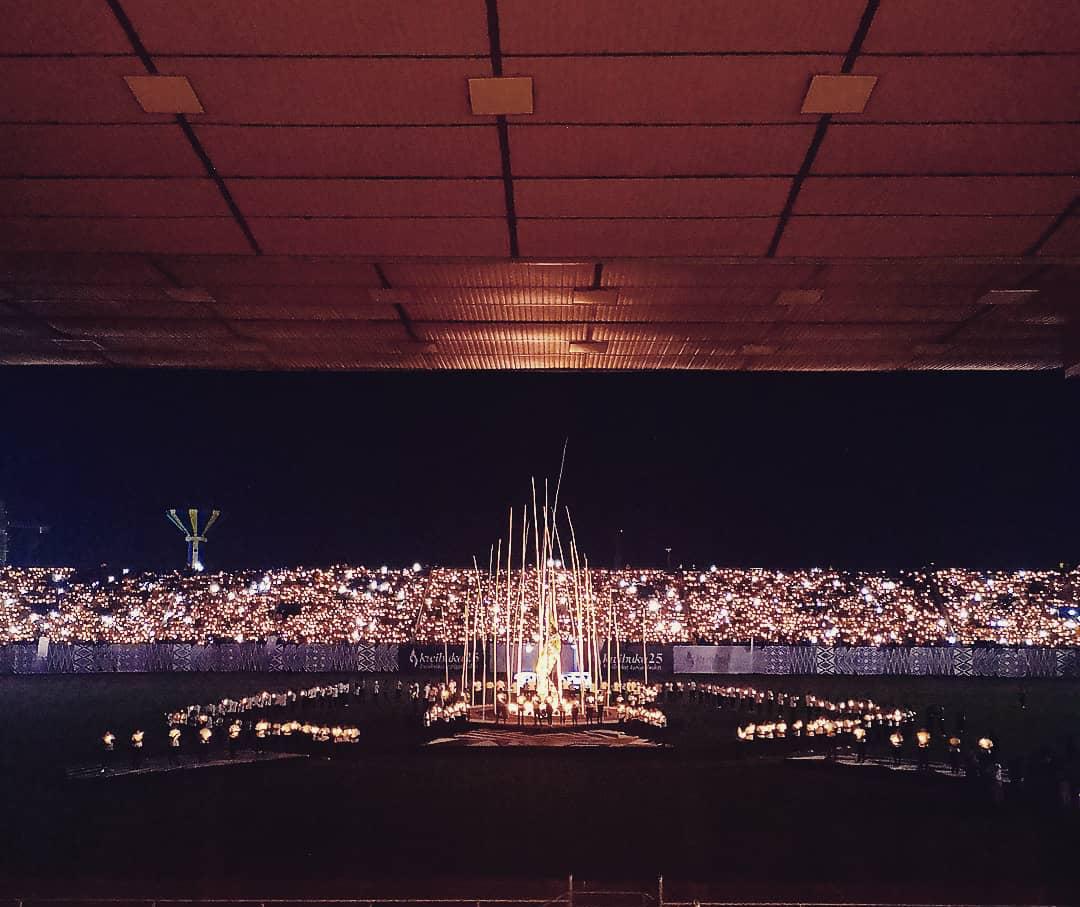
Tag: Kwibuka25

  • Iyicwa Ry’Abarokotse Jenoside: Ibyatangajwe na CNLG na IBUKA Biraca Amarenga Y’aho Ukuri Guherereye

    Iyicwa Ry’Abarokotse Jenoside: Ibyatangajwe na CNLG na IBUKA Biraca Amarenga Y’aho Ukuri Guherereye

    Ejo hashize nkimara gusoma ibaruwa ifunguye Diane Rwigara yandikiye Perezida Paul Kagame ku iyicwa ry’abarokotse jenoside, navuganye n’inshuti yanjye, Felix, nawe warokotse jenoside, mubwira iyo nkuru y’urucantege.

    Mu magambo ameze nk’ubuhanuzi,  Felix (izina rihinduye),  yarambwiye ati: ‘’ ibirego Diane ashinja Leta muri iriya baruwa ye, ntabwo nzi neza ukuri kwabyo. Ariko ibi ngiye kukubwira nubona bibaye byamurikira umuntu wese usesengura aho ukuri guherereye’’.

    Kanda hano usome ibaruwa ifunguye Diane Rwigara yandikiye Perezida Kagame

    Nuko arakomeza ati:  ‘’ Ubu tuvugana inyandiko iri bunyuzwe mu binyamakuru wasanga iri gutegurwa. Inzego zibishinzwe, nizimara kuyinoza  zirarahamagaza Naphtal, umunyamabanga wa IBUKA cyangwa  Jean Pierre, Perezida wayo,  ngo baze babafotore, ahasigaye inkuru itangazwe mu izina rya IBUKA’’.

    nta bwo nahamya 100% ko ariko byagenze, ariko , nanjye nkuwabaye mu nzego za IBUKA n’indi miryango ya sosiyete sivile mu Rwanda, ndabizi ko koko ubwisanzure bw’iyo miryango bugerwa ku mashyi.

    Icyokora nasubije Felix nti, IBUKA ubona yatinyuka ite kwiteza ikimwaro bene ako kageni? Ibuka yaba yaracecetse igihe abo ishinzwe kuvugira bicwaga, noneho ikavuga ubu ngubu  yamagana abinubira iryo yicwa mu gihe yaruciye ikarumira ubwo icyaha cyakorwaga?  Felix, yansetse, arambwira ati:  Ntukigize nkana!

    Bidatinze mu gitondo cya kare ibyo Felix yahanuye byabaye impamo!

    Naphtal, Umunyamabanga wa IBUKA yagaragaye mu kinyamakuru igihe.com  yamagana Diane Rwigara, anavuga ko nta barokotse jenoside bicwa mu Rwanda. Icyokora uwo munyamabanga ntacyo yatangaje  ku kibazo nyirizina cy’amazina y’abarokotse basaga 50 Diane Rwigara agaragaza ko bishwe mu ibaruwa ye.

    Bizimana
    Bizimana Jean Damascene, Umuyobozi wa CNLG. Photo/Igihe.com

    Yaba Naphtal wavugiye ibuka, yaba na Bizimana Jean Damascene wavugiye CNLG mu nkuru yanyuze mu kinyamakuru igihe.com , bose bikomye cyane Diane Rwigara. Igitangaje ni uko  ntawavuze niba koko abavuzwe mu ibaruwa batarishwe, ko hari imanza zabaye cyangwa niba hari amaperereza yakozwe agamije  kumenya imfu z’abo bacitse ku icumu bivugwa ko bishwe n’inzego za Leta kubera gukekwaho gukorana n’abayirwanya.

    Ngo umwera uturutse I bukuru bucya wakwiriye hose.

    Ubu nandika iyi nkuru, maze kwakira ubutumwa  buteye agahinda, umwe mu barescape ubusanzwe uvuga rikijyana yanyandikiye kuri WhatsApp, avuga kuri iki kibazo cy’abacitse ku icumu bishwa.

    Rwagasana (izina rye narihinduye) we nta nubwo aca hejuru y’umuzi w’ibibazo nkuko Ibuka n’ikigo cya Leta cyo kurwanya Jenoside (CNLG) babigenje. Ahubwo Rwagasana agaragaza ko abishwe nka Jean Paul Mwiseneza aribo bizize ngo kuko bakoreshwaga na Diane Rwigara.

    Rwagasana yanyadikiye ati:  ”Gasake, …..Mu bishwe, Diane Rwigara avuga, yahereye kuri Jean Paul Mwiseneza ( bakunda kwita Nyamata). Niwe wari umubabaje kuko niwe yakoreshaga…’’

    Rwagasana namubajije nti ese kuba umuyoboke wa Diane Rwigara cyangwa gukoreshwa nawe byabaye icyaha gihanishwa igihano cyo gucibwa umutwe ryari? Ntegereje ko umuvandimwe Rwagasana ansubiza.

    Nuko arakomeza agira ati, Diane ntagamije gutabariza abarokotse jenoside ahubwo ni inyungu ze bwite kuko hari n’abo avuga mu ibaruwa batarokotse Jenoside.

    Maze hafi imyaka 10 nandika kandi nkurikirana inkuru z’abacitse ku icumu bagenda bicwa, harimo n’urupfu rwa Jean Paul Mwiseneza nanditseho kenshi  kuri uru rubuga.

    Nagaragaje impungenge z’uburyo Leta idashyira imbaraga mu kwamagana ubwo bwicanyi no kugeza mu butabera abakekwa. Bisa nkaho no kubivugaho ari kirazira.

    Nibazaga impamvu IBUKA, CNLG, itangazamakuru rya Leta n’izindi nzego zitinya kwamagana ku mugaragaro ubu bwicanyi bumaze gufata intera ndende. Nta gisubizo ndabona kuri ibi bibazo kugeza ubu.

    Niba n’umuntu wohereza ubutumwa kuri email cyangwa WhatsApp yibereye mu cyumba cye inzego z’umutekano zibasha kumufata, ni gute zinanirwa guta muri yombi abishe Jean Paul Mwiseneza n’abandi bavugwa mu ibaruwa ya Diane Rwigara?

    Niba koko inzego za Leta ziri inyuma y’ubu bwicanyi nkuko Diane Rwigara abivuga, byaba byumvikanisha impamvu hari igihu kinini kuri iyi dosiye.

    Uko biri kose, nkuko, Felix,  mushuti wanjye, yabimbwiye ejo bundi,  uburyo IBUKA na CNLG n’abandi bakomeje kwitwara mu gusubiza ibaruwa ya Diane Rwigara,  biraca amarenga y’aho ukuri guherereye kuri icyi kibazo. Ends.

    Kanda Subscribe ubone n’izindi nkuru nshya zigisohoka.

    Soma izindi nkuru z’abarokotse bishwe:

  • Rwandan Government Behind The Killings Of Dozens Of Genocide Survivors, Diane Rwigara

    Rwandan Government Behind The Killings Of Dozens Of Genocide Survivors, Diane Rwigara

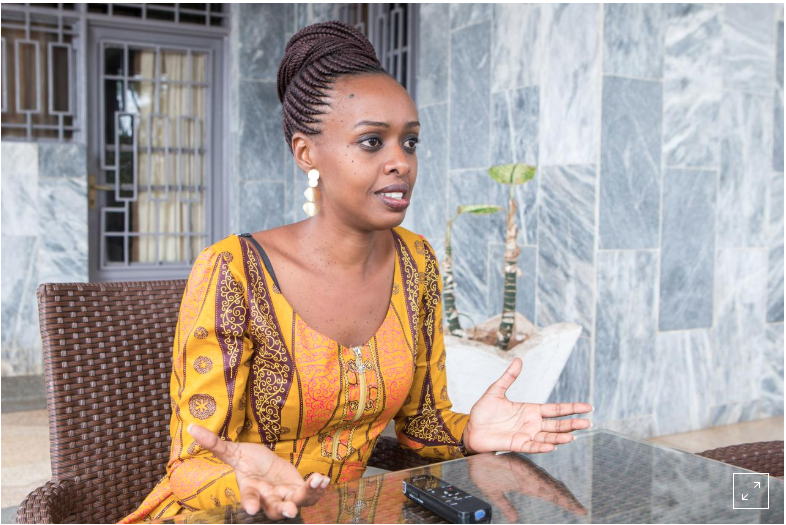
    Rwigara Diane
    2017 Rwandan Presidential Candidate, Diane Rwigara. Photo/Reuters

    Diane Rwigara, a prominent Rwandan Critic and 2017 Presidential hopeful, accuses the Rwandan government’s security forces to murder many dozens of genocide survivors including Jean-Paul Mwiseneza who was brutally killed last month.

    The government has not commented on these allegations yet.

    In an open letter addressed to President Paul Kagame today, Ms. Rwigara, a genocide survivor herself, unearths several disturbing allegations accusing the Government of killing many survivors, mostly educated ones, for politically motivated reasons.

    ‘’ Jean-Paul Mwiseneza was a friend of mine’’, said Rwigara.  He was killed shortly after talking to me about the unrest of inmates inside the Kigali Prison where he was working as a prison guard, Rwigara continued.

    Mwiseneza Jean Paul
    Jean-Paul Mwiseneza, A genocide survivor murdered on June 10, 2019.  The scars of several machete blow he received in 1994 are still visible on his disfigured face.

    Jean-Paul Mwiseneza whose murder we have documented here miraculously survived the genocide only to be beheaded last month allegedly by the government agents in connection with his relationship with the opposition.  No suspect was arrested for this crime so far.

    The open letter lists nearly 50 survivors murdered for the same reasons since the 2000s.

    ‘ Government concerned more with the dead than the living survivors’ 

    The open letter goes on to question why the Government’s main concern lies more on the memory of those killed in the 1994 genocide at the expense of the living survivors who get killed for being suspected to be critical of the current government:

    ‘’ …Excellency, your government rightly seems committed to retaining the searing memory of our loved ones killed during the genocide. But why isn’t the same level of respect shown to the living? Why isn’t the same level of concern and care shown to the survivors of those atrocities? Honoring the deceased, yes. But why not starting with preserving the living?’…The open letter reads.

    Click here to read the entire open letter as it was published on Rwigara’s website, dianerwigara.com

    It is not unusual to hear reports of Genocide survivors and non-survivors alike who get killed for their political views in Rwanda. Diane Rwigara becomes, however, the first politician inside the country to break the silence and indifference that has always surrounded this matter.

    Whether the survivors listed in the open letter were targeted for being genocide survivors,  or for being critical to the government, It remains an open question. Ends.

    Click subscribe button to get the latest posts right in your inbox.

    By Al Gasake

  • Impunity for Genocide Perpetrators: How the UN Residual Mechanism Fails to Deliver Justice

    Impunity for Genocide Perpetrators: How the UN Residual Mechanism Fails to Deliver Justice

    By Noam Schimmel, First published at Mcgill university’s  Center for Human rights and Legal Pluralism today.
    maxime-niyomwungeri-455213-unsplash
    Photo: Mcgill university’s  Center for Human rights and Legal Pluralism today.

    If you were asked to consider what would be a just sentence for someone who organized and implemented the mass murder of several thousand – possibly tens of thousands or hundreds of thousands of individuals, innocent people killed because of their religion, ethnicity, perceived race, or real or imagined political beliefs – and who had to command responsibility for these murders, you would probably intuitively and reasonably suggest a life sentence given the gravity of the crimes and their radical undermining of law, morality, social norms, and human rights.

    Or perhaps you would suggest a life sentence for each murdered victim, which demonstrates the value society and its laws place on the life of each individual. This principle is used in sentencing in some national jurisdictions, such as the United States.

    But international criminal tribunals such as the International Criminal Tribunal for Rwanda (ICTR), the International Criminal Tribunal for the Former Yugoslavia (ICTY), and the United Nations International Residual Mechanism for Criminal Tribunals (Residual Mechanism) that responds to appeals of sentences made by these tribunals— and requests for early release from convicts —often radically undervalue the lives of the innocent in their sentencing.

    The sentences given by these tribunals make a mockery of the principle that a sentence should be commensurate with the crimes committed. Much (though not all) of the sentencing of both of these tribunals and the Residual Mechanism transmits the message that the more individuals one murders and maims the less an affront to law, morality, and humanity is the crime.

    The ICTR and ICTY have sentenced criminals guilty of the organization and implementation of the mass murder of hundreds or thousands of individuals and/or of the incitement to genocide—acts often preceded by the torture of extreme brutality and depravity—to shamefully and unconscionably short sentences.

    But the demonstration of the egregious nature of these crimes has largely failed and their deterrence is hardly what has happened in practice. 

    These international tribunals were set up to demonstrate that war crimes, crimes against humanity, and genocide are egregious crimes that shock the conscience of humanity.

    Their purpose was also to send out the message that said crimes will be punished in accordance with their severity, the danger they pose to respect for human rights and human dignity, as well as to deter such crimes in the future.

    But the demonstration of the egregious nature of these crimes has largely failed and their deterrence is hardly what has happened in practice. The sentencing regimes that these tribunals have adopted sent quite the opposite message to international criminals.

    Lt-Col.-Simba-Aloys
    Lt-Col. Simba Aloys,  Aka, The Butcher of Murambi, Released early after being convicted of Genocide by the ICTR.

    Moreover, the Residual Mechanism has continued in that ignominious and irresponsible way. Unfortunately, this profound perversion of justice remains scarcely acknowledged or discussed. Their indefensibly light sentencing undermines the moral and legal integrity of international criminal law, international human rights law, and international humanitarian law.

    Furthermore, the countries that fund and support international criminal tribunals betray the values inherent in their own legal systems by not protesting the structural and systemic moral and legal failures at the heart of sentencing of these tribunals and of the Residual Mechanism.

    Amongst other issues, light sentencing and early release of convicted criminals embolden and sustain the vicious misogyny that characterized the massive and savage attacks on women, which were particularly characteristic of the Rwandan genocide against the Tutsi. As such, they are an affront to the rights, dignity, freedom, equality, and security of Rwandan women and of women generally.


    The UN Residual Mechanism’s early release of convicted Rwandan genocidaires may inspire potential future mass murderers – especially murderers ranking lower in the hierarchy – to conclude that there is a reasonable chance that if apprehended for crimes against humanity and genocide their punishment will be minimal, and their chance of eventually acquiring freedom fairly high – however much they maim and murder.

    Frequently, individuals who benefit from early release show no remorse, are not rehabilitated and have made no effort to repair. Furthermore, they go on to engage in genocide denial, incitement to hatred, and they use their freedom to harass, defame, and torment genocide survivors and those associated with their past victims; in the case of Rwanda, Tutsis.

    In fact, such early releases granted by the UN Residual Mechanism raise the question of how states such as Rwanda should respond. These early releases pose a direct threat to the rights, welfare, and safety of genocide survivors and potentially to the stability and public safety of Rwanda and the Rwandan people as a whole. These are not abstract, symbolic issues. They are of real import and practical consequence.

    As someone who has worked closely with genocide survivors in Rwanda for many years, I learned from survivors that the inadequate sentencing of the ICTR added to their well-founded fears for their safety, exacerbated their trauma, and increased their psychological suffering and sense of acute loneliness and vulnerability.

    It also severely undermined their – and the broader community’s – faith in the international legal system, which has already betrayed them catastrophically by failing to enforce the 1948 Genocide Convention in their unwillingness to prevent or stop the genocide.

    Because the sentencing of the international criminal tribunals has so frequently failed to reflect the gravity of the crimes which they punish, national jurisdictions are likely to increasingly call into question their value, credibility, and integrity, both legally and morally, and rightly so. The same is true of the UN Residual Mechanism as it continues to repeat the mistakes of the ICTR.

    It has already done so in ten cases where it has granted early release without legitimate cause, and without paying due regard to the concerns of genocide survivors. Because the sentencing of the international criminal tribunals has so frequently failed to reflect the gravity of the crimes which they punish, national jurisdictions are likely to increasingly call into question their value, credibility, and integrity, both legally and morally, and rightly so.

    This undermining of the authority of international criminal law, and the ensuing potential loss of trust and of cooperation with its tribunals and the Residual Mechanism – which cannot function effectively without such cooperation – will squarely rest with those particular judges (because it is not all of them) whose sentencing and early releases so often have been and remain incommensurable with the crimes committed.

    As the 25th anniversary of the Rwandan genocide against the Tutsi takes place in April of this year, it has become apparent that the United Nations, which failed to prevent or stop the Rwandan genocide in 1994 and actually enabled it by withdrawing UN troops, is now shamefully failing Rwandans again.

    The UN Residual Mechanism continues to neglect to legitimately and substantively deliver justice, and instead delivers impunity for genocide perpetrators and callous indifference to genocide survivors. Perhaps most noteworthy of the failures of the ICTR and the Residual Mechanism, is how it willfully marginalizes genocide survivors by denying them a right to express their concerns about issues such as sentencing, and in so doing contributes to structural violence against them in the form of increasing their trauma, devaluing their experiences and perspectives, and silencing them before the law.

    As Theodore Meron, then President of the Residual Mechanism wrote in his decision to grant early release to Aloys Simba, “In regard to the views of victims and other individuals about the impact that Simba’s potential early release would have on the victims, I recall that the Statutes, the Rules, and the Practice Direction do not provide for the victims’ views on an application for early release, commutation of sentence, or pardon by persons convicted by the ICTR, the ICTY, or the Residual Mechanism.”

    In this way, the Residual Mechanism and its former President, Theodore Meron, who consistently favored genocidaires in granting them early releases even when they denied their crimes and lacked remorse, have made it clear that international law actively favors genocidaires willfully and cruelly. It does so with staggering moral blindness and equally unconscionable arrogance and thus contributes to the suffering and violation of the rights and welfare of genocide survivors and the ongoing injustices they face.Ends


    About the author

    Noam Schimmel is Visiting Associate Professor of Ethics and International Affairs at the Elliott School of International Affairs, George Washington University. He researches in the areas of human rights, development studies, the politics and ethics of human rights law and its application, and global justice. He recently was Research Visitor at the Bonavero Institute of Human Rights, Oxford Faculty of Law, where he researched reparative justice, the human rights of Rwandan genocide survivors, and the human rights responsibilities of NGOs.

  • The Darkest  Day That Only Survivors Can Understand

    The Darkest Day That Only Survivors Can Understand

    Shiki and Mom
    L-R, My wife and my mother -in- law slightly before she was murdered in the 1994 Genocide against the Tutsi in Rwanda.

    For every survivor of genocide, there is at least one day that irreversibly shatters their life—a day so harrowing that its full gravity can only be understood by those who endured it. For my wife, Shiki, her brothers, our dear friend Frida, and many others, that day is May 7. It is the day they lost their loved ones.

    Most people outside Rwanda may be unfamiliar with the full story of the 1994 genocide.

    In April of that year, Rwanda’s majority ethnic group—the Hutu, who made up about 84% of the country’s seven million people—together with their Hutu supremacist government, launched a coordinated plan to exterminate the Tutsi, a minority comprising roughly 14% of the population. Their goal was to wipe out every Tutsi in the country. Over the course of 100 days, more than one million Tutsi—around 85% of the Tutsi population within Rwanda—were systematically slaughtered.

    On May 7, 1994, my wife narrowly escaped death when Hutu killers attacked her home in Kagarama, a neighborhood in Rwanda’s capital, Kigali. Her mother was not so fortunate. Armed with rifles, the killers fired indiscriminately at everyone in the house and left them lying in front of their home, presumed dead. The haunting image of her mother’s lifeless body on the ground—surrounded by her wounded children—is a memory my wife cannot forget. She was only seven years old at the time, and she still relives the terror of that day. Covered in blood and severely injured, she and her brother, Aristarque, got up and started walking into the unknown. How they survived is a story for another day.

    The call to wipe out Tutsi lives resonated in every corner of Rwanda—from Kigali to distant districts like Nyanza in the south. There was no place where the blood of Tutsi was not shed. Our close friend Frida, who was in Nyanza at the time, shares this same dark date with my wife. She witnessed her entire family being brutally butchered with machetes; she herself was buried alive in a pit with her relatives. Frida alone survived. Her story of courage and resilience is covered in a memoir she re-published in 2017.

    The brutality my wife experienced at the hands of Hutus on that Saturday of May in 1994, left deep visible and even deeper invisible scars in her life.

    Today, visible scars are healing. She got used to doing everything with one hand. She successfully learned how to write again using a different hand. She drives a car. She is even faster than me at typing.

    _Al shiki 4817
    My wife, Shiki, and I, April 2018.

    It is impossible, though, for her to forget that she once had a normal life before the dark date of May 7. Impossible to forget that she was once able to tie her hair or peel vegetables without any help.  Impossible to forget this dark day that robbed all her childhood’s innocence.

    The invisible wounds, however, will apparently stay with genocide survivors as long as they live. Nightmares and flashbacks of the terrible images my wife and many other survivors witnessed haunt them on a regular basis.

    ‘’This makes me sometimes wonder if surviving in itself is a good thing or NOT. It is  difficult to live with such a heavy burden of memory on my weak shoulders.”  My wife, Shiki, told me recently.

    The dark day of May 7, 1994, robbed me a chance to ever see a hero that gave life to my wife. My children will never afford the luxury of having a grandmother. The Hutus took her life so soon, so young.

    Although I never met her before, I see her every day through her beautiful daughter that I married. We talk about her all the time.  Her love, her courage and above all, her resilience against all odds.

    She endured what no one should experience in life.

    Three years before the genocide of 1994, her husband, my father-in-law, was killed in anti-Tutsi pogroms that targeted the ‘’Bagogwe’’—The Tutsi sub-group living in the Northwestern part of Rwanda. Unaware of the fate that was waiting for her and all the Tutsi in 1994, my mother-in-law fled to Kigali literally with nothing.

    She raised her four children as a single mom and found a modest job, teaching in primary school during the day and at the same time, working as a private tutor in the evening to make some extra money.

    May 7th took an iron woman from us. May her soul rest in peace, and may the souls of Frida’s family and all those who perished on this day 25 years ago also rest in peace. They live on because we survived to remember them.

    By Albert Gasake, May 07, 2019. 

    Ends.

  • My Hope, 25 Years On

    My Hope, 25 Years On

    Mireille picGuest blog post by Mireille Ishimwe. A few weeks ago as I was visiting my family during spring break, I learned that according to a census done by the National Institute of Statistics of Rwanda in 2007, there were around 300,000 Tutsis survivors of the 1994 genocide against the Tutsis. I could not believe that we were that few in numbers.

    How did I not know that crucial part of my history? I was ashamed and felt an overwhelming sense of responsibility towards the people we lost, the survivors, my country, the world, and the future generations.

    An obligation to live right and to do as much good as my limited powers will allow me.
    My hope as you read these lines is that you are stirred enough to develop a thin skin for injustice. And, if strength is bestowed unto you may you stand up against wrongdoing wherever you see it, be it in your community, or family.

    On April 7, 1994, “agahumamunwa” the unnamable befell on our hills. For the next three months, our fate was thrown down, like worthless branches, without a grave.

    Some still struggle to talk about it, some choose to bury the bits of memories, if not for eternity, at least for some time. I call them pieces of us that left us.

    I do not have a name for them. It is as if you become another person and you spend the rest of your life trying to build yourself-whole again.

    Most of us, genocide survivors, live with constant soreness within. We experience endless triggers.

    Watching a happy family, being happy for them, but gripping with the loss of your own. Wanting to get up every morning, but your limbs betray you, like a dear woman, I know who has been paralyzed for the past 25 years after she was beaten, abused in all kinds of ways and left for dead by genocide perpetrators.

    The triggers can be as simple as going to the Doctor’s office, being asked about your family health history and not knowing the answer because most were killed, young and healthy. We do not control when they happen, sometimes they are bearable other times they are suffocating.

    The list of our brokenness is long. I could go on and on… Nevertheless, so is the list of our strengths.

    Look around you, pay attention to the survivors in your life.

    Men and women who locked eye with the devil and never forgot his stare, yet decided to look up, drew strength from God and chose to walk right.

    I say, God, because leading an ordinary life, smiling, getting married, moving to a new country or staying home, seeking justice for your loved ones everything the survivors did to re-build themselves up, the tenacity it took was “Divine.”

    I praise all genocide survivors for inspiring the world to look up.

    I end my plea asking us to love one another through our brokenness. The ones we lost would not want us, to be continually vexed and undone nor do they want us to be silent.

    I believe they wish for us to embrace hope, to comfort weaker hearts than ours, to achieve our life’s purpose, and to always remember.

    Ours is a long and onerous journey. Thus, I pray that this commemoration brings you renewed vitality, I pray that another shattered part of you heals and joins the rest of you in looking up and moving right.

    I also encourage us to pick up our thread, weave our stories, and sew them carefully, lovingly.

    Mireille Ishimwe is a genocide survivor currently pursuing a doctoral degree in Pharmacy at Manchester University. She was 2 years old in 1994 when the genocide broke out.  

  • A Past That Is Ever-Present

    A Past That Is Ever-Present

    April 7, 1994, marked the start of the Rwandan genocide against the Tutsi ethnic group. I was there. Initially naive, I eventually pieced everything together, especially when my parents were gone, leaving my 14-year-old sister and me on our own. For survivors, this horrific event remains vivid decades later.

    At first, I couldn’t understand why we, the Tutsis, 14% of the Rwandan population, were being targeted and murdered by the majority ethnic group Hutu (85%). It made no sense when my mother desperately packed a few belongings and bundled us children in layers of clothing, while our Hutu neighbors who were yet to be radicalized into killers, remained safe. I saw a gust of smoke from Tutsi houses burning on the other side of the hill adjacent to our home. The truth soon became clear in my 10-year-old mind – that I was Tutsi, and being Tutsi was a problem. It was now considered a crime punishable by death while being Hutu granted a free pass to life.

    When the bloodshed spread to my hometown of Butare, my family and other Tutsis were directed by the Bourgoumestre (Mayor) to seek refuge at the soccer field and a fenced brick compound located at the commune office. A commune was a government administrative entity, similar in size to a US county, and was headed by a Bourgoumestre or Mayor. Hundreds of us gathered at these locations, unaware of the danger that lay ahead.

    A few hours after we arrived at the mayor’s office, a group of pro-government militiamen, soldiers, and police in uniform stormed the brick compound where we were sheltering. They began slaughtering the crowd with traditional weapons like machetes, axes, and clubs – the victims were mostly women and children. My father and other Tutsi men had already been killed before we reached the mayor’s office, as they were primarily targeted over the women.

    As the militia invaded, they arrived in cargo trucks with metal racks, chanting “Exterminate the Tutsis!” I was inside the fenced brick compound at the commune office with my mother and three sisters. Sensing the danger, my mother pushed me deeper into the dense, panicked crowd of women, likely to shield me from the horrific scenes unfolding at the entrance, where the militia had already begun attacking those nearest to them. Eventually, it was my turn, and the militia struck me hard on the back of my shoulder with a heavy object. I fell down as the taller women in front of me collapsed on top of me, leaving me buried and presumed dead among the piles of bodies.

    I later learned the militia conserved their bullets, seeing no need to waste them on the non-resisting women and children, and instead reserved them for the few remaining Tutsi men who put up resistance elsewhere.

    I lay buried under the bodies throughout the night, drifting in and out of consciousness. The militia had started killing around 3 or 4 pm on April 26th, 1994, which was an otherwise regular spring sunny day. As the morning of the next day approached, it was still half dark. Tucked between those corpses, I heard a small voice whispering my name. It was my sister – she was softly calling out the names of my siblings and myself, checking to see if anyone was still alive. I could see her left arm holding her neck, which was nearly severed from a blow by a machete or other sharp weapon. She was the sole living figure amidst the hundreds of lifeless bodies sprawled on the floor as far as I could see – the rest was total silence and a heavy smell of fresh, coagulated blood.

    Miraculously, she had survived. She asked me in Kinyarwanda, “Uracyariho?”, which means “Are you still alive?” I nodded, and she said, “Tugende” (Let’s go). She then pulled me from the pile of corpses, helping me escape with her through a broken back window before the killers returned. She knew the Hutus would come back as soon as daylight came to finish off any surviving Tutsi and dispose of the bodies.

    During that harrowing time, my sister told me I had to pose as a girl to increase our chances of survival at the checkpoints searching for Tutsis. Girls were killed last, while boys were the primary target. She grabbed a small blue school dress, perhaps left behind after a victim was stripped of it, laying on the stairs as we exited. This typical uniform worn by young girls in Rwandan schools served me well – not only because my bloodied, stuck-on clothes would have given me away, but the dress also provided a girl’s identity that partly saved my life.

    For the next three months after that fateful day of April 26th, I became a girl and took on another name. I don’t know how my sister came up with that plan, but it saved me. Even the good Hutu man who eventually hid us, from a different commune (county), did not realize I was a boy until the genocide ended. My sister watched over me constantly, ensuring I got used to my new name (taken from my older sister who was killed) and did not make any mistakes that could endanger our lives if they discovered I was actually a boy.

    Once we escaped the City Hall compound-turned mass killing field, we embarked on a perilous 3-month journey, hiding and hunted like animals. This was before our miraculous survival, which came after the Hutu government’s defeat by the Patriotic Front (RPF) in mid-July 1994. This rebel group, composed mainly of exiled Tutsis who lived in the neighboring countries, put an end to the genocide.

    The details of our survival—and of the guardian angels God placed in our path—are stories for another time. Recounting everything that happened after April 26, 1994, would fill an entire book. Later, we learned that a mass grave, dug near the mayor’s office, held hundreds of victims, including my mother and sisters. Today, a memorial stands just a few meters from that mass grave to honor those who lost their lives.

    The Rwandan government meticulously coordinated this extermination campaign, deploying the military, police, militias, and even ordinary Hutu neighbors to systematically eliminate the Tutsi minority. At the time, we had no name for this crime—not one we yet knew. By the end of those 100 days of extermination all over the country, finally, the United Nations (UN) named this crime—genocide. In just 3 months, over 1 million Tutsi and moderate Hutus were slaughtered – the fastest genocide in recorded history, 3 times faster than the Holocaust. 5 out of every 6 Tutsis inside Rwanda in 1994 were murdered for no reason other than their Tutsi identity. My own family, including parents, siblings, and extended relatives, were among the victims.

    The international community failed to intervene, with France even supporting the genocidal government. The United Nations withdrew peacekeeping troops at the start of the violence, and the USA said they had no interest in French-speaking Rwanda at the time. The Rwandan Patriotic Front eventually ended the genocide by defeating the authorities responsible.

    Even today, decades later, the pain endures. Although the Rwandan genocide against the Tutsi is now history, for us, it remains a living trauma that can never fully heal. They say time heals all wounds, but I doubt there will ever be enough time to mend ones as deep as these. Ends.

    By Albert Gasake April 7, 2019

  • How well has Rwanda healed 25 years after the genocide?

    How well has Rwanda healed 25 years after the genocide?

    economist
    Photo/The Economist

    Twenty-five after the genocide, Rwanda is still an enigma. Its recovery in economic, social and psychological terms is hotly debated. Almost every aspect of the past and present is still argued over. What exactly caused the genocide (which started after a plane carrying Rwanda’s president, Juvénal Habyarimana, was shot down by unknown assassins)? How many people died? Could outsiders, in particular, the UN, have halted it?

    More recently, has President Paul Kagame, the Tutsi rebel commander who stopped the genocide at gunpoint and has ruled ever since, genuinely sought to heal the wounds? Or does he cynically exploit the horror to legitimize his ruthlessly authoritarian and predominantly Tutsi regime? Are the Hutus, still a large majority, quietly determined to take over again one day? Could democracy ever take root in Rwanda—or is a firm grip on government the least bad option?

    What is undisputed is that the killing that began on April 7th 1994 was genocide. Probably three-quarters of all Tutsis in Rwanda—men, women, children, and babies—were murdered. The true number is unknown. The un guesses 800,000: mostly Tutsis, but also 30,000 or so moderate Hutus. Mr. Kagame prefers a round figure of a million. The meticulous Alison Des Forges of Human Rights Watch was able to substantiate 500,000 deaths. She was later barred from Rwanda for criticizing Mr. Kagame’s regime.

    The slaughter was shockingly swift, lasting only 100 days. Probably most adult Hutus took part or witnessed the killing without objection. Hutus were then 84% of Rwandans, so their Tutsi neighbors had nowhere to run. As Philip Gourevitch, a journalist, put it: “The entire Hutu population was called upon to kill the entire Tutsi population.”

    Hutus with babies on their backs hacked down Tutsi women similarly encumbered. Hutu priests oversaw massacres of Tutsis in their congregations. Hutu husbands killed Tutsi wives. Hutus were told that if they failed to kill, they would themselves be killed. Though the Rwandan army often lobbed grenades into churches and schools and fired on Tutsis cowering there, most murders were carried out by civilians wielding machetes and clubs.

    The issue of justice still reverberates and rankles. A year after the genocide about 120,000 suspected perpetrators were put in prisons built for 45,000. Another 300,000 were eventually incarcerated in appalling conditions. Some 46,000 Rwandans, most of them génocidaires, are still behind bars.

    Such was the scale of the genocide that from 2002 until 2012 a huge web of community courts known as gacaca (pronounced “gatchatcha”) was set up, under trees and in village courtyards, to dispense justice in a more traditional fashion, by asking witnesses to tell their stories before amateur judges. “No one claims that Gacaca justice was perfect but very few here doubt that it saved Rwanda,” says Nick Johnson, a British law professor. With justice has come a measure of reconciliation. “No other country today has so many perpetrators of mass atrocities living in such proximity to their victims’ families,” writes Phil Clark of the School of Oriental and African Studies in London.

    Mr. Kagame’s great claim is that there has been no large-scale violence inside Rwanda for the past 24 years. Mr. Clark, who has conducted more than 1,000 interviews with Rwandans on both sides of the Hutu-Tutsi gap in the past 16 years, says his respondents nowadays describe “peaceful but uneasy community relations”.

    In part, this has been achieved through a widely understood if unspoken, a contract whereby people have traded political freedom for peace and economic development. The economy has recovered rapidly. Infant mortality has halved since 2000, a feat UNCEF rates as “one of the most significant in human history”. In 1995, when the country lay in ruins, GDP per person was $125. Today it is around $800, though some economists question Rwanda’s rosy statistics.

    Few Rwandans have the nerve to dissent. A Rwandan journalist warns that “no one will ever tell you truly what they think.” A Western diplomat concurs. “People just won’t talk freely.” Mr. Kagame may have slightly loosened his elaborate system of spies and social controls of late, yet there is precious little space for political competition. He won 99% of the vote in 2017. A compliant Green Party was allowed seats in parliament last year, but its members recall how, in 2010, unknown killers cut off its vice-president’s head. Last year two opposition leaders who had sought to run for president were freed from prison, including Victoire Ingabire, a Hutu who had been sentenced to 15 years on trumped-up charges of inciting “divisionist” (ie, Hutu v Tutsi) rebellion. Her spokesman was murdered this month.

    Mr. Kagame has scaled back his military adventures abroad. Initially, these were intended to hunt down génocidaires lurking mainly in the forests of neighboring Congo, but they expanded into calamitous regional wars during which Congo’s minerals were looted and multitudes died. Recently, Mr. Kagame has fallen out badly with Uganda’s president, Yoweri Museveni, once a close ally, whom he now accuses of harboring Rwandan “traitors”. He particularly detests the Rwandan National Congress, a group of fellow Tutsis who were once his closest comrades. It has supporters across a wide diaspora, including in Belgium, South Africa, Uganda, and America. Several have been assassinated on foreign soil.

    Twenty-five years after taking power, Mr. Kagame faces two tests. The first is whether he will be able to hand over smoothly to a successor. The second is whether, when he does go, Rwanda’s terrible wounds will reopen.

    Mr. Kagame’s boosters argue that only he has the authority to hold together so fragile a country. That argument loses force with each passing year. Under a fifth of the population is old enough to have been adults during the genocide. Most children have grown up with the idea of “Rwandaness”, inculcated into them in education camps, known as ingando, that try to minimize ethnic differences. More will begin to demand freedoms enjoyed elsewhere. Without the safety valve of democracy, protests and anger could again take on an ethnic tinge, awakening the demons that Mr. Kagame claims to have banished.

    Source: First appeared in The Economist today 3/28/2019.

  • A Baby Step In The Right Direction:  US Senate’s Resolution Observing the 25th Anniversary of the Genocide in Rwanda

    A Baby Step In The Right Direction:  US Senate’s Resolution Observing the 25th Anniversary of the Genocide in Rwanda

    menendez
    K Senator Bob Menendez (D-N.J.0. Photo/Twiter

    The Democratic Senator of New Jersey, Bob Menendez, today introduced a Resolution marking the twenty-fifth anniversary of the genocide in Rwanda, which cost the lives of over one million people.

    “This April we join with the people of Rwanda and the global community to solemnly commemorate the 25th Anniversary of this terrible moment in history,” said Senator Menendez in a press release available on his web site.

    The draft resolution does not shy way to call out the US government’s refusal to intervene in Rwanda as the genocide was unfolding.

    “As we commend the people and government of Rwanda in continuing to take steps toward peace, reconciliation, and accountability, we also acknowledge the tragic failure of the international community, including the United States, in providing urgent assistance in helping to prevent and stop the organized campaign and the mass killing that ensued.” Added the Democratic Senator of New Jersey.

    First of its kind

    While it’s not the first time that the United States recognizes its failure to stop the 1994 Genocide against the Tutsi in Rwanda, this resolution–once voted, will be the first of its kind since the Clinton administration.  Usually, the State Department would issue a low- profile and often generic statement every year,  to mark the 1994 Genocide commemoration.

    On March 25, 1998, President Bill Clinton expressed regret for failing to halt genocide in Rwanda, saying that he didn’t “fully appreciate the depth and the speed with which [Rwandans] were being engulfed by this unimaginable terror.”  It turned out to be a blatant lie.

    Now we know how much the Clinton administration knew. Classified papers show Clinton was aware of ‘final solution’ to eliminate all the Tutsi of Rwanda.  Truth is that the United State simply chose to ignore Rwanda.

     A Baby step in the right direction

    The Menendez resolution once adopted, will be a small positive step forward. There is so much however,  the US Senate and Government can do to mend its failure to abide by the international law in refusing to intervene in Rwanda.

    Contributing to the establishment of the International Trust Fund for the survivors is one of the most comprehensive ways the US can explore to bring closure to its failure with dignity.

    On a pragmatic level, the Senate should among others,  make it mandatory to teach the 1994 genocide against the Tutsi in all secondary schools and erect a major genocide memorial in the USA, to educate the young generation about the world’s fasted genocide. Ends.

    By Albert Gasake

    Related articles:

  • A New Way to Immortalize Genocide Victims Launched

    Kigali Memorial Centre children
    Photo/Kigali Memorial Genocide

    A team of genocide survivors launched on Monday this week, a new website designed to serve as a central database of names, photographs, and brief biographies of over one million people murdered in the 1994 genocide against the Tutsi in Rwanda.  The initiative, according to a press release issued on that occasion, is an effort to honor their memory and restore their identities.

    ‘’It is necessary to name the victims of genocide against the Tutsis so that they are no longer reduced to just numbers. They are not a million of people without names, not a million strangers.’’  Said the survivors’ representatives who signed the statement.

    Survivors are the first witnesses to the genocide today. Their children are the second-degree witnesses and this database will obviously be another kind of virtual memorial, where the young generation will get to add a human face to the one million lives lost during the 1994 annihilation of Rwanda’s Tutsi, continued the statement.

    A 2004 Rwandan Government’s census of the genocide victims revealed that 1,074,017 were murdered during the 100 days of genocide. The same report indicates that 93.7% of the victims were killed because they were identified as Tutsi, 1% because they were related, married or friends with Tutsis, 0.08% because they had physical traits similar to those of Tutsis and 0.8% because they had ideas contrary to those of the Hutu regime of the time, or hid people chased by the killers .

    Creating a virtual database of genocide victims’ name and stories certainly marks an important new way to immortalize them, although, the real impact of this initiative will depend on the extent to which survivors will actually share the details of their loved ones with this website. Click here to visit ‘’ https://ibukatutsigenocide.org/’’ and add the name of your loved one too. Ends

    By Albert Gasake

  • Igice cya 2: Ibintu Bikwiye Kurangirana no Kwibuka 25

    Igice cya 2: Ibintu Bikwiye Kurangirana no Kwibuka 25

    kwibuka_5

    Mu nyandiko y’ubushize nanditse ko kugira abarokotse nk’indorerezi mu mihango yo kwibuka ababo ari umuco ucuramye ukwiye kurangirana no Kwibuka 25. Uyu munsi ndavuga ku bindi bintu 2 bikwiye kujyana no kwibuka 25.

    Gutegeka abacitse ku icumu ibyo bavuga n’ibyo batavuga mu buhamya

    Kuvuga ubugome abahutu badukoreye n’agahinda kadashira jenoside yadusigiye, bisigaye bisa n’imbyino yavuye ku gihe. Intero ni ”kwigira”, ”Kwiyubaka”  n’ibindi bisa bityo.  Kwigira no kwiyubaka ntago mbyanze. Ariko ukuri ni uko abarokotse jenoside benshi cyane abatuye mu byaro babayeho mu buzima bugoye kurusha uko bariho mbere ya jenoside bagifite imiryango y’abo, amazu n’amatungo. Ababashije kwiga nabo umubare w’abashomeri uri hejuru cyane.

    Niba uzi nibura umuntu umwe watanze ubuhamya bw’uko yarokotse jenoside mu mihango yo kwibuka jenoside yakorewe abatutsi ku rwego rw’igihugu, akarere cyangwa umudugudu, ndakeka ko ibi ngiye kuvuga waba warabibonye nawe.

    Mugenzi wanjye Jean claude (Izina rye nyakuri narihinduye), yasabwe gutanga ubuhamya mu gikorwa cyo kwibuka ku rwego rw’igihugu mu myaka mike ishize. Hasigaye igihe gito ngo umunsi wo kwibuka ugere, CNLG iramuhamagara ngo babanze bumve ubuhamya azavuga.

    Ajya kuri CNLG, ababwira ubuhamya bwe  akenshi bwibanda ku rupfu rw’agashinyaguro ababyeyi be bishwe, uko inkovu y’umuhoro afite ku mutwe na magingo aya imutera umutwe udakira, ndetse n’ubuzima bugoye akomeje kubamo nyuma ya jenoside.

    Aho kumwumva no kwishyira mu mwanya we, CNLG yamusabye kwibanda ku buryo yiyubatse nyuma ya jenoside, uko yishyuriwe amashuri,  n’uruhare rwa Leta muri uko kwiteza imbere.

    Jean Claude yavuye kuri CNLG ku mugoroba ameze nk’uwahungabanye kubera uburyo ngo bajoraga ubuhamya bwe uboshye utora imungu mu bishyimbo bimaze igihe bihunitse!

    Byarangiye Jean Claude atemerewe gutanga ubuhamya kuko ubuhamya bwe ngo butari mu murongo usabwa—Gahunda za Leta no kwigira!

    Guhindura ibikorwa byo kwibuka urubuga rwo kwamamaza gahunda za Leta.

    Mu myaka ishize, nagiye nitabira ibiganiro byo kwibuka bitegurwa mu midugudu yose y’igihugu mu cyumweru cyo kwibuka. Ikibabaje ni uko muri ibyo biganiro utegereza ko abatanga ibiganiro bibanda ku ngingo zirebana no kwibuka jenoside ugaheba.

    Aho nagiye hose, ni gake numvise abavuga bagaruka ku bijyanye n’uko jenoside yakozwe, uko inzibutso zafatwa neza, ingengabitekerezo ya jenoside, ubutabera, imibereho y’abarokotse n’izindi ngingo zakwiye kuba zivugwa mu kwibuka.

    Ikivugwa cyane ni gahunda za Leta na nyakubahwa perezida wa repubulika ibindi ntibabitindaho babinyuraho bihitira iyo babivuzeho.

    None ndibaza nti ko Leta ifite  iminsi 365 yose yo kwigisha gahunda zayo, ntiyareka nibura  iriya minsi 7 igaharirwa kwibuka nyakuri?

    No mu barokotse jenoside baba mu mahanga ishyamba si ryeru.

    Kwamamaza gahunda za Leta (PR) mu mihango yo kwibuka no mu guhatira abarokotse gutanga ubuhamya mu murongo wa Leta si ikibazo cy’abarescape baba mu Rwanda gusa. Abacitse ku icumu baba mu mahanga natwe icyo kibazo  turakibona ino.

    Umwaka ushize nitabiriye igikorwa cyo kwibuka cyabereye mu gace dutuyemo. Uretse ko abatuye muri ako gace benshi  batazi n’aho u Rwanda ruherereye ku ikarita y’isi, na jenoside yakorewe abatutsi ubwayo ni bake bayumviseho mbere.

    Ambasaderi w’u Rwanda niwe wavuze ijambo nyamukuru ry’uwo munsi wo kwibuka. Aho kwibanda ku mwihariko wa jenoside yakorewe abatutsi, uwo muyobozi yamaze hafi umwanya wose yahawe yigisha kuri gahunda y’umuganda, ingendo za perezida wa repubulika i Roma kwa PaPa n’amafoto bijyanye.

    Ngarutse ku muco ugayitse wo kugerageza gutegeka abarokotse ibyo bavuga n’ibyo batavuga mu buhamya batanga, hari inshuti yanjye, Janviere (Izina rihinduye), tubana ino muri america, bamuhamagaye gutanga ubuhamya mu muhango wo kwibuka utegurwa na ambassade y’ u Rwanda.

    Bamusabye kopi y’ubuhamya azatanga bamugira n’inama yo kongera mu buhamya bwe zimwe muri gahunda za Leta n’uburyo abacitse ku icumu biyubatse.

    N’ubwo Janviere atemeye ko ategekwa uko atanga ubuhamya bwe, yambwiye ko hari ibyo yavuze yikandagira cyane cyane ibirebana n’imibereho y’abacitse ku icumu na n’ubu bakinyagirwa kuko amazu yabo yasenywe muri jenoside cyangwa batarabasha kuvuzwa indwara zikomoka ku bikomere bya jenoside.

    Nta deni abacitse ku icumu bafitiye Leta.

    Sinanze rwose ko Leta  ishimirwa ku bufasha igenera abarokotse jenoside kimwe n’abandi banyarwanda batishoboye. Ariko twe guhatirwa kuvuga cyangwa kutavuga ibi n’ibi mu gihe turi gutanga ubuhamya bw’icuraburindi rya jenoside twanyuzemo.

    Nta deni abarescape dufitiye Leta. Ahubwo Leta y’u Rwanda ni yo idufitiye ideni. Ideni ry’ubutabera. Kuba hari abo leta yagiye iha ubufasha ubu n’ubu, si impuhwe zidasanzwe. Ni inshingano za Leta iyo ariyo yose ku isi gutera inkunga abaturage bayo batishoboye kandi si abacitse ku icumu gusa ibikorera.

    Kuva mu 2002, Leta imaze gusohora arenga miliyari 80 z’amafaranga y’ u Rwanda yo gusubiza mu buzima busanzwe abahoze mu mitwe ya gisirikare biganjemo interahamwe za FDLR. Mu ngengo y’imari ya 2017-2018 yonyine Leta yateganyije asaga miliyari 5 zo gufasha ababarirwa kuri magana muri FDLR uko bo  bagenda bataha mu Rwanda.

    Hari n’andi matsinda y’abanyarwanda yashyiriweho ubufasha bw’umwihariko ku buryo abacitse ku icumu badakwiye kujya bakomeza gucyurirwa ko bashyiriweho ikigega FARG igihe basabye ko Leta icyemura n’ibindi bibazo byabo birimo nk’ikibazo cy’ubutabera, imanza za Gacaca zitarangizwa zijyanye n’imitungo yasahuwe muri jenoside, indishyi n’ibindi.

    Mu myaka yashize nanditse inyandiko nyinshi zinenga uburyo Leta icunga FARG, amafaranga yitirirwa abarokotse nyamara ntagere mu isanduku ya FARG, kuba imiryango y’abarokotse idahagarariwe mu nama y’ubutegetsi bwa FARG, amafaranga ya FARG akoreshwa ibyo atagenewe n’indi micungire mibi. Ibyo simbigarukaho none.

    Icyo nenga ubu ni uyu muco mubi  wadutse mu myaka ya za 2005 wo kwerekera abarokotse uko bagomba gutanga ubuhamya bwabo nkaho hari uwari kumwe nabo igihe abahutu babatemaguraga izuba riva. Ijoro ribara uwariraye. Ikintu cyoroshye umuryango nyarwanda n’isi bakwiye gukora ni ukwicara hamwe, abacitse ku icumu bafite ubutwari bwo kuvuga bakababwira iryo babonye mu irimburabatutsi rya 94 nta kirogoya. End

    Albert.