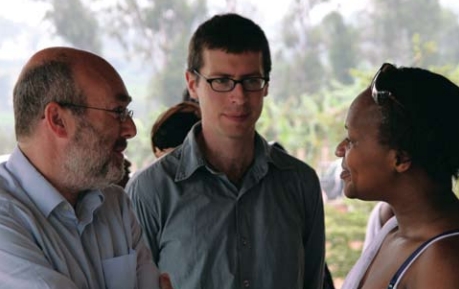
 Photo SURF/David Russell, in middle.In the UK, at a meeting at London’s King’s College, David Russell of the UK charity SURF (Survivors Fund) launched an appeal to the international community to support reparations for survivors of the genocide.
He described how more than 300,000 survivors still face severe trauma, HIV infection through rape, and loss of land and property.
The UN General Assembly has passed resolutions calling for UN agencies to provide help, “yet such calls have largely gone unheeded,” he said.
“In fact, there is no framework for reparative justice for survivors of the genocide, either in Rwanda or internationally,” he pointed out.
According to one report, Russell compared UN aid for survivors’ in Rwanda of less than $1 million with the $1 billion spent by the UN International Criminal Tribunal for Rwanda (ICTR) – more than $30 million per conviction.
SURF and seven survivor-led organisations in Rwanda focus on reparations and the establishment of an International Trust Fund to support survivors. An International Organization of Migration report on its feasibility, commissioned by the ICTR, is expected this year.
“The 20th anniversary of the genocide and the closure of the ICTR … is a unique opportunity to address the issue of reparation and call for an explicit form of reparative justice for survivors to be prioritised through funding from agencies, funds and programmes of the United Nations, or through voluntary contributions from Governments and the international community,” says Russell.
The Genocide in Rwanda began in April 1994 and was executed by the ethnic Hutu majority.
Then U.S. President Bill Clinton, who is a close ally of Rwandan President Paul Kagame and then-UN Secretary General, Kofi Annan, have in the past issued apologies for failing to stop it.
In the lead up to the main events on April 7 in Kigali, a symbolic fire traversed the country and lit up several flames to mark the Kwibuka ceremony of remembrance. It happens every year to commemorate the genocide and citizens to personally reflect on its horror, examine its causes, and hopefully, say “never again”. But as it is marked for the 20th time, the out-pouring of support has been remarkable. End
– See more at: http://www.independent.co.ug/rwanda-ed/rwanda/8853-world-unites-behind-rwanda-as-it-marks-20-years-after-genocide#sthash.Vjz9UWJq.dpuf


 Justice4 Survivors
Leave a reply to Here Is Why Genocide Survivors Are not Compensated, 25 years On – Justice4Survivors Cancel reply