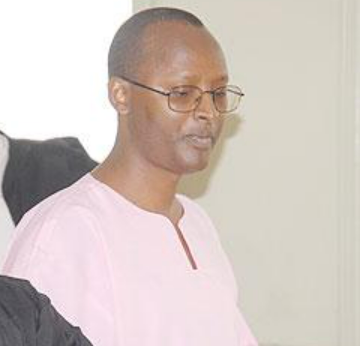
IGICUMBI AISBL, an independent international association representing survivors of the Genocide against the Tutsi in Rwanda, issues this urgent statement following the death of Aimable Uzaramba Karasira, announced by the Rwanda Correctional Service (RCS) on the morning of 7 May 2026. You can read the full statement in English below:
It may come as a surprise, but Rwanda’s longest-serving political prisoner is a survivor of the 1994 genocide against the Tutsi—a man who lost his entire family in the atrocities. His name is Deogratias “Deo” Mushaidi.
At 63 years old, Mushaidi remains behind bars, serving a life sentence handed down exactly 14 years ago today. His charges? Bizarre and politically motivated offenses, including “genocide ideology” and denying the very genocide against the Tutsi that he survived.
On this sad anniversary, Igicumbi—Voix de Rescapés du Génocide contre les Tutsis, the only independent survivor organization in Rwanda, has issued its annual statement drawing attention to the situation of survivors like Mushaidi.
The organization is calling on President Paul Kagame’s regime to release Deo Mushaidi and other survivors who are incarcerated on politically motivated charges.
Dr. Philippe Basabose, President of Igicumbi, emphasizes that Mushaidi is serving a life sentence simply because he exercised his right to engage in politics through a party other than the ruling Rwandan Patriotic Front (RPF).
The statement also highlights other survivors facing similar fates. Among them is Aimable Karasira Uzaramba, a university professor and YouTube political commentator who has been imprisoned since 2021. Another is Yvonne Idamange Iryamugwiza, who is serving a 15-year prison sentence for her statements on YouTube criticizing the regime’s treatment of survivors.
Dr. Basabose asserts that these individuals are detained because they have spoken out about the injustices they and their loved ones have experienced under the Kagame regime, the challenges faced by survivor organizations, or broader human rights issues in Rwanda.
“Igicumbi calls for their immediate release,” Dr. Basabose states. “Their only ‘crime’ is refusing to remain silent in the face of injustice.”
Mushaidi is imprisoned in Mpanga International Maximum Security Prison in Nyanza, located in Rwanda’s southern district. This facility is notable for housing notorious genocide perpetrators, including individuals who may have been involved in the killing of Mushaidi’s own family. The prison also accommodates eight Sierra Leonean inmates convicted of war crimes and crimes against humanity.
Similarly, Aimable Karasira and Yvonne Idamange are incarcerated in Mageragere maximum Security Prison, a few miles outside Kigali City. Karasira has reported to the court that he is in constant distress because his cell is next to that of Denis Kazungu, a notorious serial killer who murdered 14 women and was sentenced to life in 2023.
The full statement (VIDEO) from Igicumbi is also available HERE
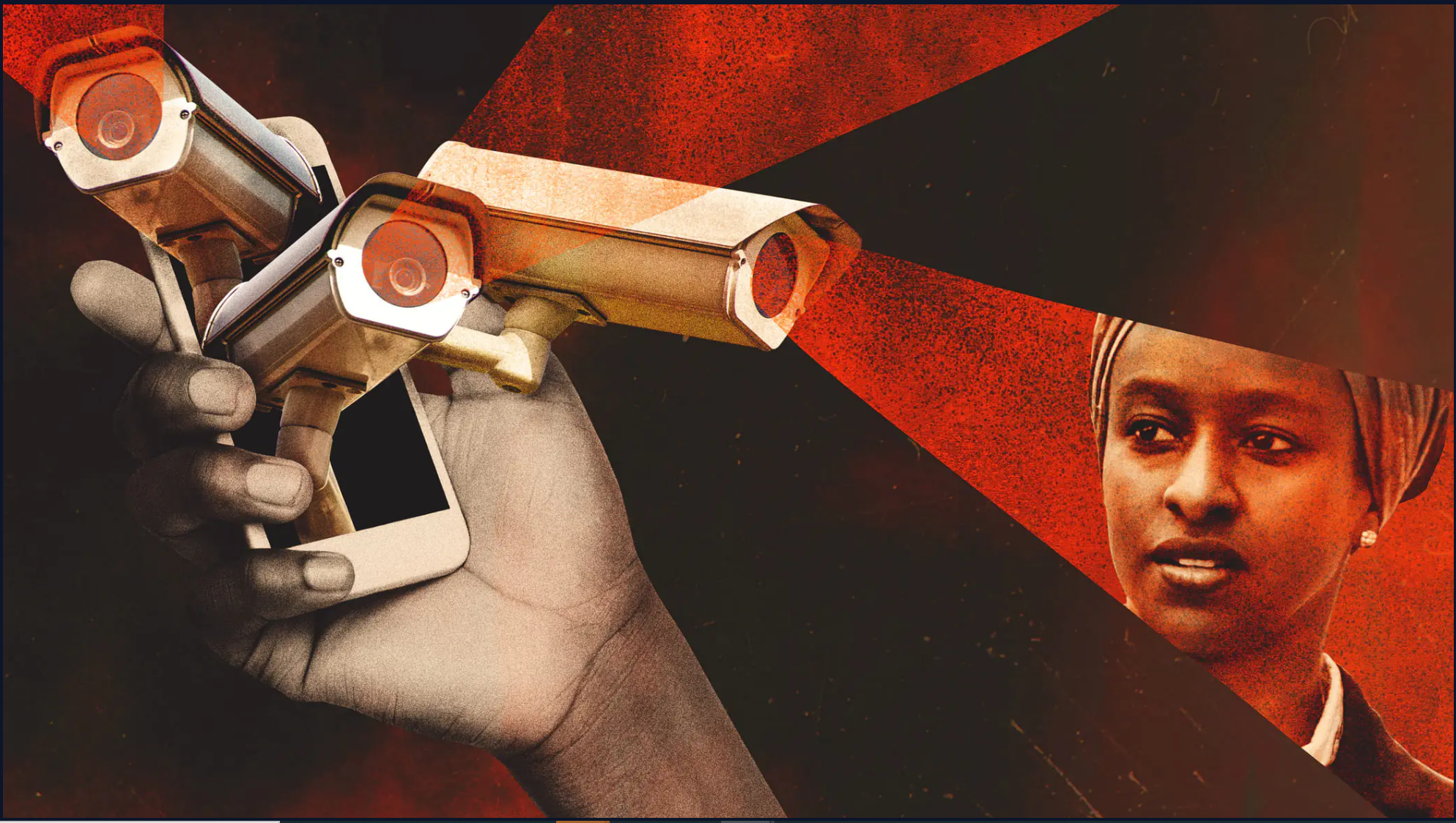
In a disturbing revelation, the investigative work of Forbidden Stories has uncovered that Anne Rwigara, a 41-year-old genocide survivor and sister of Rwandan opposition figure Diane Rwigara, was targeted by Pegasus, a powerful spyware tool sold by the Israeli company NSO Group to state intelligence services. Anne died unexpectedly in California on December 28, 2023, after a brief complaining of stomach pain.
These findings raise serious concerns about the safety of all Rwandan citizens, including genocide survivors who may have previously believed they were immune to the repressive tactics of Paul Kagame’s regime. The revelations also show the urgent need for increased scrutiny of the government’s actions and the importance of protecting the rights and lives of all individuals, regardless of their background or political affiliations.
The Rwigara family’s tragic history, which includes the mysterious death of their father Assinapol in 2015 and the imprisonment of Diane and her mother Adeline following Diane’s attempt to run for president in 2017, appears to be part of a larger pattern of persecution by state forces. The targeting of Anne Rwigara’s phone with Pegasus spyware in February 2019 suggests that this persecution extended to invasive surveillance measures.
As someone who had previously expressed suspicions about the circumstances surrounding Anne Rwigara’s death, I find these latest revelations deeply troubling. The deployment of sophisticated tools like Pegasus to monitor her activities points to a disturbing level of scrutiny that may have played a role in her untimely death, which I believe could have been the result of state-orchestrated violence.
The fact that Gatera Gashabana, the lawyer who represented the Rwigara family, was also targeted by the spyware further illustrates the lengths to which the Kagame regime appears willing to go to intimidate and silence perceived threats or opposition.
It has been thirty years since the genocide took you from me. The journey since then has been challenging, caught between the perpetrators and their descendants who deny the genocide, as well as our supposed liberators who have turned into oppressors. In this suffocating environment, the memory of all we lost is constantly under threat.
On one hand stand the Hutu extremists, their collaborators, and tragically, some of their descendants who shamelessly deny and downplay the genocide they committed with such fervor. You recall how these perpetrators openly proclaimed their intent to exterminate us, celebrating each murder with bonfires on the hills, toasting on crates of Primus beer, and triumphant tunes on the radio after long days of work (gukora)- their euphemism for the merciless slaughter of Tutsis.
As they hunted us down, mobs cheered like excited sports fans, while our Hutu neighbors, either indifferent or pleased, participated eagerly, and keen to stripe us any last possession we had. Amidst this horror, only a few brave souls like Simeoni and Munyurangabo who hid me, dared to stand against this extermination campaign.
Now, the killers’ descendants exploit social media to spread their venom, distorting the truth and questioning the very existence of the genocide. They paint themselves as victims, blaming the RPF for Habyarimana’s assassination to justify genocide. Meanwhile, as the RPF tightens its grip on power, it cynically weaponizes the genocide to silence dissent, even targeting us survivors. They engage in futile wars, like in Congo, claiming to protect Congolese Tutsis from “ethnic cleansing” while plundering resources. Their actions only encourage the extremists, who now claim moral equivalence and demand we move on.
Thirty years later, the genocide is still disputed. We unfortunately still have to explain that you and other Tutsis were victims of a crime not of your doing but of your being. You were murdered simply for being Tutsi—a crime of existence, not of action, unrelated to any events like a plane being shot down or an invasion by the RPF rebel group then. Our little one, barely a year old, was also a victim. She did nothing to deserve such a brutal fate; she was murdered simply because she was Tutsi. The perpetrators sought to exterminate the future she represented, not because she posed any present threat. It was nothing more than that.
The deniers now treat the facts of the genocide as though they are complex equations or rocket science. They claim there were no victims, no perpetrators as if you were killed by aliens and not the ordinary Hutus with whom we shared everything. They say it was committed by faceless Interahamwe militia, even though there was no Interahamwe in Butare where we were.
Simple lived experiences and common knowledge like this have become so uncommon because the deniers are so many, and their toxic voices are so much louder than our weak ones. I see no signs of this diminishing anytime soon. They may have murdered your physical body and countless other Tutsis in 100 days, but they now seem determined to erase your memory for many years to come.
On the other hand, the RPF, once seen as our saviors, has betrayed our trust and exploited our suffering for political advantage. They present us to the world as trophies of ’their victory’while ignoring our daily hardships and withholding desperately needed reparations. They have placed impoverished survivors in “villages of reconciliation,” and force them to live alongside their killers in shared homes. These villages serve as staged spectacles for dignitaries and tourists, who are invited to photograph survivors and perpetrators embracing as if to validate the RPF’s controversial social experiments. In these cruel displays, survivors are reduced to mere exhibits in a human zoo.
Father, you are likely better off where you are now than being subjected to the inhumane experiments our supposed saviors conduct to entertain their foreign guests and political masters in the West. Interestingly, the RPF officials who engineered these villages also claim to have lost family in the genocide, yet they never placed their own relatives in these villages, which house about 5,000 survivors across six locations.
Beyond this moral outrage, the oppression extends far beyond these forced reconciliations. Any dissent is met with harsh suppression, targeting those inside Rwanda or abroad who dare to question the official narrative or expose the RPF’s wrongdoings. It reminds me of when you had to secretly listen to the RPF’s Radio Muhabura during Habyarimana’s rule. Today, survivors must be cautious about who they confide in, as even relatives are often pitted against each other based on their political affiliations (intore vs. ibigarasha, pro-RPF vs. critic).
During Kwibuka, no one dares to play Kizito Mihigo’s beautiful songs, which were once synonymous with genocide commemoration itself, due to his assassination by the regime in 2020. Survivors must also be careful about what they share on social media, how they tell their stories, mourn their loved ones, and express their true feelings, all to avoid retribution from those in power.
Marginalized
Thirty years later, we remain marginalized. Inviting a survivor representative to lay a wreath on your grave at ceremonies honoring our dead, like the 30th commemoration, seems a luxury we don’t deserve as if our presence is offensive. There may be fear of overshadowing the strongman’s fame, though fame from genocide is the last thing we want.
The remembrance of you and other Tutsi victims has become a tightly controlled state affair. Your remains may be displayed in a glass cabinet at a government-run memorial site, as I never had the chance to locate your body. No one bothered to consult me or other survivors about whether they should display parts of your remains in those cabinets or grant you a dignified burial. Official events make it seem like there’s only one recognized Genocide survivor in Rwanda—the strong man at the center of Kwibuka, a term coined by his Jewish consultants in 2014.
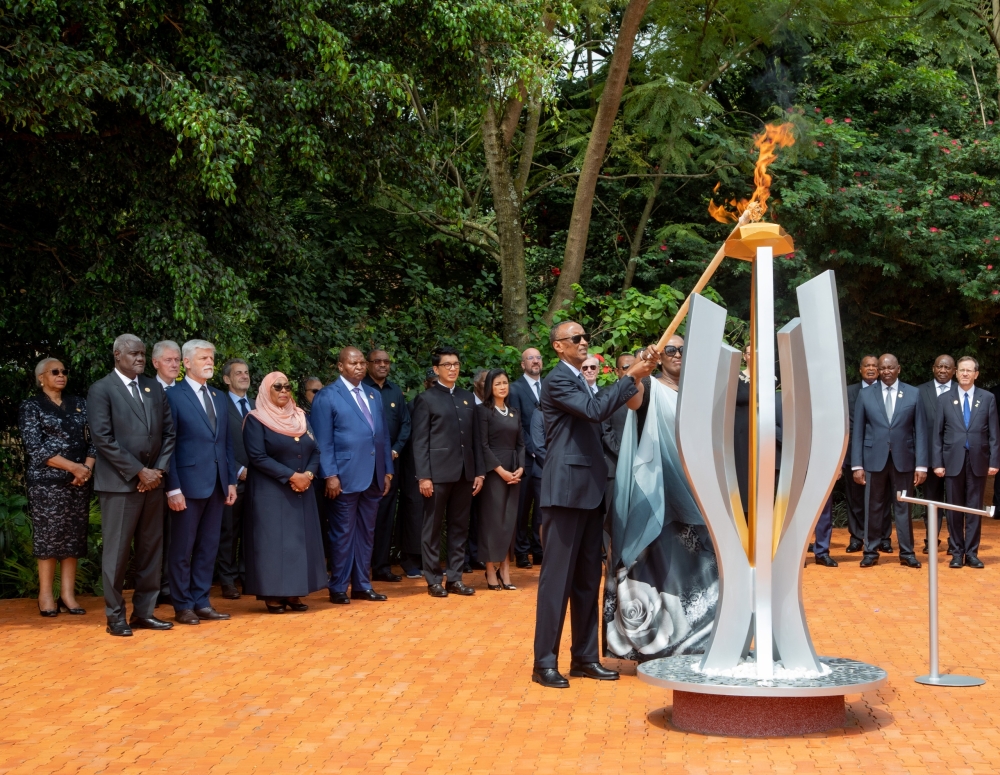
This one man invites dignitaries who gather around him as he lays wreaths on your graves, as they stand beside him when he lights a flame called the “flame of hope,” and speaks in a language that only his guests understand—a foreign language unfamiliar to you and many other survivors and Rwandans. Through this one-man show, no other survivor is invited to lay wreaths or play a significant role in this otherwise important tribute.
Father, despite the hardships since your loss in 1994, I don’t want to dwell on the darkness. In my next letter, I’ll share the brighter moments that sustain me – my incredible wife, whose support has been my anchor, and our beautiful children, who embody the hope and strength you fought for. They are eager to learn about you, the grandfather they never knew.
I am fortunate to have found safety abroad, where I can write without fear, but my heart breaks for those still in Rwanda. They are caught in a dire predicament, forced to live alongside those who killed their families and under an authoritarian government that demands unquestioning loyalty.
Ce discours de lancement, prononcé à la première heure du 7 avril, 2024, par Dr. Philippe Basabose, président en exercice de l’Association Igicumbi, revient, sans détours, sans tabous ni complaisance, sur les axes principaux de la terrible tragédie du génocide contre les Tutsi et de la période de 30 ans qui l’a suivie. Il lance aussi une invitation à entrer dans cette période commémorative avec calme, courage et tolérance.
Au nom d’Igicumbi, Dr. Philippe Basabose saisit également cette occasion pour sonner l’alerte contre une campagne de stigmatisation et de diabolisation des rescapés du génocide contre les Tutsi orchestrée par les partisans du pouvoir de Kigali et dans le silence complice de ce dernier. Le discours était en kinyarwanda ; nous vous proposons ici sa version intégrale en français:
Photos: Kwibuka30 ceremony on April 7, 2024 at Kigali Genocide memorial where President Kagame and his several dignitaries laid wreaths. Survivors not invited here.
Kwibuka, the annual commemoration of the 1994 Genocide Against the Tutsi in Rwanda, has become a far cry from its original purpose. What was once a solemn occasion to honor the victims and stand in solidarity with the survivors has now been transformed into a one-man show, used by President Paul Kagame to legitimize his regime, justify his wars in the Democratic Republic of the Congo, and air his personal grievances.
The word “Kwibuka” means “to remember” in the Kinyarwanda language, but in the three decades since the genocide, the official Kwibuka ceremonies have strayed remarkably far from this core mission. Kagame, the long-reigning president of Rwanda, has made the commemoration an annual platform to serve his own political interests, with little regard for the true victims and survivors.
Kagame’s Kwibuka speeches, delivered in English (a language spoken by less than 1% of Rwandans), are not meant for the Rwandan people, let alone the survivors. They are instead intended for an international audience. In these speeches, Kagame does not focus on honoring the memory of the genocide victims or supporting the survivors. Instead, he uses the occasion to vent his frustrations about former allies who have grown weary of his 30-year grip on power, and to justify his military interventions in neighboring countries, all under the guise of preventing another “genocide of the Tutsi” – but this time, the Tutsis in the Democratic Republic of Congo.
The survivors of the genocide, who endured the horrors and lost their loved ones, have been systematically sidelined from the Kwibuka ceremonies. In the immediate aftermath of genocide, survivors were left to bury their dead alone, with little support or recognition from the government and fellow Tutsi returnees who had fled the country before 1994. Today, Kwibuka seems to have become fashionable among some of these returnees, though it’s unclear if this is due to the government’s hijacking of the events or a genuine interest.
On social media, this group of Tutsi returnees (though not all) has recently become ardent champions of Kwibuka, even labeling survivors who criticize the RPF government as “genocide deniers.” In Kagame’s Rwanda, the RPF is considered synonymous with the genocide itself, so any criticism of the party is equated with genocide denial—a severe charge that can even be leveled at survivors who speak out or join a different political party.
I’m not blaming these returnees for taking long to join us in remembering the genocide victims; in fact, I’m thankful they have eventually shown some interest, and I hope this trend continues beyond the regime’s cosmetic approach to Kwibuka. However, I wonder where these passionate Kwibuka supporters were when we survivors were searching for our dead and cleaning their bones from mass graves shortly after genocide. Many orphans had nowhere to go during school breaks, forced to stay in boarding schools while many our fellow Tutsi returnees owned big houses. Now, these returnees sing Kwibuka louder than us.
Over the years, the survivors’ role in the Kwibuka commemoration has been gradually diminished. From 2005 to 2015, they still had a limited presence, with a survivor representative occasionally allowed to lay a wreath or speak on behalf of the survivor community. During this period, a selected survivor would also be permitted to share their personal story of how they survived the genocide. However, even these survivor testimonies were heavily vetted by the authorities.
I recall the case of a fellow survivor named Marius, whose testimony was rejected during the Kwibuka20 commemoration in 2014. His testimony was rejected because he mentioned escaping to Burundi, rather than being “saved” by the RPF forces. This censorship of survivor narratives that did not align with the government’s preferred narrative was a troubling sign of the diminishing role of survivors in the Kwibuka ceremonies.
Since 2014, the survivor representative, typically the president of Ibuka (the umbrella organization for survivors’ groups), was removed from the Kwibuka wreath-laying ceremony and event organization.
By 2024, survivors were largely excluded from all official Kwibuka preparations. Reviewing the photographs and footage of these events, particularly the initial wreath-laying and “light of hope” ceremonies at the Kigali Genocide Memorial, there is a noticeable absence of survivor representatives.
While survivors’ organizations have internally expressed discontent with this exclusion, they are too afraid to voice their concerns publicly. The only exception is a brief 15-20 minute slot allocated to a carefully vetted survivor, who is expected to offer a testimony praising Kagame for the “rescue and help” provided after the genocide.
The commemoration has now become a political show for Kagame and the RPF party, who have the audacity to consider themselves the “victims” of the genocide, despite being a belligerent party in the conflict that led to the genocide.
Jean Damascene Bizimana, Kagame’s cabinet minister, claiming that RPF is a genocide victim!
The survivors, who were once the central focus of Kwibuka, have now been relegated to the status of abavumbyi, or uninvited guests, in the very commemoration meant to honor their loved ones and stand in solidarity with them. If the thousands of victims laid to rest in the memorial sites could speak, they would surely ask where their own families, the survivors, are in the spectacle of dignitaries parading at the graveyards in their absence.
Kwibuka has become a clear reflection of Kagame’s priorities. It has turned into a platform for political showmanship and self-promotion, rather than a solemn remembrance of the past and a genuine effort to support the survivors. As the country continues to grapple with the long-term impacts of the genocide, the question of how to ensure that Kwibuka truly serves the interests of the victims and survivors, rather than just the ruling elite, becomes more and more important.
The hijacking of Kwibuka is a troubling development, one that threatens to undermine the very purpose of the commemoration and the collective healing that it was meant to foster. As Rwanda looks to the future, it must find a way to restore the true spirit of Kwibuka, where the voices of the survivors are heard, their needs are addressed, and the memory of the victims is honored with the respect and dignity it deserves. Ends.
As we prepare to commemorate the 30th time of the Genocide against the Tutsi, the IGICUMBI Association – Voice of the Survivors of the Genocide against the Tutsi – has written an open letter, available here in Kinyarwanda, French, and English, to President Paul Kagame.
In this letter, they request him to stop and prevent the killings and other abuses committed against survivors of this tragedy.
These acts often occur shortly before or during the commemorative period and have persisted without interruption over the last 30 years, to the point of becoming an accepted cultural norm.
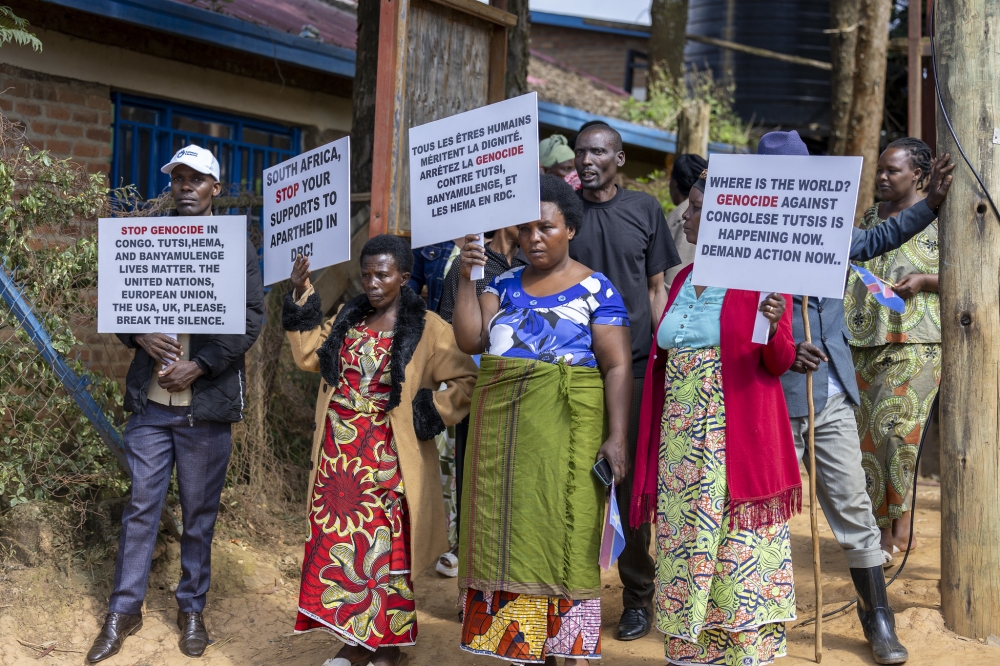
Congolese refugees in Rwanda during a peaceful march on Monday, March 4. Photos by teh New Times/ Olivier Mugwiza
On March 4th, according to The New Times Rwanda, Hundreds of Congolese refugees residing in Rwandan camps took to the streets in an orchestrated protest march. Brandishing placards, they vehemently condemned the alleged killings of the Tutsi, Banyamulenge, and Hema communities in the eastern Democratic Republic of Congo (DRC). The refugees directly accused the Congolese government, rebel groups like the FDLR, as well as Burundian and SADC forces of perpetrating “genocide.”
Their impassioned calls for international intervention to “stop the genocide” seem justified on the surface. After all, these are people who have endured decades of displacement, torn from their homes by the very conflict they now denounce. Over 70,000 Congolese refugees remain confined to Rwandan camps, with over 13,000 newly arrived, fleeing the escalating clashes between Congolese forces and the M23 rebels.
However, those familiar with the iron-fisted regime of the Rwandan Patriotic Front (RPF) know that genuine protests and dissent are virtually non-existent – unless directly sanctioned by the state. Rwanda’s authoritarian grip simply does not allow for democratic protests. Real grievances from these very refugees, like their 2018 protest for a mere $2 increase in their measly $5 monthly food rations from UNHCR, have been met with shocking brutality. That ration protest ended with over 12 refugees killed by Rwandan police firing live ammunition into the crowds.
The bitter reality is that this latest Congolese refugee “protest” appears to be a carefully choreographed piece of theater, potentially the Rwandan government’s final bid to justify its military forces and allies intervening in the DRC under the guise of stopping an alleged “genocide” of Tutsis. Only pro-government protests are permitted in Rwanda’s tightly controlled sphere.
We have witnessed this tactic before, with how the government has controlled and co-opted Rwanda’s genocide survivor community and organizations, mobilizing them to protest internationally when it suited the regime’s agenda. Whether it was the controversial arrest of Rose Kabuye in Europe for her alleged role in assassinations, or sanctions imposed on Rwanda for its past interventions in the Congo conflict, the state rallied survivor groups to its defense. Transport, placards, and logistics – all provided by the state machinery to create an impression of unified outrage from a traumatized community.
As the complex conflict rages in eastern Congo, such self-serving manipulation by the Rwandan state only serves to deepen human suffering and misery. By controlling the narrative through orchestrated protests and co-opting vulnerable communities like these refugees, Rwanda conveniently diverts attention from addressing its own destabilizing role in the region through military entanglements.
One cannot help but be reminded of the decades these Congolese refugees have spent languishing in camps, robbed of a future in their homeland, as conflicts and atrocities perpetuated around them. Now, they find themselves mere props in Rwanda’s latest campaign of obfuscation on the regional stage, likely facing threats and coercion to toe the official line.
Ultimately, if this refugee protest achieved anything, it was to cruelly expose how far Rwanda will go to weaponize genocide – not just against its own people when they dare dissent, but also exploiting the plight of Congolese Tutsi refugees in a self-serving agenda cloaked in “stopping genocide” rhetoric. As the region seeks peace, such manipulation breeds polarization, and perpetual violence. Ends.
Bamwe mu banyamulenge bakomeye banditse ibaruwa ifunguye mu ntangiriro z’icyi cyumweru biyama u Rwanda. Aba bagabo bavuga ko nta bubasha bahaye igihugu icyo aricyo cyose bwo kuvugira abanyamulenge cyangwa kwitwaza izina ryabo mu ntambara ibera mu burasirazuba bwa Congo-Kinshasa.
Muri iyo baruwa y’amapaji abiri yanditse mu rurimi rw’igifaransa abanyamulenge baravuga ko urugomo n’ amagambo y’urwango akoreshwa n’abanyecongo bagenzi babo bayazi, ariko bashimangira ko icyo ari ikibazo kibareba nk’abanyekongo ubwabo. Abo banyamulenge bongeraho ko mu babakorera urugomo harimo n’imitwe iterwa inkunga n’u Rwanda. Imwe muri yo ni umutwe w’abarundi witwa Red Tabara wishe ukanasenya imihana myinshi y’abanyamulenge bazira ko baba barakiriye abagize P-5, igizwe n’ amashyaka nka RNC n’andi arwanya ubutegetsi bw’u Rwanda.
Aba banyamulenge barasaba u Rwanda kureka kwivanga mu makimbirane y’abanyecongo hagati yabo no guhagarika ubushotoranyi bwa M-23 yitwaza izina ry’abatutsi bo muri Congo. Aba bagabo barashimira ijambo Perezida Félix Tshisekedi yavuze icyumweru gishize, ashimangira ko abanyamulenge ari abanyecongo nk’abandi ndetse ko harimo benshi batakaje ubuzima bwabo barinda ubusugire bwa Congo- Kinshatsa.
Muri iryo jambo rigufi wasanga hano Tshisekedi aravuga ati: Ndambiwe amagambo avangura abanyamulenge n’abatutsi bo muri Congo…bituma u Rwanda rubona urwitwazo rwo kubagira ibikoresho by’intambara yo guhungabanya Congo.
Ibaruwa isoza, abanyamulenge bayanditse berekana ko hari icyuho hagati y’ijambo rya Tshisekedi n’ibikorwa n’inzego z’umutekano n’ubutabera bya Congo kuko badahana abakora ivangura Perezida Tshisekedi ubwe yamaganye. Iyi baruwa irasaba ko abagize uruhare mu kuvuga amagambo y’u rwango bakurikiranwa no guta muri yombi abantu bashingiye ku isura yabo bigahagarara.
On February 17, 2020, police announced that Kizito Mihigo, a popular Rwandan singer and genocide survivor, had been killed in his cell at a Kigali police station. Today, fellow genocide survivors and members of Igicumbi, the only independent survivor organization, mourn his death.
They remember him and hundreds of other survivors who lived through the 1994 genocide by Hutu extremists, only to later perish under suspicious circumstances. Their deaths raise concerns about ongoing human rights violations in Rwanda, despite the current regime presenting itself as the savior that stopped the genocide.
There is a tragic irony in survivors falling victim to unexplained violence under this government. More transparency and accountability are needed regarding these deaths, which seem to further the objectives of the original perpetrators who sought to eliminate Tutsis. Ends