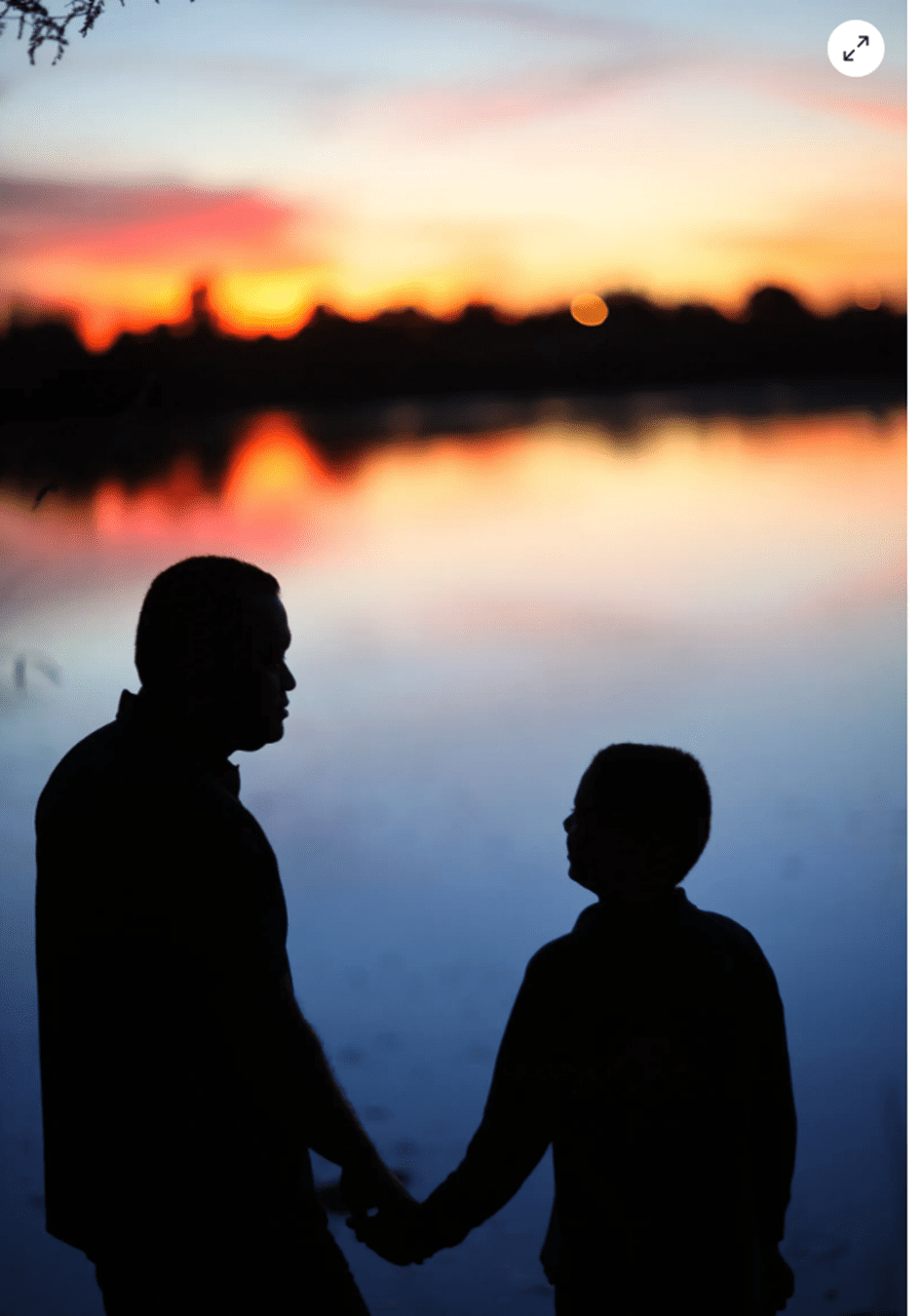
Dearest Father,
It has been thirty years since the genocide took you from me. The journey since then has been challenging, caught between the perpetrators and their descendants who deny the genocide, as well as our supposed liberators who have turned into oppressors. In this suffocating environment, the memory of all we lost is constantly under threat.
On one hand stand the Hutu extremists, their collaborators, and tragically, some of their descendants who shamelessly deny and downplay the genocide they committed with such fervor. You recall how these perpetrators openly proclaimed their intent to exterminate us, celebrating each murder with bonfires on the hills, toasting on crates of Primus beer, and triumphant tunes on the radio after long days of work (gukora)- their euphemism for the merciless slaughter of Tutsis.
As they hunted us down, mobs cheered like excited sports fans, while our Hutu neighbors, either indifferent or pleased, participated eagerly, and keen to stripe us any last possession we had. Amidst this horror, only a few brave souls like Simeoni and Munyurangabo who hid me, dared to stand against this extermination campaign.
Now, the killers’ descendants exploit social media to spread their venom, distorting the truth and questioning the very existence of the genocide. They paint themselves as victims, blaming the RPF for Habyarimana’s assassination to justify genocide. Meanwhile, as the RPF tightens its grip on power, it cynically weaponizes the genocide to silence dissent, even targeting us survivors. They engage in futile wars, like in Congo, claiming to protect Congolese Tutsis from “ethnic cleansing” while plundering resources. Their actions only encourage the extremists, who now claim moral equivalence and demand we move on.
Thirty years later, the genocide is still disputed. We unfortunately still have to explain that you and other Tutsis were victims of a crime not of your doing but of your being. You were murdered simply for being Tutsi—a crime of existence, not of action, unrelated to any events like a plane being shot down or an invasion by the RPF rebel group then. Our little one, barely a year old, was also a victim. She did nothing to deserve such a brutal fate; she was murdered simply because she was Tutsi. The perpetrators sought to exterminate the future she represented, not because she posed any present threat. It was nothing more than that.
The deniers now treat the facts of the genocide as though they are complex equations or rocket science. They claim there were no victims, no perpetrators as if you were killed by aliens and not the ordinary Hutus with whom we shared everything. They say it was committed by faceless Interahamwe militia, even though there was no Interahamwe in Butare where we were.
Simple lived experiences and common knowledge like this have become so uncommon because the deniers are so many, and their toxic voices are so much louder than our weak ones. I see no signs of this diminishing anytime soon. They may have murdered your physical body and countless other Tutsis in 100 days, but they now seem determined to erase your memory for many years to come.
On the other hand, the RPF, once seen as our saviors, has betrayed our trust and exploited our suffering for political advantage. They present us to the world as trophies of ’their victory’while ignoring our daily hardships and withholding desperately needed reparations. They have placed impoverished survivors in “villages of reconciliation,” and force them to live alongside their killers in shared homes. These villages serve as staged spectacles for dignitaries and tourists, who are invited to photograph survivors and perpetrators embracing as if to validate the RPF’s controversial social experiments. In these cruel displays, survivors are reduced to mere exhibits in a human zoo.
Father, you are likely better off where you are now than being subjected to the inhumane experiments our supposed saviors conduct to entertain their foreign guests and political masters in the West. Interestingly, the RPF officials who engineered these villages also claim to have lost family in the genocide, yet they never placed their own relatives in these villages, which house about 5,000 survivors across six locations.
Beyond this moral outrage, the oppression extends far beyond these forced reconciliations. Any dissent is met with harsh suppression, targeting those inside Rwanda or abroad who dare to question the official narrative or expose the RPF’s wrongdoings. It reminds me of when you had to secretly listen to the RPF’s Radio Muhabura during Habyarimana’s rule. Today, survivors must be cautious about who they confide in, as even relatives are often pitted against each other based on their political affiliations (intore vs. ibigarasha, pro-RPF vs. critic).
During Kwibuka, no one dares to play Kizito Mihigo’s beautiful songs, which were once synonymous with genocide commemoration itself, due to his assassination by the regime in 2020. Survivors must also be careful about what they share on social media, how they tell their stories, mourn their loved ones, and express their true feelings, all to avoid retribution from those in power.
Marginalized
Thirty years later, we remain marginalized. Inviting a survivor representative to lay a wreath on your grave at ceremonies honoring our dead, like the 30th commemoration, seems a luxury we don’t deserve as if our presence is offensive. There may be fear of overshadowing the strongman’s fame, though fame from genocide is the last thing we want.
The remembrance of you and other Tutsi victims has become a tightly controlled state affair. Your remains may be displayed in a glass cabinet at a government-run memorial site, as I never had the chance to locate your body. No one bothered to consult me or other survivors about whether they should display parts of your remains in those cabinets or grant you a dignified burial. Official events make it seem like there’s only one recognized Genocide survivor in Rwanda—the strong man at the center of Kwibuka, a term coined by his Jewish consultants in 2014.
This one man invites dignitaries who gather around him as he lays wreaths on your graves, as they stand beside him when he lights a flame called the “flame of hope,” and speaks in a language that only his guests understand—a foreign language unfamiliar to you and many other survivors and Rwandans. Through this one-man show, no other survivor is invited to lay wreaths or play a significant role in this otherwise important tribute.
Father, despite the hardships since your loss in 1994, I don’t want to dwell on the darkness. In my next letter, I’ll share the brighter moments that sustain me – my incredible wife, whose support has been my anchor, and our beautiful children, who embody the hope and strength you fought for. They are eager to learn about you, the grandfather they never knew.
I am fortunate to have found safety abroad, where I can write without fear, but my heart breaks for those still in Rwanda. They are caught in a dire predicament, forced to live alongside those who killed their families and under an authoritarian government that demands unquestioning loyalty.
Your Son.
Albert Gasake, May,12, 2024.


 Justice4 Survivors
Leave a comment