Tag: history

  • Will the UN ever recover Kabuga’s money?

    Will the UN ever recover Kabuga’s money?

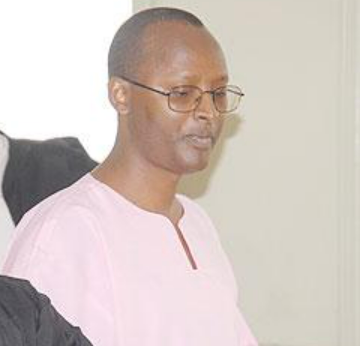
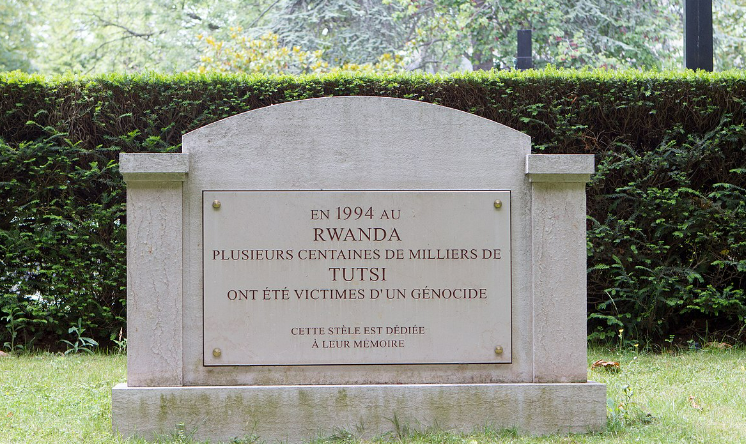
    On 8 November, the International Criminal Tribunal for Rwanda will celebrate its 30th anniversary. Created three months after the end of the Tutsi genocide by a resolution of the United Nations Security Council, it is based in Arusha, Tanzania. The International Criminal Tribunal for Rwanda (ICTR) closed its doors on 31 December 2015, having indicted 93 individuals, including 61 convicted and 14 acquitted. The others are fugitives or have been declared unfit to stand trial. The latter included former businessman Félicien Kabuga, who found himself successively, in these two situations.

    Then the ICTR’s so-called “residual” functions were relegated to a UN Mechanism, initially intended as a small “temporary entity”, but ultimately housed in expensive and imposing premises built especially for it. As the cases of five accused were sent back to Rwanda, it was primarily responsible for tracking down three “big fish”, including Kabuga – who was found in France in 2020.

    Kabuga, the only Rwandan defendant to owe a debt to the UN

    The Kabuga trial was marked by “firsts”. After one of the longest escapes from international justice, Kabuga has been the only Rwandan defendant to have his trial judged by the UN Mechanism’s branch based in the Hague, in the Netherlands. He is also the only one to have had only one and a half hours of hearings per day and three days of hearings per week, the only one to have attended his trial by videoconference, and the only one to have had five expert witnesses called to assess his state of health. He has been the first to be released on grounds of incapacity. And finally, Kabuga has become the first defendant of the international justice system on Rwanda to be declared not indigent, and therefore called upon to reimburse the costs incurred by the United Nations for his defence.

    The decision was handed down on 6 October 2023, but a year later, it has still not been implemented. Kabuga’s assets are still frozen. And the proceedings remain bogged down.

    Initially, on 12 November 2020, the accused requested legal assistance from the Mechanism, on the grounds that he could not afford to pay for counsel, and he asked the registry to appoint the French lawyer Emmanuel Altit as his permanent counsel. The accused had then submitted a declaration of resources form to support his claim of indigence.

    Kabuga’s son did not declare indigence

    While paying for legal aid, the registry opened an investigation into the means of the accused – who was reputed to have been the richest man in Rwanda. But while the registry was bogged down without any tangible results, it was Kabuga’s eldest son, Donatien Nshimyumuremyi, who came to his aid. After a quarrel with Emmanuel Altit, whom the judges refused to remove from the case, Donatien Kabuga published a press release on 28 September 2022 that included a solemn declaration of the accused that he had sufficient assets to pay for the lawyer of his choice.

    The court registry jumped at the opportunity. On 4 October 2022, it sent a request to Nshimyumuremyi for information on the assets that would be taken into account to certify the accused’s ability to pay for a lawyer himself. On 18 October 2022, the accused’s son provided the information. It took almost a full year of analysis and procedural calculations before the registry declared, on 6 October 2023, that “the accused is deemed non-indigent and capable of fully funding his entire defence before the Mechanism (i.e., including pre-trial, trial proceedings to date, and any further proceedings)”.

    Assets in France, Belgium, Rwanda and Kenya

    The registry states that “assets which have been identified by the Registry and which are deemed attributable to the accused are respectively located in the French Republic, the Kingdom of Belgium, the Republic of Rwanda, and the Republic of Kenya  (collectively, the “Assets”). The Assets are broadly composed of bank accounts, real estate property and personal property. The bank accounts attributable to the Accused have precise balance sheets, which the Registry has independently verified”. Furthermore, “the total legal aid cost incurred by the Mechanism for funding the Accused’s defence amounts to approximately $1,184,500, which includes the entire pre-trial stage and trial proceedings thus far”. The updated amount has not been communicated to us.

    The decision also added that Altit remained appointed as counsel for the accused under the Mechanism’s legal aid system until further notice and that, as such, the registry was required to continue administering legal aid.

    The rules of the Mechanism provide that “where a person is assigned Counsel and is subsequently found not to be lacking the means to remunerate Counsel, the Chamber may, on application by the Registrar, make an order for contribution to recover the cost of providing Counsel”. To date, however, the chamber has not issued any order. Since the decision, observations have been requested from the registry to help determine the feasibility of recovering Kabuga’s legal expenses from the assets attributed to him. The exchanges remain confidential.

    In its decision, the registry explains that “a substantial part of the assets is frozen, in accordance with the requests and/or orders of the International Criminal Tribunal for Rwanda (ICTR) and/or the Mechanism”. But according to the registry, to unfreeze these assets, legal decisions are needed from the national courts of the countries in which these assets are located – and as these decisions are slow in coming, they would prevent their recovery.

    The option of a release in Rwanda

    Added to this quagmire is the absence of a host country for the nonagenarian, whose release was ordered by the Appeals Chamber on 7 August 2023. Since then, Kabuga’s defence has been left to its own devices to find a country where their client could be released. At the last status conference, in July, it emerged that the defence had contacted two countries, both of which had refused to welcome him into their territory.

    The efforts made do not seem likely to materialise in the near future, and the Irish judge presiding over the chamber, Ian Bonomy, has indicated that he is not ruling out the possibility of transferring him to Rwanda. In an order, the trial chamber invited “the panel of independent medical experts, in consultation with the medical team of the UNDU as appropriate, to indicate in its next monitoring report whether they are in a position to assess Mr. Kabuga’s fitness to travel to and be released in Rwanda”.

    The judge explained that this order does not in any way express a preference of the chamber. But that it considered that there would be “no point in going down that road if in the end of the day it’s clear that Mr. Kabuga’s unfit to make the journey. So it’s that sort of information that the Chamber seeks to have clarified before raising the question of a possible relocation of Mr. Kabuga in Rwanda”.

    After a long escape and due to the slowness of the Mechanism, the senile old man will be neither convicted nor acquitted, and today no one can predict whether he will be released or not.

    Source:

    Justiceinfo.net by Barthazar Nduwayezu, November 7, 2024.

  • Igicumbi Calls for Justice: The Fight to Free Deo Mushaidi and Other Wrongfully Detained Survivors

    Igicumbi Calls for Justice: The Fight to Free Deo Mushaidi and Other Wrongfully Detained Survivors

    Deo Mushaidi/Photo/TNT Rwanda

    It may come as a surprise, but Rwanda’s longest-serving political prisoner is a survivor of the 1994 genocide against the Tutsi—a man who lost his entire family in the atrocities. His name is Deogratias “Deo” Mushaidi.

    At 63 years old, Mushaidi remains behind bars, serving a life sentence handed down exactly 14 years ago today. His charges? Bizarre and politically motivated offenses, including “genocide ideology” and denying the very genocide against the Tutsi that he survived.

    On this sad anniversary, Igicumbi—Voix de Rescapés du Génocide contre les Tutsis, the only independent survivor organization in Rwanda, has issued its annual statement drawing attention to the situation of survivors like Mushaidi.

    The organization is calling on President Paul Kagame’s regime to release Deo Mushaidi and other survivors who are incarcerated on politically motivated charges.

    Dr. Philippe Basabose, President of Igicumbi, emphasizes that Mushaidi is serving a life sentence simply because he exercised his right to engage in politics through a party other than the ruling Rwandan Patriotic Front (RPF).

    The statement also highlights other survivors facing similar fates. Among them is Aimable Karasira Uzaramba, a university professor and YouTube political commentator who has been imprisoned since 2021. Another is Yvonne Idamange Iryamugwiza, who is serving a 15-year prison sentence for her statements on YouTube criticizing the regime’s treatment of survivors.

    Dr. Basabose asserts that these individuals are detained because they have spoken out about the injustices they and their loved ones have experienced under the Kagame regime, the challenges faced by survivor organizations, or broader human rights issues in Rwanda.

    “Igicumbi calls for their immediate release,” Dr. Basabose states. “Their only ‘crime’ is refusing to remain silent in the face of injustice.”

    Mushaidi is imprisoned in Mpanga International Maximum Security Prison in Nyanza, located in Rwanda’s southern district. This facility is notable for housing notorious genocide perpetrators, including individuals who may have been involved in the killing of Mushaidi’s own family. The prison also accommodates eight Sierra Leonean inmates convicted of war crimes and crimes against humanity.

    Similarly, Aimable Karasira and Yvonne Idamange are incarcerated in Mageragere maximum Security Prison, a few miles outside Kigali City. Karasira has reported to the court that he is in constant distress because his cell is next to that of Denis Kazungu, a notorious serial killer who murdered 14 women and was sentenced to life in 2023.

    The full statement (VIDEO) from Igicumbi is also available HERE

    By Albert Gasake, September 17, 2024.

    ends.

  • Ibuka-USA’s New Leadership: Can Fresh Faces Overcome Old Challenges?

    Ibuka-USA’s New Leadership: Can Fresh Faces Overcome Old Challenges?

    After months of difficulty finding members willing to join its leadership committee, Ibuka-USA, a non-profit organization incorporated in Delaware, announced last week a new team of six dynamic leaders to guide the organization for the next four years. This diverse group brings fresh perspectives but faces challenges, including criticism that they, like other Ibuka chapters, are seen as extensions of the Rwandan ruling party (RPF) and are too closely aligned with the regime. This alignment complicates efforts to advocate effectively for survivors, especially when the regime’s interests conflict with those of the survivors. Can this new leadership overcome these hurdles and drive meaningful change?

    At the helm of the new committee is President Marcel Mutsindashyaka, an IT executive at a college in Cleveland, Ohio. Marcel, who has been actively involved in survivor organizations in Rwanda, like AERG and GAERG, is known for his entrepreneurial drive, and as I know him, he doesn’t shy away from engaging in difficult conversations. His leadership style marks a shift from his predecessor and definitely makes him a promising choice for Ibuka-USA.

    The rest of the team includes Vice President Favorite Iradukunda, a professor at the Elaine Marieb College of Nursing at the University of Massachusetts Amherst; Mireille Ishimwe, a Doctor of Pharmacy in Indianapolis, who will serve as the Social Affairs officer; Luck Ndunguye from Phoenix, Arizona, as secretary; Nicole Karekezi Umurerwa from Portland, Maine, as a committee member; and Paul Rukema as treasurer.

    Ibuka-USA, founded in 2020 as a 501(c)(3) non-profit, aims to support and advocate for the genocide survivors who now live in the United States. The organization aspires to be an umbrella body for other survivor non-profits and individuals in the U.S., similar to its parent organization, Ibuka-Rwanda. This goal is not, however, universally accepted by local survivor groups in the U.S., which have long organized commemoration events and other activities for survivor welfare and genocide education independently.

    Globally, there are many Ibuka chapters operating independently from each other, including in Europe, where the first Ibuka was established in 1995 in Brussels, Belgium. These chapters are credited with sustaining the commemoration of the genocide against the Tutsi by organizing annual events, working with host countries to erect memorials, combating genocide denial, and promoting genocide education through conferences and other initiatives.

    However, critics argue that Ibuka groups, both in Rwanda and abroad, often align too closely with the Rwandan government, even when this alignment conflicts with the interests of survivors. For instance, Ibuka has been known to support government actions against critics but remains silent when a survivor in their membership is harmed, whether by the regime for dissent or by released genocide perpetrators.

    Ibuka chapters abroad are also accused of being influenced by the Rwandan government through its embassies, which exert tight control over these groups. This relationship challenges their independence and hampers their ability to advocate effectively for survivors, especially when Ibuka-Rwanda itself operates under severe political constraints.

    These dynamics have led many survivors to be hesitant about actively engaging with Ibuka chapters, often limiting their involvement to annual commemoration events. A common perception is that the group is politically aligned and lacks independence, which may explain why Ibuka-USA had difficulty attracting survivors to its leadership committee, despite considerable outreach efforts. Survivors critical of the government often face ostracism and even loss of membership, reinforcing a belief that supporting the RPF or the current government is expected, while dissent can put one’s survivor status at risk.

    Additionally, Ibuka has been used to attack fellow survivors who have formed independent organizations, such as Igicumbi – Voix des Rescapés du Génocide des Tutsis, which the Rwandan regime opposes due to its lack of control. Nearly all Ibuka groups were pressured to align against this new organization, which highlights again the regime’s influence on Ibuka.

    Despite these challenges, the new Ibuka-USA committee has a unique opportunity to strive for its independence and bridge political divisions among its members. They can work with the government without compromising the solidarity that binds survivors who share the immense loss and trauma of genocide.

    The name “Ibuka,” meaning “remember” in Kinyarwanda, was coined by Eugene Mutabazi, a Rwandan living in Belgium during the genocide who lost many family members.

    As Ibuka-USA begins this new chapter, its leadership will need to navigate these complex dynamics to effectively advocate for survivors and honor the memory of those we lost. The big question is: can these new faces on the committee overcome the longstanding challenges that have hindered Ibuka’s progress? Ends

    Albert Gasake, September 12, 2024.

  • A Brief Note to My Father

    A Brief Note to My Father

    Dearest Father,

    It has been thirty years since the genocide took you from me. The journey since then has been challenging, caught between the perpetrators and their descendants who deny the genocide, as well as our supposed liberators who have turned into oppressors. In this suffocating environment, the memory of all we lost is constantly under threat.

    On one hand stand the Hutu extremists, their collaborators, and tragically, some of their descendants who shamelessly deny and downplay the genocide they committed with such fervor. You recall how these perpetrators openly proclaimed their intent to exterminate us, celebrating each murder with bonfires on the hills, toasting on crates of Primus beer, and triumphant tunes on the radio after long days of work (gukora)- their euphemism for the merciless slaughter of Tutsis.

    As they hunted us down, mobs cheered like excited sports fans, while our Hutu neighbors, either indifferent or pleased, participated eagerly, and keen to stripe us any last possession we had. Amidst this horror, only a few brave souls like Simeoni and Munyurangabo who hid me, dared to stand against this extermination campaign.

    Now, the killers’ descendants exploit social media to spread their venom, distorting the truth and questioning the very existence of the genocide. They paint themselves as victims, blaming the RPF for Habyarimana’s assassination to justify genocide. Meanwhile, as the RPF tightens its grip on power, it cynically weaponizes the genocide to silence dissent, even targeting us survivors. They engage in futile wars, like in Congo, claiming to protect Congolese Tutsis from “ethnic cleansing” while plundering resources. Their actions only encourage the extremists, who now claim moral equivalence and demand we move on.

    Thirty years later, the genocide is still disputed. We unfortunately still have to explain that you and other Tutsis were victims of a crime not of your doing but of your being. You were murdered simply for being Tutsi—a crime of existence, not of action, unrelated to any events like a plane being shot down or an invasion by the RPF rebel group then. Our little one, barely a year old, was also a victim. She did nothing to deserve such a brutal fate; she was murdered simply because she was Tutsi. The perpetrators sought to exterminate the future she represented, not because she posed any present threat. It was nothing more than that.

    The deniers now treat the facts of the genocide as though they are complex equations or rocket science. They claim there were no victims, no perpetrators as if you were killed by aliens and not the ordinary Hutus with whom we shared everything. They say it was committed by faceless Interahamwe militia, even though there was no Interahamwe in Butare where we were.

    Simple lived experiences and common knowledge like this have become so uncommon because the deniers are so many, and their toxic voices are so much louder than our weak ones. I see no signs of this diminishing anytime soon. They may have murdered your physical body and countless other Tutsis in 100 days, but they now seem determined to erase your memory for many years to come.

    On the other hand, the RPF, once seen as our saviors, has betrayed our trust and exploited our suffering for political advantage. They present us to the world as trophies of ’their victory’while ignoring our daily hardships and withholding desperately needed reparations. They have placed impoverished survivors in “villages of reconciliation,” and force them to live alongside their killers in shared homes. These villages serve as staged spectacles for dignitaries and tourists, who are invited to photograph survivors and perpetrators embracing as if to validate the RPF’s controversial social experiments. In these cruel displays, survivors are reduced to mere exhibits in a human zoo.

    Father, you are likely better off where you are now than being subjected to the inhumane experiments our supposed saviors conduct to entertain their foreign guests and political masters in the West. Interestingly, the RPF officials who engineered these villages also claim to have lost family in the genocide, yet they never placed their own relatives in these villages, which house about 5,000 survivors across six locations.

    Beyond this moral outrage, the oppression extends far beyond these forced reconciliations. Any dissent is met with harsh suppression, targeting those inside Rwanda or abroad who dare to question the official narrative or expose the RPF’s wrongdoings. It reminds me of when you had to secretly listen to the RPF’s Radio Muhabura during Habyarimana’s rule. Today, survivors must be cautious about who they confide in, as even relatives are often pitted against each other based on their political affiliations (intore vs. ibigarasha, pro-RPF vs. critic).

    During Kwibuka, no one dares to play Kizito Mihigo’s beautiful songs, which were once synonymous with genocide commemoration itself, due to his assassination by the regime in 2020. Survivors must also be careful about what they share on social media, how they tell their stories, mourn their loved ones, and express their true feelings, all to avoid retribution from those in power.

    Marginalized

    Thirty years later, we remain marginalized. Inviting a survivor representative to lay a wreath on your grave at ceremonies honoring our dead, like the 30th commemoration, seems a luxury we don’t deserve as if our presence is offensive. There may be fear of overshadowing the strongman’s fame, though fame from genocide is the last thing we want.

    The remembrance of you and other Tutsi victims has become a tightly controlled state affair. Your remains may be displayed in a glass cabinet at a government-run memorial site, as I never had the chance to locate your body. No one bothered to consult me or other survivors about whether they should display parts of your remains in those cabinets or grant you a dignified burial. Official events make it seem like there’s only one recognized Genocide survivor in Rwanda—the strong man at the center of Kwibuka, a term coined by his Jewish consultants in 2014.

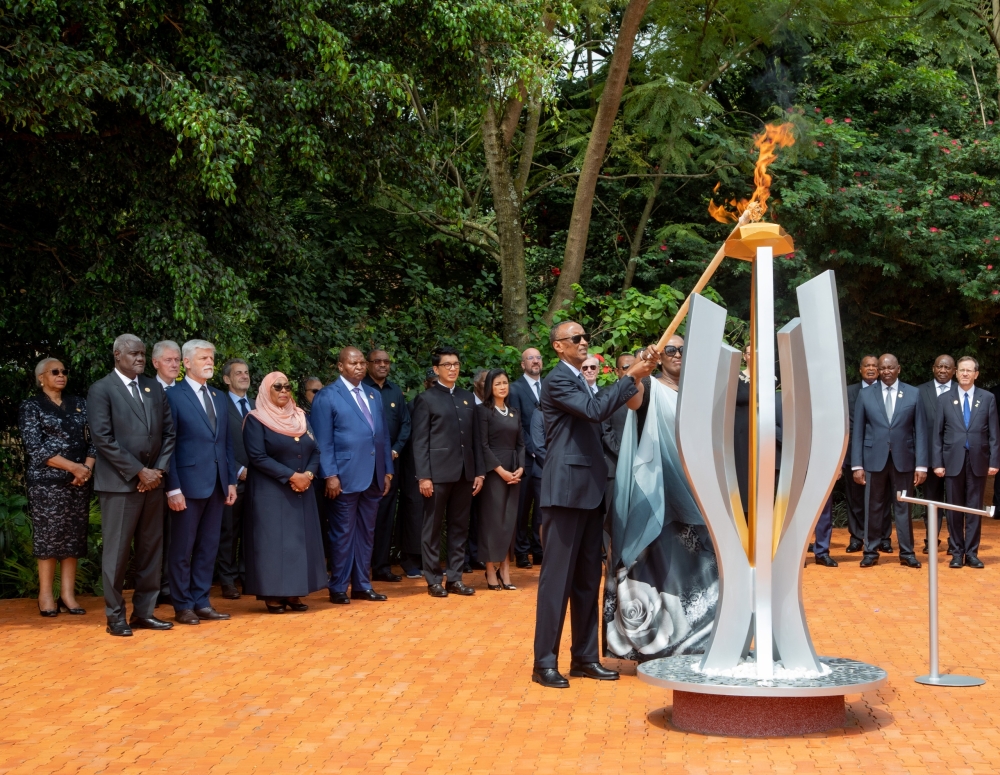
    This one man invites dignitaries who gather around him as he lays wreaths on your graves, as they stand beside him when he lights a flame called the “flame of hope,” and speaks in a language that only his guests understand—a foreign language unfamiliar to you and many other survivors and Rwandans. Through this one-man show, no other survivor is invited to lay wreaths or play a significant role in this otherwise important tribute.

    Father, despite the hardships since your loss in 1994, I don’t want to dwell on the darkness. In my next letter, I’ll share the brighter moments that sustain me – my incredible wife, whose support has been my anchor, and our beautiful children, who embody the hope and strength you fought for. They are eager to learn about you, the grandfather they never knew.

    I am fortunate to have found safety abroad, where I can write without fear, but my heart breaks for those still in Rwanda. They are caught in a dire predicament, forced to live alongside those who killed their families and under an authoritarian government that demands unquestioning loyalty.

    Your Son.

    Albert Gasake, May,12, 2024.

  • Génocide contre lesTutsi au Rwanda : Discours de lancement de la 30ème commémoration par l’Association Igicumbi-Voix  des Rescapés

    Génocide contre lesTutsi au Rwanda : Discours de lancement de la 30ème commémoration par l’Association Igicumbi-Voix des Rescapés

    Ce discours de lancement, prononcé à la première heure du 7 avril, 2024, par Dr. Philippe Basabose, président en exercice de l’Association Igicumbi, revient, sans détours, sans tabous ni complaisance, sur les axes principaux de la terrible tragédie du génocide contre les Tutsi et de la période de 30 ans qui l’a suivie.  Il lance aussi une invitation à entrer dans cette période commémorative avec calme, courage et tolérance.

    Au nom d’Igicumbi, Dr. Philippe Basabose saisit également cette occasion pour sonner l’alerte contre une campagne de stigmatisation et de diabolisation des rescapés du génocide contre les Tutsi orchestrée par les partisans du pouvoir de Kigali et dans le silence complice de ce dernier. Le discours était en kinyarwanda ; nous vous proposons ici sa version intégrale en français:

  • Kwibuka: How Rwanda’s Annual Genocide Remembrance Ceremony Lost Its Way

    Kwibuka: How Rwanda’s Annual Genocide Remembrance Ceremony Lost Its Way

    Kwibuka, the annual commemoration of the 1994 Genocide Against the Tutsi in Rwanda, has become a far cry from its original purpose. What was once a solemn occasion to honor the victims and stand in solidarity with the survivors has now been transformed into a one-man show, used by President Paul Kagame to legitimize his regime, justify his wars in the Democratic Republic of the Congo, and air his personal grievances.

    The word “Kwibuka” means “to remember” in the Kinyarwanda language, but in the three decades since the genocide, the official Kwibuka ceremonies have strayed remarkably far from this core mission. Kagame, the long-reigning president of Rwanda, has made the commemoration an annual platform to serve his own political interests, with little regard for the true victims and survivors.

    Kagame’s Kwibuka speeches, delivered in English (a language spoken by less than 1% of Rwandans), are not meant for the Rwandan people, let alone the survivors. They are instead intended for an international audience. In these speeches, Kagame does not focus on honoring the memory of the genocide victims or supporting the survivors. Instead, he uses the occasion to vent his frustrations about former allies who have grown weary of his 30-year grip on power, and to justify his military interventions in neighboring countries, all under the guise of preventing another “genocide of the Tutsi” – but this time, the Tutsis in the Democratic Republic of Congo.

    The survivors of the genocide, who endured the horrors and lost their loved ones, have been systematically sidelined from the Kwibuka ceremonies. In the immediate aftermath of genocide, survivors were left to bury their dead alone, with little support or recognition from the government and fellow Tutsi returnees who had fled the country before 1994. Today, Kwibuka seems to have become fashionable among some of these returnees, though it’s unclear if this is due to the government’s hijacking of the events or a genuine interest.

    On social media, this group of Tutsi returnees (though not all) has recently become ardent champions of Kwibuka, even labeling survivors who criticize the RPF government as “genocide deniers.” In Kagame’s Rwanda, the RPF is considered synonymous with the genocide itself, so any criticism of the party is equated with genocide denial—a severe charge that can even be leveled at survivors who speak out or join a different political party.

    I’m not blaming these returnees for taking long to join us in remembering the genocide victims; in fact, I’m thankful they have eventually shown some interest, and I hope this trend continues beyond the regime’s cosmetic approach to Kwibuka. However, I wonder where these passionate Kwibuka supporters were when we survivors were searching for our dead and cleaning their bones from mass graves shortly after genocide. Many orphans had nowhere to go during school breaks, forced to stay in boarding schools while many our fellow Tutsi returnees owned big houses. Now, these returnees sing Kwibuka louder than us.

    Over the years, the survivors’ role in the Kwibuka commemoration has been gradually diminished. From 2005 to 2015, they still had a limited presence, with a survivor representative occasionally allowed to lay a wreath or speak on behalf of the survivor community. During this period, a selected survivor would also be permitted to share their personal story of how they survived the genocide. However, even these survivor testimonies were heavily vetted by the authorities.

    I recall the case of a fellow survivor named Marius, whose testimony was rejected during the Kwibuka20 commemoration in 2014. His testimony was rejected because he mentioned escaping to Burundi, rather than being “saved” by the RPF forces. This censorship of survivor narratives that did not align with the government’s preferred narrative was a troubling sign of the diminishing role of survivors in the Kwibuka ceremonies.

    Since 2014, the survivor representative, typically the president of Ibuka (the umbrella organization for survivors’ groups), was removed from the Kwibuka wreath-laying ceremony and event organization.

    By 2024, survivors were largely excluded from all official Kwibuka preparations. Reviewing the photographs and footage of these events, particularly the initial wreath-laying and “light of hope” ceremonies at the Kigali Genocide Memorial, there is a noticeable absence of survivor representatives.

    While survivors’ organizations have internally expressed discontent with this exclusion, they are too afraid to voice their concerns publicly. The only exception is a brief 15-20 minute slot allocated to a carefully vetted survivor, who is expected to offer a testimony praising Kagame for the “rescue and help” provided after the genocide.

    For example, this year’s testimony featured a survivor who was actually rescued by French forces during Operation Turquoise, but the credit was given to Kagame. This was a symbolic token gesture, given the widely documented and terrible role France played in enabling the genocide. However, it is a well-established fact that towards the end of the genocide, French troops, whether intentionally or as a political show, rescued and protected around 12,000 Tutsis in the Nyarushishi camp. Two of my survivor friends were among those saved by the French. Those who were not relocated to the French-protected camp were accompanied to the RPF-controlled zone for safety, as was the case with Louise Ayinkamiye, who testified at the Kwibuka30 commemoration.

    The commemoration has now become a political show for Kagame and the RPF party, who have the audacity to consider themselves the “victims” of the genocide, despite being a belligerent party in the conflict that led to the genocide.

    Jean Damascene Bizimana, Kagame’s cabinet minister, claiming that RPF is a genocide victim!

    The hijacking of Kwibuka raises serious concerns about the future of genocide commemoration in Rwanda, beyond the current ruling party. While the regime organizes lavish, Grammy-award-style Kwibuka events funded by taxpayer money, the true victims of the genocide continue to live in dire conditions. Many survivors are succumbing to diseases and incurable conditions, exacerbated by the government’s closure of the Fund for the Support of Needy Survivors (FARG) in 2021. Established in 1998, FARG provided essential support in healthcare, education, housing, and income generation.

    The survivors, who were once the central focus of Kwibuka, have now been relegated to the status of abavumbyi, or uninvited guests, in the very commemoration meant to honor their loved ones and stand in solidarity with them. If the thousands of victims laid to rest in the memorial sites could speak, they would surely ask where their own families, the survivors, are in the spectacle of dignitaries parading at the graveyards in their absence.

    Kwibuka has become a clear reflection of Kagame’s priorities. It has turned into a platform for political showmanship and self-promotion, rather than a solemn remembrance of the past and a genuine effort to support the survivors. As the country continues to grapple with the long-term impacts of the genocide, the question of how to ensure that Kwibuka truly serves the interests of the victims and survivors, rather than just the ruling elite, becomes more and more important.

    The hijacking of Kwibuka is a troubling development, one that threatens to undermine the very purpose of the commemoration and the collective healing that it was meant to foster. As Rwanda looks to the future, it must find a way to restore the true spirit of Kwibuka, where the voices of the survivors are heard, their needs are addressed, and the memory of the victims is honored with the respect and dignity it deserves. Ends.

  • The Lasting Legacy of Genocide in Rwanda: A Survivor’s Reflection 30 Years On

    Guest post by Jacques Gatutsi, a survivor of the 1994 genocide against the Tutsis in Rwanda.

    Photo: Genocide victims’ names at Ntarama genocide museum where five thousand people were killed in the Catholic church.

    When I was a child in elementary school, our religion teacher used to tell us that on Judgment Day, the mountains would drop their massive stones and destroy us. The purpose, he said, was for the righteous to be reborn into a new world free of suffering, while the wicked would be condemned to eternal hell.

    Growing up at the base of a mountain littered with large stones, I dreaded that fateful day, unable to fathom where I could possibly hide from such an apocalyptic event. The large rocks that loomed over our home filled me with a deep sense of fear about what would happen when that day of reckoning finally arrived.

    Tragically, that apocalyptic day did arrive – not from the heavens, but at the hands of our longtime Hutu neighbors. They surrounded my extended family, massacring them mercilessly from infants to the elderly. Rwanda had become the stage for unprecedented horrors, unlike any the world had ever witnessed. While mass killings of populations have occurred throughout history, never before had we seen neighbors so completely “phagocytize” one another with the intent of total extermination. Such abominable crimes were previously confined to armies annihilating the populations of foreign territories they sought to conquer.

    And yet, for 100 days starting on April 7, 1994, the territory of Rwanda transformed into a hunting ground where the prey was the Tutsi people. To have been born a Tutsi was to be “guilty” – even unborn Tutsi fetuses of Hutu women married to Tutsi men were not spared. These scenes of unspeakable horror played out day after day, week after week, on every hillside across Rwanda, while the world turned a blind eye.

    The macabre result: more than a million people were atrociously tortured and massacred in a monstrous frenzy by mobs of Hutu killers, during this genocide perpetrated in the indifference of the world. Another odious result: at the end of the genocide, over a million people were suspected of having been involved in the genocide. Because, according to the architects of this genocide, no Tutsi was to remain alive on Rwandan territory.

    Thirty years is the time of a generation. But for us, it is as if it happened yesterday, so vivid is the memory in our hearts and in our everyday thoughts. We remember and will always remember our own who were senselessly massacred. We will always remember the genocide that changed our lives so much that nothing is the same for us. There is the before, with all the pleasures of living as a family with our loved ones, and the after, represented by our lives as orphans, widows and widowers, in grief. We are forever marked.

    We will never forget. We will never forget that our family members were not swallowed up by mountains that collided on Judgment Day, nor by a tsunami or an earthquake, but rather that they were exterminated by those we believed to be human like them, who had decreed that we no longer had the right to live on this earth.

    Today we remember. We remember to pay tribute to our family members victim of the genocide against the Tutsis of Rwanda. But let us also remember those other victims, whether Hutus or foreigners, killed during the genocide against the Tutsis, who they because of their courage refused to dip their hands in the blood of innocents, who they because of their courage took the risk of seeking a hiding place for the Tutsis hunted down like beasts of prey. We also pay tribute to those among these valiant men who were able to survive with or without their protégés. To all these righteous people, we say thank you, and ask God to give them the reward they deserve for their humanity.

    Today we remember our family members to honor their memory, but we must also remind the world, starting with Leaders of Rwanda’s neighbouring countries, mainly the Presidents Museveni, Mobutu and Mwinyi, and the Leaders of Great Powers, mainly the Presidents Clinton of US and Mitterrand of France, as well as the Prime Ministers Major of UK and Chretien of Canada, that they shamefully abandoned us, turning away their eyes and plugging their ears when we needed their help. This reproach also goes to the leaders of the RPF, who let this happen, with the clear aim of exploiting this tragedy to their advantage towards their war and political success. Our distress was of no concern to them. Shame on all of them.

    Today we also remember, and salute with pride, those among the survivors who were able to overcome pain and grief to arm themselves with resilience and optimism. We salute the bravery of all those among the survivors who were able to bounce back despite all the ups and downs of their lives. We tell them to keep up!

    Today we remember, because we must keep intact the memory of our family members so that we can pass on the torch of remembrance to the next generation so that they can do the same with the generations that follow. We have no other choice.

    It is our duty as survivors of the genocide against the Tutsi of Rwanda to remember. Not to brood over grudges that feed vengeance, but to remind the world that it happened, that this genocide took place, alas, 30 years ago. We must do so, all the more so as today, genocide deniers of all stripes spare no effort in trying to falsify the history of the genocide against our family members.

    We therefore must thwart their despicable plans. We have to bear witness, so that our family members never die, either in our hearts, which are their graves, or in the memory of mankind. Anything less would be a victory for their executioners. Ends.

  • Four years after the Assassination of Kizito Mihigo, IGICUMBI Commemorates

    Four years after the Assassination of Kizito Mihigo, IGICUMBI Commemorates

    Guest post by Dr. Philippe Basabose

    Le 17 février 2020 restera, dans les annales des assassinats et exécutions sommaires au Rwanda, une des dates les plus sombres. C’est le jour où le grand chanteur de gospel et messager de la paix et de la réconciliation, Kizito Mihigo, a été assassiné alors qu’il était en détention dans un cachot de la police rwandaise à Kigali.

    Quatre ans après ce crime sordide, ses frères et sœurs rescapés du génocide contre les Tutsi de l’Association IGICUMBI – Voix desRescapés du génocide contre les Tutsi ont commémoré sa vie ainsi que celles de bien d’autres rescapé(e)s de la même tragédie qui ont perdu leurs vies par la main du pouvoir du FPR.

    En plus d’honorer leur mémoire, ils ont ouvertement pointé du doigt le Président Paul Kagame comme le principal commanditaire de ces crimes ou en tous cas celui sans l’aval de qui la plupart d’entre eux n’auraient pas été commis. Ils ont dénoncé différents autres méfaits commis par le régime de Kagame à leur endroit et la totale impunité dont ils sont couverts. « Ces crimes et ces méfaits, a souligné Dr. Philippe Basabose, Président en exercice d’IGICUMBI, dans son adresse pour la circonstance, continuent et aggravent les conséquences du génocide contre les Tutsi sur ses rescapé(e)s ».

    The ceremony took place in Rwandan language (and it is accessible) on the YouTube channel Igicumbi94 . We offer you here, in French version, the full speech of Dr. Philippe Basabose.

    The version has been enriched with some footnotes or parenthetical notes to guide readers who are not aware of the context of certain details mentioned in the speech which was delivered in Kinyarwanda, the language of Rwanda.

  • Justice Denied, Now Served After 29 Years: The Unending Battle Continues

    Justice Denied, Now Served After 29 Years: The Unending Battle Continues

    Sosthene Munyemana – a doctor turned genocidal villain – shielded by French indifference, is finally convicted. This achievement is largely thanks to the heroic efforts of Alain and Daphrose Gauthier from the ” Collectif des Parties Civiles pour le Rwanda” (CPCR).

    While only a small measure of justice, it marks a significant victory in the ongoing fight to end impunity for those responsible for the Rwandan genocide. Munyemana’s conviction sheds light on systemic failures that protect perpetrators and overlook survivors.

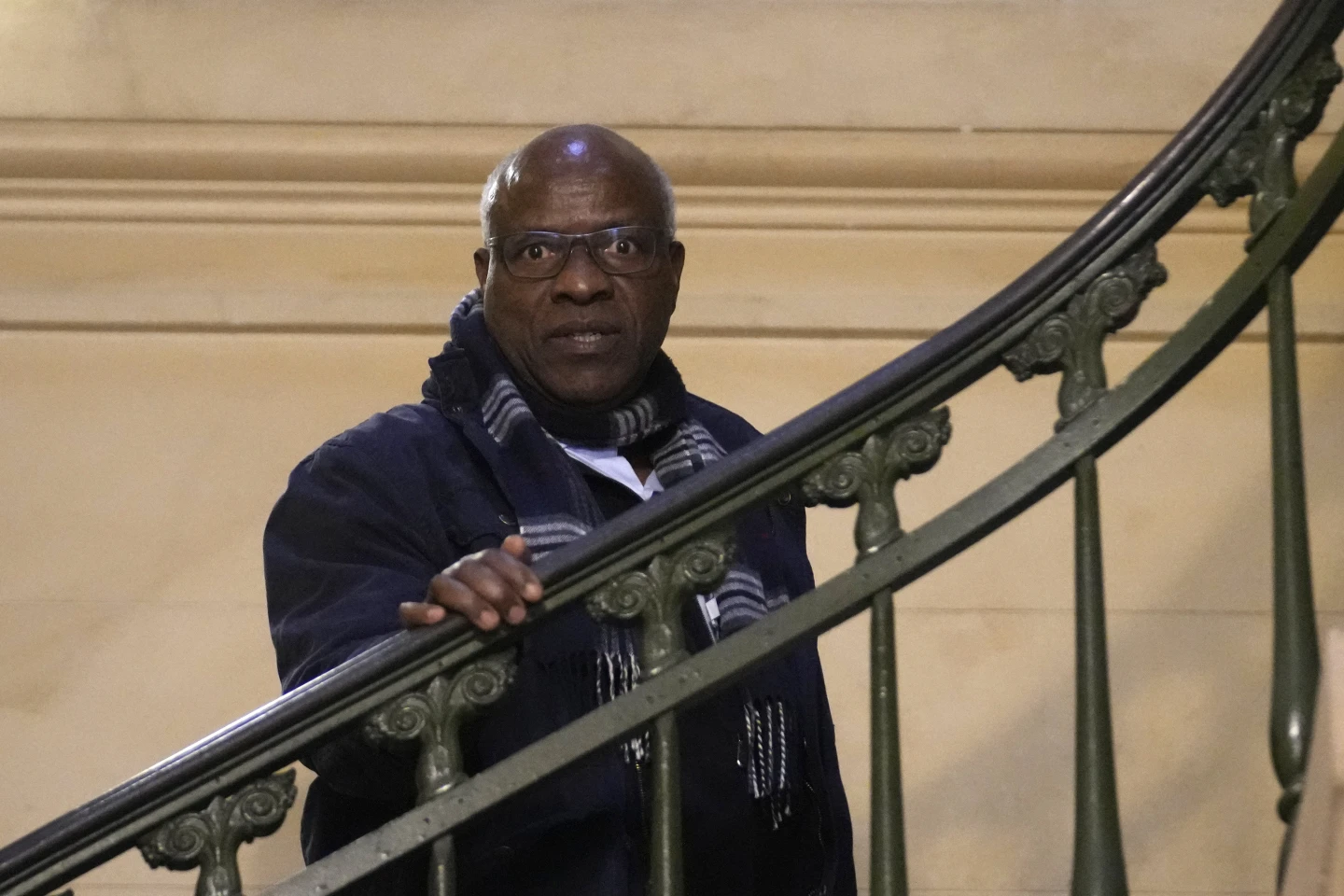
    Munyemana, 68, was found guilty on charges of genocide, crimes against humanity, and aiding in preparations for genocide. As a gynecologist in April 1994, Munyemana gave a speech inciting the killing of Tutsis in Tumba and later participated directly in attacks, commanded soldiers, and oversaw the extermination of Tutsi civilians. His conviction received extensive media coverage; case details are on the CPCR website.

    The case’s progress was hindered since its inception in 1995 due to political and legal challenges in prosecuting Rwandan genocide suspects in France. Such reluctance in France to pursue accountability for these crimes is regrettably common.

    The 2021-2022 report from Rwanda’s public prosecution office reveals that France harbors the most genocide fugitives in Europe, with 92 individuals convicted in absentia by the Rwandan Gacaca courts, followed by Belgium with 88. The United States and Canada shelter 60 and 9 fugitives, respectively.

    France, however, is not unique in this regard; other countries, including Rwanda, the DR Congo, Uganda, Burundi, and Tanzania, also drag their feet in prosecuting fugitives.

    In terms of numbers, when the Gacaca courts concluded in 2012, they transferred 71,658 cases of convicted fugitives to the National Public Prosecution Office (NPPA). However, in the subsequent decade, only 924 were apprehended, leaving 70,734 at large. At this rate, it could take an estimated 765 years to apprehend all remaining fugitives, effectively granting them impunity.

    In 2022, the NPPA’s fugitive mapping initiative could only gather information on about half of these criminals (35,680), hindered by tracking difficulties and case duplications. Of these, 21,950 are thought to be abroad, with only 1000 having international indictments. Approximately 7055 are believed to be in Rwanda.

    Although Rwanda has prosecuted around 1.2 million cases from 2005 to 2012, the urgency in tracking and prosecuting these fugitives has diminished over time. The conviction of Munyemana should reignite efforts to seek justice for the one million lives lost in the 1994 genocide against the Tutsi.

    By Albert Gasake, December 20, 2023.

  • Genocide in Rwanda: Clearing Up Common Misconceptions

    Genocide in Rwanda: Clearing Up Common Misconceptions

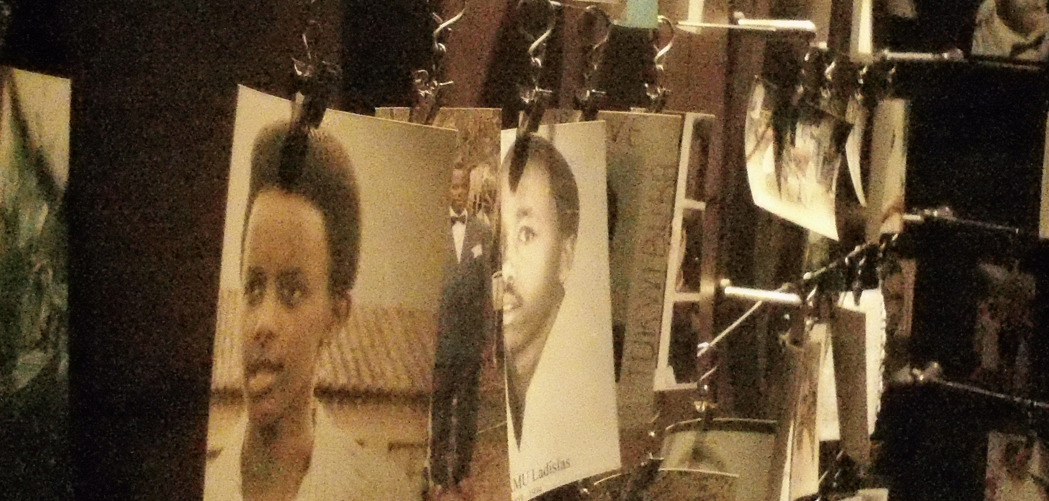
    Pictures of some genocide victims/Photo/Shoah Foundations

    For those who have experienced or studied the 1994 Genocide against the Tutsis in Rwanda, its facts might seem like common knowledge. The extremist Hutu killers made no secret of their target: Tutsis. Their extermination chants and zeal killing Tutsis for 3+ months stick in memories, as does hate-filled Kantano Habimana on RTLM radio directing them. Tutsis were explicitly targeted via media and speeches, labeled “cockroaches” and foreigners deserving elimination down the Nyabarongo River toward Abyssinia “where they came from.”

    However, a recent experience in a Twitter Space (a feature for live audio group discussions) revealed to me that what seems commonly understood about the genocide is, in fact, not so universally acknowledged. As with the Holocaust, despite extensive scholarship and survivor testimonies, the genocide against the Tutsis continues to face denial and lack of understanding. During this discussion, I was abruptly removed for merely mentioning the term “genocide against the Tutsis” – a phrase that the participants vehemently contested.

    Their main argument was against the specific phrase “genocide against the Tutsi,” noting that Hutus were also victims during the same period. While it’s true that some moderate Hutus – including those who opposed the Habyarimana regime, those intermarried with Tutsis, and even Hutus mistaken for Tutsis due to facial stereotypes – were killed, this doesn’t alter the characterization of the event as a genocide against the Tutsi.

    The term “genocide against the Tutsi” doesn’t negate the fact that others, including foreigners, were killed; it simply clarifies the primary intent of the perpetrators: to exterminate the Tutsi as an ethnic group.

    This distinction is crucial. The Tutsis were targeted for extermination based on their ethnic identity, which aligns with the 1948 UN Genocide Convention’s definition. The Convention defines genocide as acts committed with intent to destroy, in whole or in part, a national, ethnic, racial, or religious group. This specificity is what differentiates genocide from other crimes.

    The moderate Hutus and others were targeted for their actions (such as marrying or protecting Tutsis or opposing the Hutu Power faction) and their political views. Examples include Boniface Ngurinzira, the Foreign Affairs Minister from the moderate MDR party, and Agathe Uwiringiyimana, the Prime Minister, both of whom were murdered not for being Hutus, but for their political opposition to the Habyarimana regime and the subsequent genocidal government.

    These killings, while heinous, fall under different categories of international law, such as crimes against humanity or war crimes, but not under genocide as defined by the 1948 Convention on the Punishment and Prevention of the Crime of Genocide. This exclusion of political opinion from the genocide definition was a point of contention among scholars and human rights activists during the drafting of the Convention. Yet, it was not included in the final version.

    Some extremists call the appellation genocide against the Tutsi RPF propaganda but it is not. Survivors have fought to have a clear definition of the extermination of Tutsis since 1994 when the new RPF government employed vague phrases like ‘’itsembatsemba n’itsembabwoko –loosely translated as massacres and genocide. It took more than 10 years of advocacy for the RPF Government to start using the term genocide against the Tutsi as survivors have initially demanded.

    While the term ‘’genocide against the Tutsi’’ is a good starting point, I hope better terms attempting to show the extent of this tragedy that annihilated 9 out 10 Tutsis in Rwanda, can be coined. My preference is something like Irimburabatutsi (Annihilation of Tutsi).

    In Rwanda, possessing an ID card labeled “Tutsi” was effectively a death sentence, whereas “Hutu” indicated a chance for survival. Moderate Hutus could sometimes find safety in unfamiliar areas, but for Tutsis, there was no safe haven in Rwanda during the genocide.

    This stark reality highlights the specific targeting of the Tutsi and underscores why the term “genocide against the Tutsi” is not only accurate but essential for historical and legal clarity. Surprisingly, this understanding is not as widespread as one might expect, underscoring the need for continued education and awareness about the true nature of the Rwandan Genocide.

    Written by Albert Gasake, December 18, 2023.