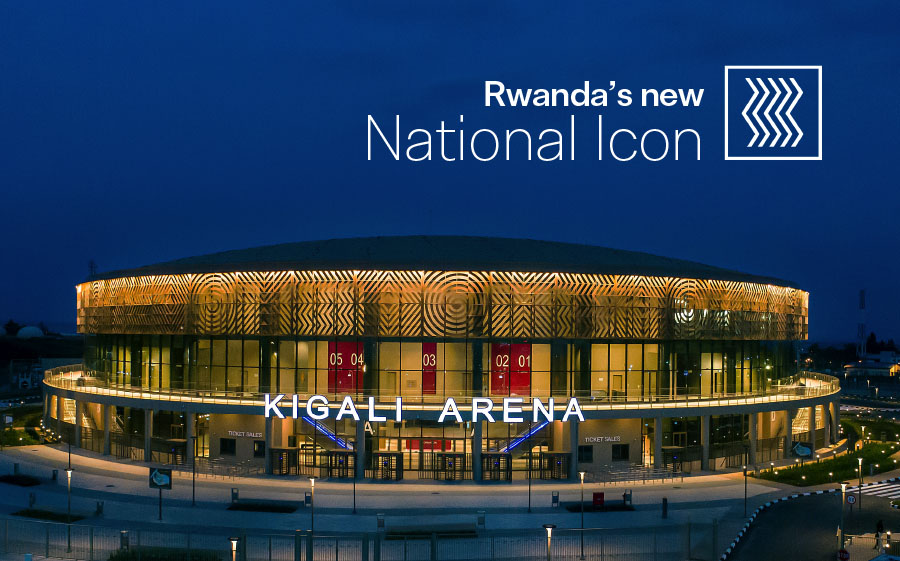


You may not know it, but Rwanda’s iconic Kigali Convention Center and gleaming BK Arena stadium carry a disturbing secret – they were constructed upon a bargain of Armenian genocide denial for money.
Last week, the French newspaper, Le Point, revealed that Rwanda secretly agreed to eliminate all mentions of the Armenian genocide from the Kigali Genocide Memorial, the nation’s principal genocide museum, as a condition for receiving $300 million in investment from Turkey. Specifically, Turkey required the removal of a dedicated room commemorating the 1.5 million Armenians murdered by the Ottoman Empire, a predecessor to modern-day Turkey, in 1915. This exhibition space within the memorial was subsequently demolished and its contents removed from public display.
The deal was officially struck on April 24, 2015 – just one day after the annual Armenian Genocide Remembrance Day – symbolically exchanging genocide recognition for money on the anniversary of these atrocities. Besides Turkish money, Kigali Convention Center was financed through other international funds including Eurobonds and local Rwandan funds.
This is sadly not the first time Rwanda has faced pressure to deny the Armenian genocide for economic reasons. In 2013, a major conference on the Armenian genocide in Kigali was downscaled following economic threats from Turkey. Originally scheduled for the grand ballroom of the Serena Hotel, it was relocated to a small room at the Kigali Genocide Museum. As a participant, I witnessed the enforced denial firsthand. An Armenian scholar at the conference confided that the hostility stems from Turkey’s global campaign to suppress recognition of the Ottoman Empire’s genocidal crimes, even in countries like Rwanda still healing from their own genocide trauma.
For Rwanda, a nation that has built its government’s legitimacy on the commemoration of the 1994 genocide against the Tutsis, agreeing to obscure another genocide is alarmingly contradictory. The regime, which prides itself on values of dignity (agaciro) and truth-telling, ironically compromises these principles. The removal of the Armenian genocide references from public consciousness and education in Rwanda sets a dangerous precedent.
As a survivor, I am concerned about the extent of concessions the government might make concerning our own history for political or economic expediency. Initially, the Rwandan government hesitated to correctly name the 1994 genocide against the Tutsis, using vague terms like ”massacres” or ‘Itsembatesemba n’itsembabwoko” in Kinyarwanda. Only after persistent survivor’s advocacy and pressures from the government’s dissidents was the accurate term adopted. This tendency to manipulate historical narrative for political gain endures, as demonstrated by prioritizing economic and political alliances over the truthful representation of over a million lives lost in 1994.
Rwanda’s ruling party, the RPF, seems more focused on retaining power than honoring victim dignity, readily manipulating memory narratives to quell dissent and justify rights abuses when convenient. A prime example is the 120 million Euro deal and military contracts with French President Macron, which effectively purchased Rwanda downplaying France’s genocide role. Since Macron’s 2021 visit, any survivor critique or asking for a formal apology from France faces backlash. This climate illustrates the troubling prioritization of economic and political interests over the acknowledgment of historical truths.
The Kigali Convention Center and BK Arena, rather than symbolizing progress, now represent the heavy cost of historical denial. The compromise with Turkey starkly illustrates how economic interests can overshadow the fundamental values of memory and truth. This episode in Rwanda’s history underscores the critical need for a worldwide commitment to protecting historical memory, ensuring that the legacy of tragedies, such as the Armenian genocide, is never compromised or negotiated away for financial gain.
Source: Click here to read the original article on the Turkish deal in Le Point.
By Albert Gasake 2/2/2024


 Justice4 Survivors
Leave a reply to Anonymous Cancel reply