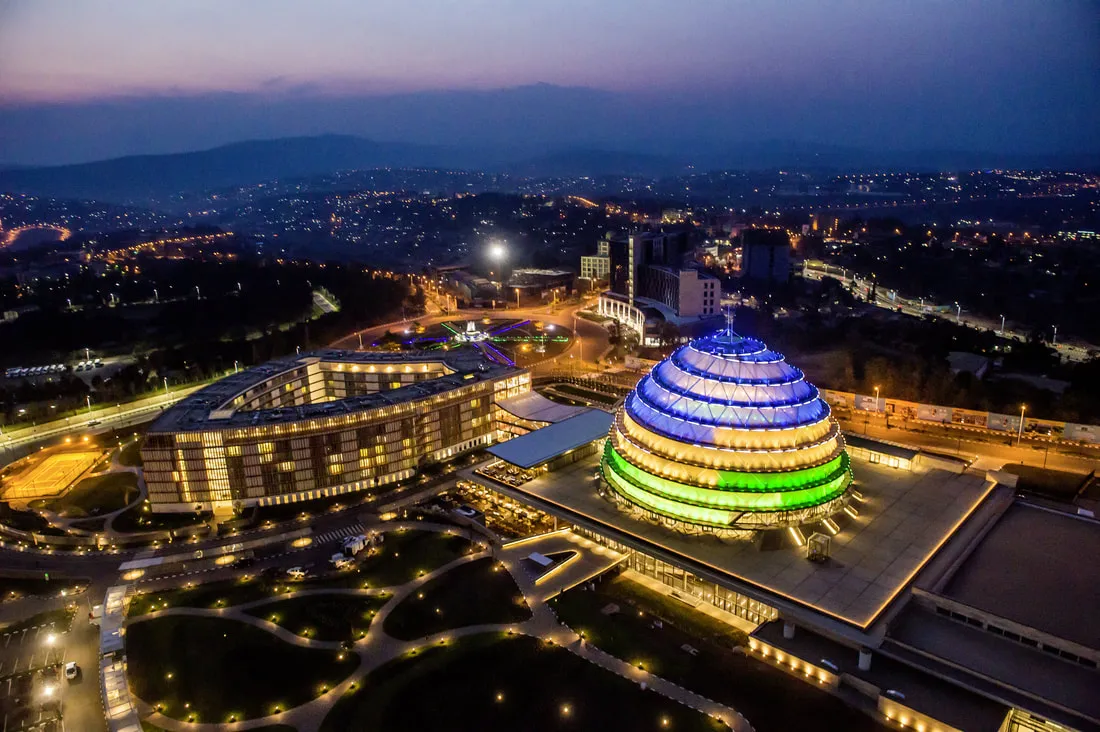


You may not know it, but Rwanda’s iconic Kigali Convention Center and gleaming BK Arena stadium carry a disturbing secret: they were built on a bargain that traded Armenian genocide denial for money.
Last week, the French magazine Le Point revealed that Rwanda secretly agreed to eliminate all mentions of the Armenian genocide from the Kigali Genocide Memorial, the nation’s principal genocide museum, as a condition for receiving $300 million in investment from Turkey. Specifically, Turkey required the removal of a dedicated room commemorating the 1.5 million Armenians murdered by the Ottoman Empire, a predecessor to modern-day Turkey, in 1915. This exhibition space within the memorial was subsequently demolished and its contents removed from public display.
The deal was officially struck on April 24, 2015, just one day after the annual Armenian Genocide Remembrance Day, symbolically exchanging genocide recognition for money on the anniversary of these atrocities. Besides Turkish money, the Kigali Convention Center was financed through other international funds, including Eurobonds and local Rwandan funds.
This is sadly not the first time Rwanda has faced pressure to deny the Armenian genocide for economic reasons. In 2013, a major conference on the Armenian genocide in Kigali was downscaled following economic threats from Turkey. Originally scheduled for the grand ballroom of the Serena Hotel, it was relocated to a small room at the Kigali Genocide Museum. As a participant, I witnessed the enforced denial firsthand. An Armenian scholar at the conference confided that the hostility stems from Turkey’s global campaign to suppress recognition of the Ottoman Empire’s genocidal crimes, even in countries like Rwanda still healing from their own genocide trauma.
For a government that has built its legitimacy on commemorating the 1994 genocide against the Tutsi, agreeing to hide another genocide is a stunning contradiction. The regime, which prides itself on values of dignity (agaciro) and truth-telling, ironically compromised these principles. The removal of the Armenian genocide references from public consciousness and education in Rwanda sets a dangerous precedent.
As a survivor, I worry about how far the government might go in compromising our own history for political or economic expediency. Initially, the Rwandan government hesitated to correctly name the 1994 genocide against the Tutsis, using vague terms like “massacres,” or “itsembatsemba n’itsembabwoko” in Kinyarwanda. Only after persistent advocacy by survivors and pressure from government dissidents was the accurate term adopted. That habit of bending history for political gain continues, putting economic and political alliances ahead of the truth about the more than one million lives lost in 1994.
Rwanda’s ruling party, the RPF, seems more interested in keeping power than in honoring the dignity of victims, and it bends memory whenever that helps silence dissent or justify abuses. A prime example is the €120 million deal and military contracts with French President Macron, which effectively bought Rwanda’s silence on France’s role in the genocide. Since Macron’s 2021 visit, any survivor who criticizes France or asks for a formal apology faces backlash. Once again, money and politics come before the truth.
So the Kigali Convention Center and BK Arena are not just symbols of progress. They also show what denial costs. No genocide, Armenian or ours, should ever be traded away for money.
Source: Click here to read the original article on the Turkish deal in Le Point.
By Albert Gasake, February 2, 2024




Leave a Reply