


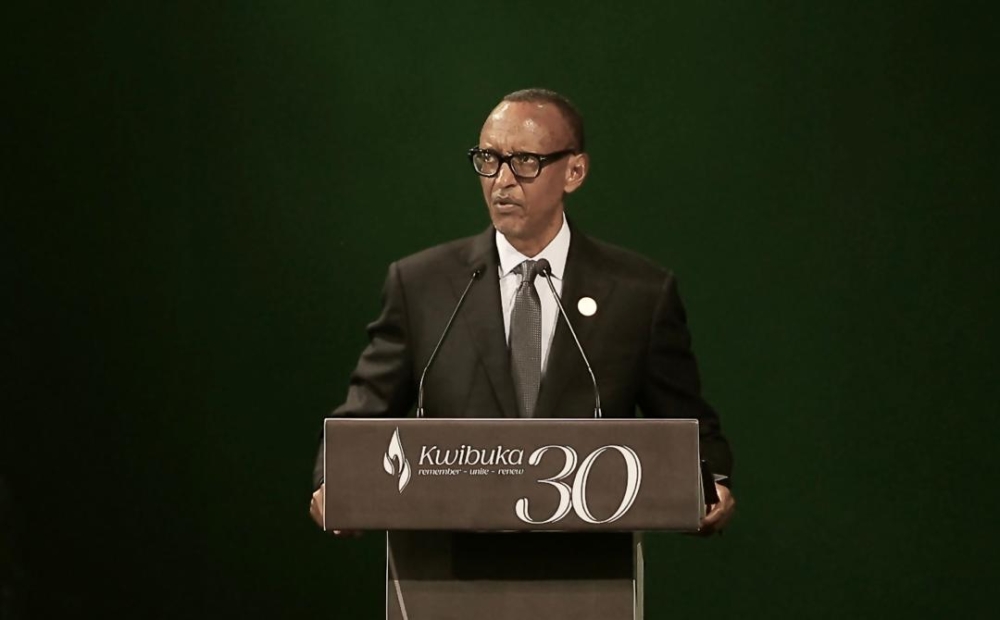
Kwibuka, the annual commemoration of the 1994 Genocide Against the Tutsi in Rwanda, has become a far cry from its original purpose. What was once a solemn occasion to honor the victims and stand in solidarity with the survivors has now been transformed into a one-man show, used by President Paul Kagame to legitimize his regime, justify his wars in the Democratic Republic of the Congo, and air his personal grievances.
The word “Kwibuka” means “to remember” in the Kinyarwanda language, but in the three decades since the genocide, the official Kwibuka ceremonies have strayed remarkably far from this core mission. Kagame, the long-reigning president of Rwanda, has made the commemoration an annual platform to serve his own political interests, with little regard for the true victims and survivors.
Kagame’s Kwibuka speeches, delivered in English (a language spoken by less than 1% of Rwandans), are not meant for the Rwandan people, let alone the survivors. They are instead intended for an international audience. In these speeches, Kagame does not focus on honoring the memory of the genocide victims or supporting the survivors. Instead, he uses the occasion to vent his frustrations about former allies who have grown weary of his 30-year grip on power, and to justify his military interventions in neighboring countries, all under the guise of preventing another “genocide of the Tutsi” – but this time, the Tutsis in the Democratic Republic of Congo.
The survivors of the genocide, who endured the horrors and lost their loved ones, have been systematically sidelined from the Kwibuka ceremonies. In the immediate aftermath of genocide, survivors were left to bury their dead alone, with little support or recognition from the government and fellow Tutsi returnees who had fled the country before 1994. Today, Kwibuka seems to have become fashionable among some of these returnees, though it’s unclear if this is due to the government’s hijacking of the events or a genuine interest.
On social media, this group of Tutsi returnees (though not all) has recently become ardent champions of Kwibuka, even labeling survivors who criticize the RPF government as “genocide deniers.” In Kagame’s Rwanda, the RPF is considered synonymous with the genocide itself, so any criticism of the party is equated with genocide denial—a severe charge that can even be leveled at survivors who speak out or join a different political party.
I’m not blaming these returnees for taking long to join us in remembering the genocide victims; in fact, I’m thankful they have eventually shown some interest, and I hope this trend continues beyond the regime’s cosmetic approach to Kwibuka. However, I wonder where these passionate Kwibuka supporters were when we survivors were searching for our dead and cleaning their bones from mass graves shortly after genocide. Many orphans had nowhere to go during school breaks, forced to stay in boarding schools while many our fellow Tutsi returnees owned big houses. Now, these returnees sing Kwibuka louder than us.
Over the years, the survivors’ role in the Kwibuka commemoration has been gradually diminished. From 2005 to 2015, they still had a limited presence, with a survivor representative occasionally allowed to lay a wreath or speak on behalf of the survivor community. During this period, a selected survivor would also be permitted to share their personal story of how they survived the genocide. However, even these survivor testimonies were heavily vetted by the authorities.
I recall the case of a fellow survivor named Marius, whose testimony was rejected during the Kwibuka20 commemoration in 2014. His testimony was rejected because he mentioned escaping to Burundi, rather than being “saved” by the RPF forces. This censorship of survivor narratives that did not align with the government’s preferred narrative was a troubling sign of the diminishing role of survivors in the Kwibuka ceremonies.
Since 2014, the survivor representative, typically the president of Ibuka (the umbrella organization for survivors’ groups), was removed from the Kwibuka wreath-laying ceremony and event organization.
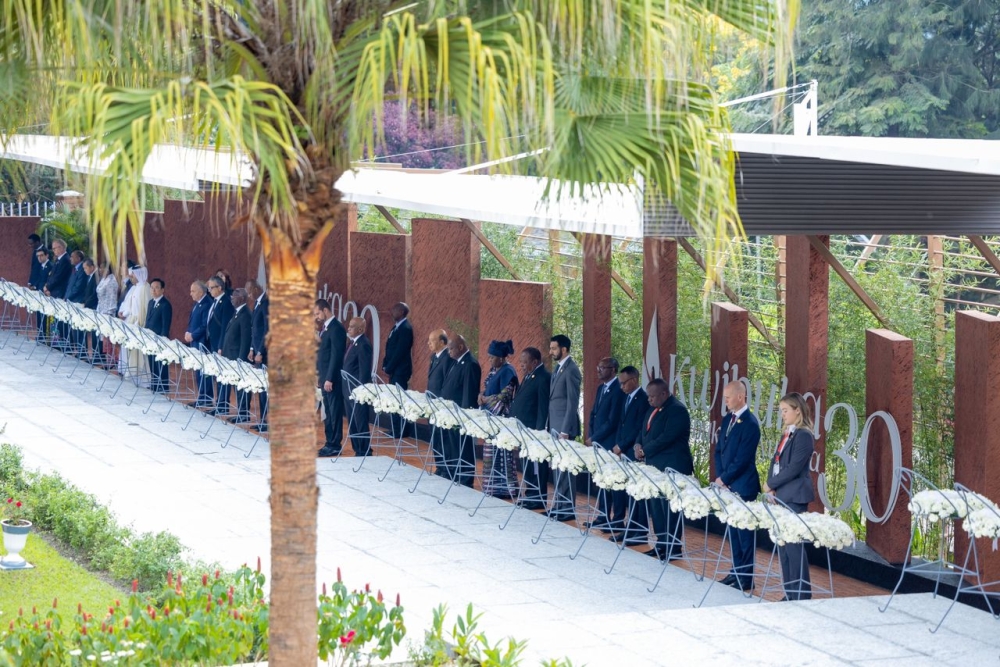
By 2024, survivors were largely excluded from all official Kwibuka preparations. Reviewing the photographs and footage of these events, particularly the initial wreath-laying and “light of hope” ceremonies at the Kigali Genocide Memorial, there is a noticeable absence of survivor representatives.
While survivors’ organizations have internally expressed discontent with this exclusion, they are too afraid to voice their concerns publicly. The only exception is a brief 15-20 minute slot allocated to a carefully vetted survivor, who is expected to offer a testimony praising Kagame for the “rescue and help” provided after the genocide.
For example, this year’s testimony featured a survivor who was actually rescued by French forces during Operation Turquoise, but the credit was given to Kagame. This was a symbolic token gesture, given the widely documented and terrible role France played in enabling the genocide. However, it is a well-established fact that towards the end of the genocide, French troops, whether intentionally or as a political show, rescued and protected around 12,000 Tutsis in the Nyarushishi camp. Two of my survivor friends were among those saved by the French. Those who were not relocated to the French-protected camp were accompanied to the RPF-controlled zone for safety, as was the case with Louise Ayinkamiye, who testified at the Kwibuka30 commemoration.
The commemoration has now become a political show for Kagame and the RPF party, who have the audacity to consider themselves the “victims” of the genocide, despite being a belligerent party in the conflict that led to the genocide.
The hijacking of Kwibuka raises serious concerns about the future of genocide commemoration in Rwanda, beyond the current ruling party. While the regime organizes lavish, Grammy-award-style Kwibuka events funded by taxpayer money, the true victims of the genocide continue to live in dire conditions. Many survivors are succumbing to diseases and incurable conditions, exacerbated by the government’s closure of the Fund for the Support of Needy Survivors (FARG) in 2021. Established in 1998, FARG provided essential support in healthcare, education, housing, and income generation.
The survivors, who were once the central focus of Kwibuka, have now been relegated to the status of abavumbyi, or uninvited guests, in the very commemoration meant to honor their loved ones and stand in solidarity with them. If the thousands of victims laid to rest in the memorial sites could speak, they would surely ask where their own families, the survivors, are in the spectacle of dignitaries parading at the graveyards in their absence.
Kwibuka has become a clear reflection of Kagame’s priorities. It has turned into a platform for political showmanship and self-promotion, rather than a solemn remembrance of the past and a genuine effort to support the survivors. As the country continues to grapple with the long-term impacts of the genocide, the question of how to ensure that Kwibuka truly serves the interests of the victims and survivors, rather than just the ruling elite, becomes more and more important.
The hijacking of Kwibuka is a troubling development, one that threatens to undermine the very purpose of the commemoration and the collective healing that it was meant to foster. As Rwanda looks to the future, it must find a way to restore the true spirit of Kwibuka, where the voices of the survivors are heard, their needs are addressed, and the memory of the victims is honored with the respect and dignity it deserves. Ends.


 Justice4 Survivors
Leave a comment