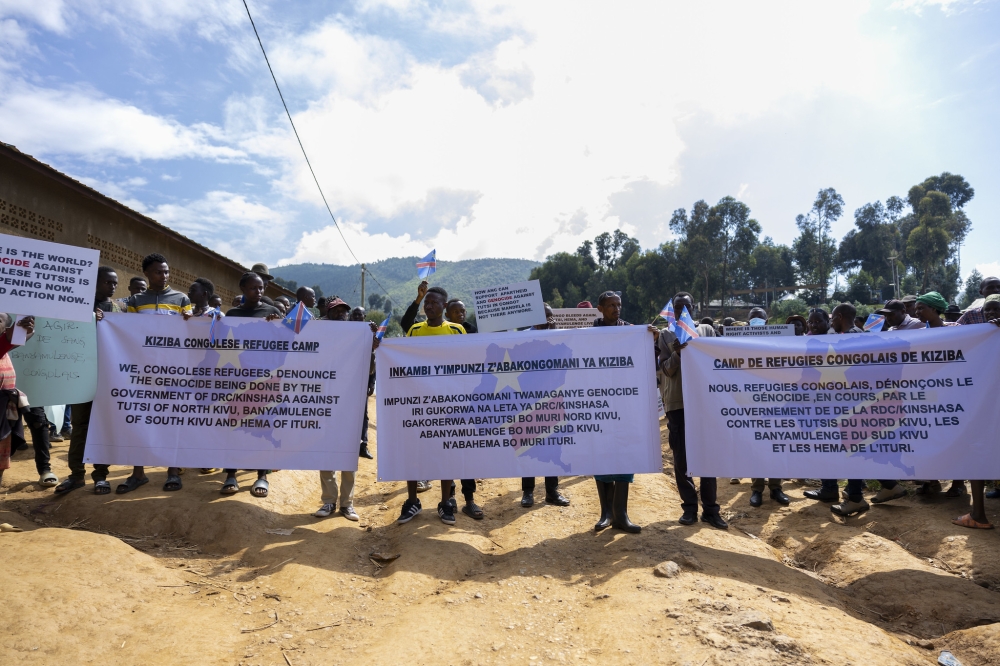
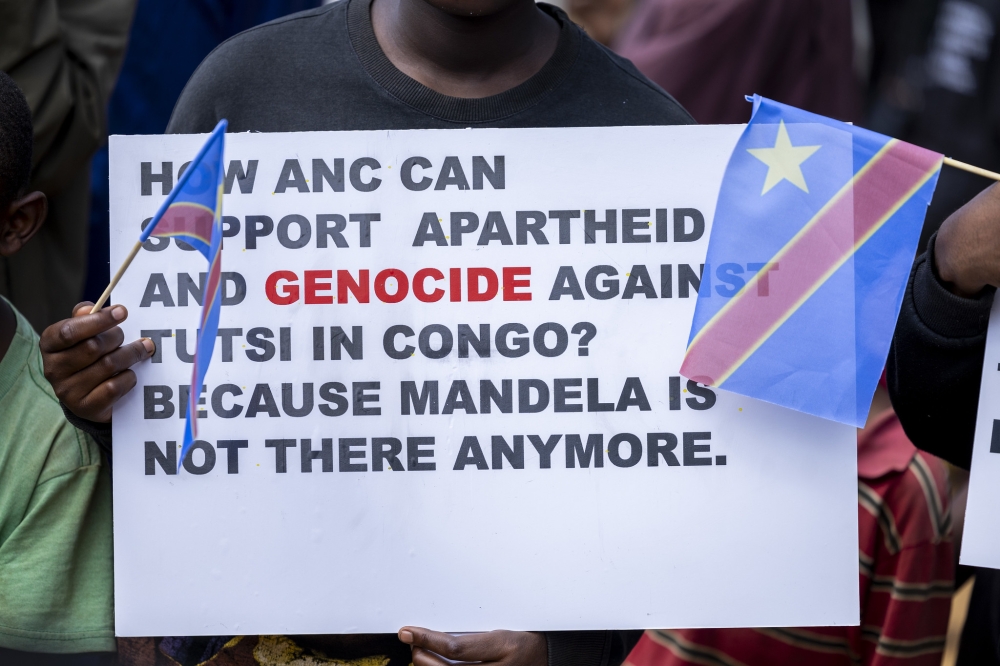
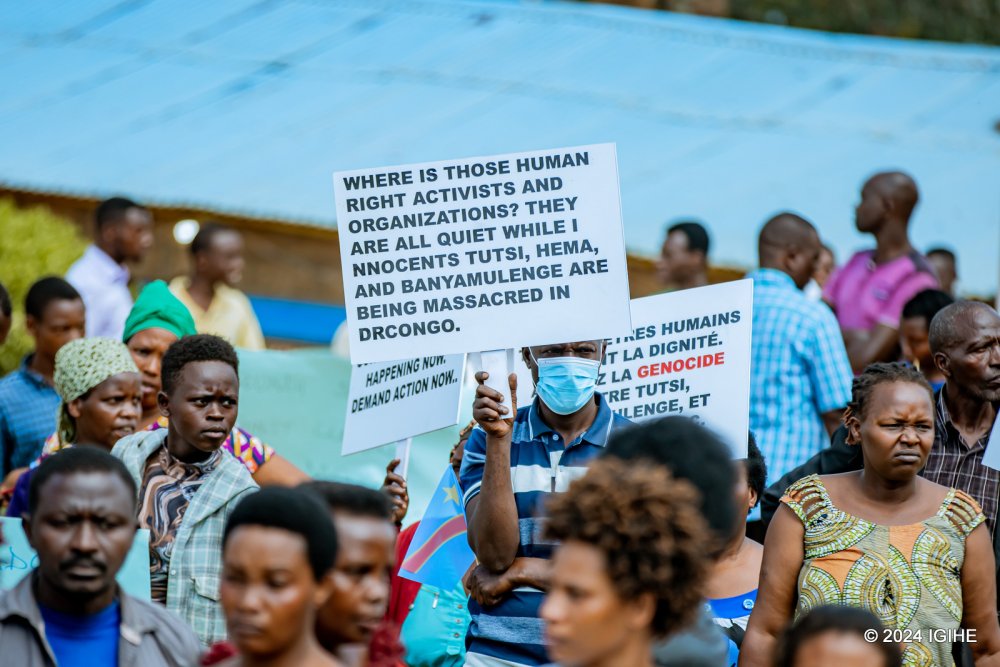

On March 4th, according to The New Times Rwanda, Hundreds of Congolese refugees residing in Rwandan camps took to the streets in an orchestrated protest march. Brandishing placards, they vehemently condemned the alleged killings of the Tutsi, Banyamulenge, and Hema communities in the eastern Democratic Republic of Congo (DRC). The refugees directly accused the Congolese government, rebel groups like the FDLR, as well as Burundian and SADC forces of perpetrating “genocide.”
Their impassioned calls for international intervention to “stop the genocide” seem justified on the surface. After all, these are people who have endured decades of displacement, torn from their homes by the very conflict they now denounce. Over 70,000 Congolese refugees remain confined to Rwandan camps, with over 13,000 newly arrived, fleeing the escalating clashes between Congolese forces and the M23 rebels.
However, those familiar with the iron-fisted regime of the Rwandan Patriotic Front (RPF) know that genuine protests and dissent are virtually non-existent – unless directly sanctioned by the state. Rwanda’s authoritarian grip simply does not allow for democratic protests. Real grievances from these very refugees, like their 2018 protest for a mere $2 increase in their measly $5 monthly food rations from UNHCR, have been met with shocking brutality. That ration protest ended with over 12 refugees killed by Rwandan police firing live ammunition into the crowds.
The bitter reality is that this latest Congolese refugee “protest” appears to be a carefully choreographed piece of theater, potentially the Rwandan government’s final bid to justify its military forces and allies intervening in the DRC under the guise of stopping an alleged “genocide” of Tutsis. Only pro-government protests are permitted in Rwanda’s tightly controlled sphere.
This blatant state manipulation lays bare a haunting irony – the Rwandan regime claims sympathy for Congolese Tutsis allegedly facing genocide, while brutally cracking down on any dissenting Tutsi voices, including genocide survivors, within its own borders. The regime has a long and disturbing history of weaponizing the genocide issue to silence opposition and fight diplomatic battles.
We have witnessed this tactic before, with how the government has controlled and co-opted Rwanda’s genocide survivor community and organizations, mobilizing them to protest internationally when it suited the regime’s agenda. Whether it was the controversial arrest of Rose Kabuye in Europe for her alleged role in assassinations, or sanctions imposed on Rwanda for its past interventions in the Congo conflict, the state rallied survivor groups to its defense. Transport, placards, and logistics – all provided by the state machinery to create an impression of unified outrage from a traumatized community.
Now, this same manipulative strategy has been exported to exploit the vulnerable Congolese Tutsi refugee community under the guise of defending them against “genocide.” Disturbingly, reports suggest children as young as 14 in these refugee camps were even recruited as child soldiers to fight in Rwanda’s military campaigns in the DRC resulting in US sanctions against Rwanda last year.
The irony is staggering – a regime that subjugates its own people, kills dissenting Tutsi genocide survivors like Kizito Mihigo, and deprives them of basic rights under an authoritarian system, now pretends to be a savior for Tutsis in the DRC.
As the complex conflict rages in eastern Congo, such self-serving manipulation by the Rwandan state only serves to deepen human suffering and misery. By controlling the narrative through orchestrated protests and co-opting vulnerable communities like these refugees, Rwanda conveniently diverts attention from addressing its own destabilizing role in the region through military entanglements.
One cannot help but be reminded of the decades these Congolese refugees have spent languishing in camps, robbed of a future in their homeland, as conflicts and atrocities perpetuated around them. Now, they find themselves mere props in Rwanda’s latest campaign of obfuscation on the regional stage, likely facing threats and coercion to toe the official line.
Ultimately, if this refugee protest achieved anything, it was to cruelly expose how far Rwanda will go to weaponize genocide – not just against its own people when they dare dissent, but also exploiting the plight of Congolese Tutsi refugees in a self-serving agenda cloaked in “stopping genocide” rhetoric. As the region seeks peace, such manipulation breeds polarization, and perpetual violence. Ends.
By Albert Gasake 3/5/2024.


 Justice4 Survivors
Leave a comment