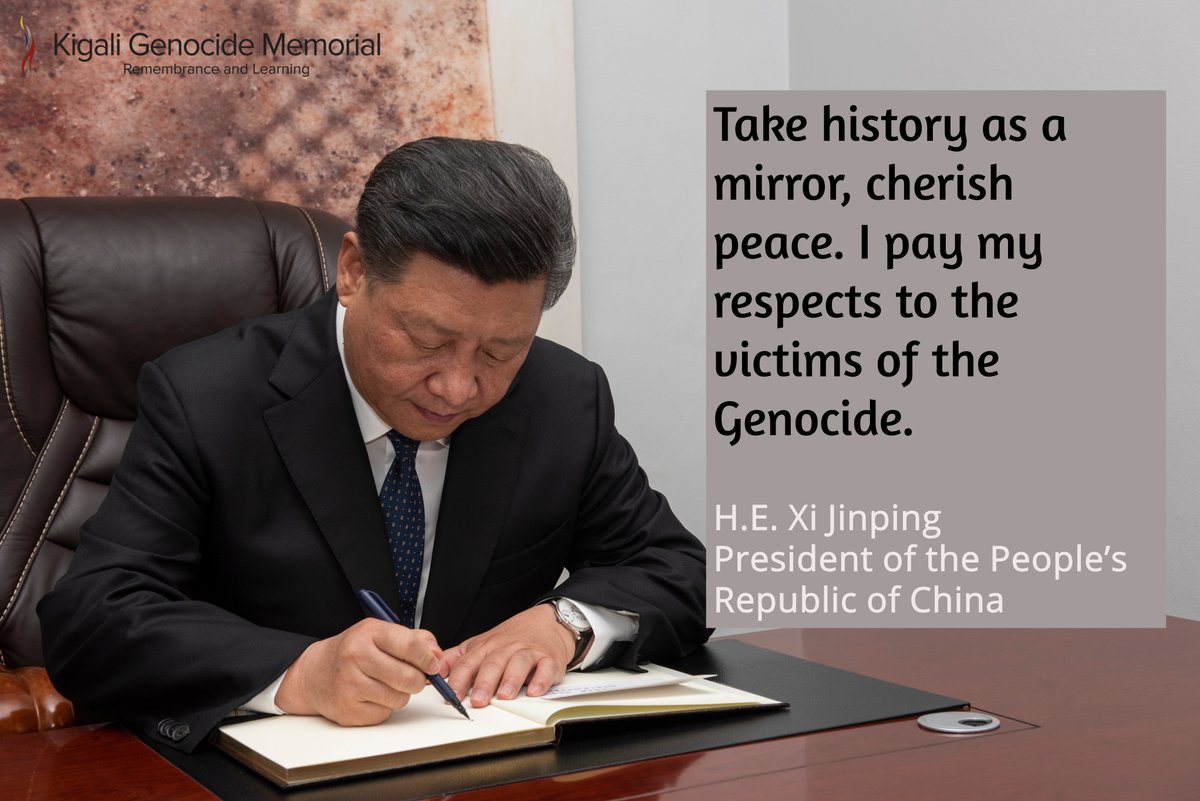

During his first visit to Kigali last week, Chinese President Xi Jinping made a controversial stop at the Kigali Genocide Memorial, where he paid “tribute” to the victims of the genocide against the Tutsi.
His visit got plenty of media coverage, but the truly disturbing question got none: China’s past and present role in genocides, and its open hostility toward human rights around the world.
As a genocide survivor and a rights activist who spends a good part of his time writing about justice, let me explain why President Xi needs to put his actions where his mouth is.
Like most high-profile guests, Xi left a message at the end of his 30-minute tour. “Take history as a mirror, cherish peace. I pay my respects to the victims of the genocide,” Xi wrote in the memorial’s guestbook.
The message looks quite genuine at first glance. But I seriously question what it means, given China’s long pattern of fueling genocides, including the genocide against the Tutsi.
If you think China’s hands are clean when it comes to the 1994 genocide against the Tutsi, think again. According to a 1995 Human Rights Watch report, China blocked any chance of intervention to stop the genocide.
China argued that any intervention must be endorsed by the then extremist Hutu government—the same government that was slaughtering Tutsi at a lightning speed.
China kept supplying weapons to Rwanda’s genocidal government during the genocide and after its defeat, violating the UN arms embargo imposed in mid-May 1994.
At the end of March 1995, Paul Kagame, the current president of Rwanda, paid a visit to China in part to dissuade the Chinese government from selling arms to the defeated Hutu government via Zaire.
Kagame’s visit followed a few months after a visit to China by Agathe Kanziga, the widow of the late president of Rwanda, Juvénal Habyarimana, and her brother, Séraphim Rwabukumba, in October 1994.
News reports have suggested that they placed orders for Kalashnikov rifles, grenades and rocket-propelled grenade launchers to a total value of $5 million.
China’s complicity did not end with Rwanda. In 2003, China backed Sudan during the “genocide” in Darfur, where an estimated 400,000 people died at the hands of China’s ally, General Omar al-Bashir.
Like in Rwanda, China consistently blocked efforts at the UN to have Sudan’s actions classed as genocide, to have effective sanctions put in place, or to have a peacekeeping force with the power to protect the people of Darfur put into Sudan.
China has yet to “take history as a mirror,” as Xi ironically wrote at the Kigali Genocide Memorial.
As I write, China continues to back the Myanmar regime, diplomatically and politically, in its campaign to massacre the Rohingya Muslim minority.
Last year, China voted against a UN resolution calling on Myanmar to end military operations in Rohingya villages and to accept a special envoy.
I’m not against China’s president visiting the memorial. Quite the opposite. I think it’s a positive gesture, if too little, too late.
As a survivor, I simply question the meaning of a Chinese leader parading over the graves of my people while the same leader supports similar atrocities today.
China missed the chance to apologize for its role in the genocide against the Tutsi. It still has a chance to change its long-standing policy of putting economic interests ahead of human rights. Whether it will is another question. End.
By Albert Gasake.


Leave a Reply