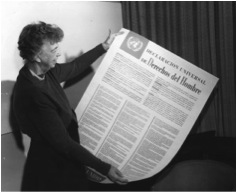
On Human Rights Day, we celebrate the Universal Declaration of Human Rights (UDHR), a document born from the ashes of a world war and the Holocaust. It was a promise to humanity: “Never again.”
Yet, that promise was broken. Just 46 years later, the world stood by as over a million people were slaughtered in the 1994 genocide in Rwanda. Today, 64 years after the UDHR was signed, hundreds of thousands of survivors continue to live—and die—with the trauma, physical scars, and profound losses of that atrocity.
The United Nations has accepted responsibility for its failure to prevent the genocide. But as survivors know, an apology without action is an empty gesture. Their hope is that this admission will lead to real, tangible justice.
The Right to Remedy: An Unkept Promise
The UDHR isn’t just a list of ideals. It lays out fundamental rights, and one of the most crucial is found in Article 8: the right to an effective remedy. This means that if your fundamental rights are violated, you have the right to justice, including restitution and compensation.
For Rwandan genocide survivors, this right remains largely unfulfilled.
While some survivors have been awarded compensation in court, the vast majority of these judgments have never been enforced. The Rwandan government created a fund for survivors called FARG, but this isn’t the same as true reparation. While FARG provides crucial support, it’s considered a social service, not a formal recognition of the suffering caused by the genocide. Survivors themselves had little to no say in its creation or management.
This isn’t about putting a price on human life. No amount of money can ever erase the memory of torture, the loss of a loved one, or the emotional and physical scars that remain. But what survivors deserve, and what the law promises, is a minimum level of justice, a tangible sign that their lives and their suffering matter.
A Global Failure
The failure to deliver justice isn’t just on Rwanda. The international community, through the UN International Criminal Tribunal for Rwanda (ICTR), also fell short. Unlike other international courts, the ICTR didn’t have a mandate to award reparations to victims. Out of more than 75 perpetrators tried, not a single victim was allowed to file a claim.
This confirms a painful truth: the ICTR seemed more focused on restoring the international community’s tarnished reputation than on delivering real justice for the survivors of a “preventable genocide.”
It’s Time for Action
Eighteen years after the genocide, the survivors are still waiting for Article 8 to be honored. The time for excuses is over. Both the Government of Rwanda and the international community have a legal and moral obligation to act.
This Human Rights Day, we call on them to fulfill their promise by establishing a dedicated reparation fund for survivors. Let this day not just be a reminder of a past ideal, but a catalyst for prompt action, so survivors can finally have the opportunity to rebuild their lives and receive the justice they have so desperately deserved for so long.
Albert Gasake is the legal advocacy coordinator at Survivors Fund (SURF). Contact: Albert@survivors-fund.org.uk


 Justice4 Survivors
Leave a reply to Rwanda’s Silent Struggle: Survivors Fighting for Rights Post-Genocide – Justice4Survivors Cancel reply