“Have you forgiven the Hutu killers?”
It’s a question that has haunted me for the past 30 years as a survivor of the Rwandan genocide against the Tutsi. This profoundly complex query feels loaded yet irrelevant. Allow me to unpack the nuanced feelings it evokes and why I believe it is often the wrong question posed to the wrong person.
First, no Hutu who directly murdered my family has approached me asking for forgiveness. Even if they did, I cannot take it upon myself to absolve such horrific crimes against my slain loved ones. It feels abstract and irrelevant as if I owe the killers something or must forgive to satisfy social pressures.
Some young Hutus have preemptively sought my forgiveness out of misplaced inherited guilt. I find that pointless since they did not commit genocide. When a killer is prosecuted, their family does not apologize on their behalf. So this notion of an innocent Hutu friend needing my forgiveness makes little sense.
When Faced With Genocide, Forgiveness Loses Meaning
When confronted with crimes against humanity on the scale of genocide, the very meaning and possibility of forgiveness fundamentally shifts. My difficulty stems less from wanting vengeance, but recognizing the magnitude of violence inflicted defies human understanding. After losing my family, the devastation makes forgiveness feel unreachable.
I did not consciously withhold forgiveness as a gravely wounded child. I believe the role of justice was to demand accountability and safeguard it never recurs. My path is not to forgive the unforgivable but to understand how genocide unfolded, so we can prevent repetition.
My typical response when asked about forgiveness is that I forgive none, yet harbor no hatred. Perhaps my only equivalence is tirelessly striving to comprehend how ordinary citizens embraced toxic ideologies that normalized dehumanizing Tutsis as “cockroaches.” Relentlessly uncovering the roots of such violence is what I have instead of forgiveness – a means of making sense of the unthinkable. The more I analyze how blind conformity spreads, the better equipped I feel to firmly oppose the patterns that breed genocide.
Rwanda’s history warns against the danger when “Us versus Them” thinking becomes enshrined politically and socially. The previous genocidal regime’s propaganda branded Tutsis as non-human “cockroaches” to be killed without remorse. Alarmingly, similar categorization (into pro RPF, intore and critics, ibigarasha) re-emerged under the RPF government.
Once in power, the RPF soon labeled critics “enemies of the nation”, sowing renewed division. As a survivor now openly questioning the regime’s abuses, I again face ostracization and repression along with many other Rwandans who dare to question any goverment’s policy.
The RPF portrays itself as the savior of Tutsi, peddling fear that without them in charge, genocide will recur. This narrative creates immense pressure on survivors to be loyal, stifling dissent. Those of us who speak out face retaliation despite enduring genocide firsthand. We suffer intimidation, imprisonment, disappearances, and staged “suicides” – a constant reminder of our precarity.
It is as if the RPF believes they own survivors, demanding our complicity no matter what abuses unfold. Many tragically stay silent even when their own loved ones are jailed or killed, such is the pervasive climate of fear.
This repression persists despite the common myth from the international community that Tutsis survivors are uniquely priviledged in the post-genocide Rwanda , simply because the RPF leadership happens to be mostly Tutsi as well.
In truth, Tutsi who openly criticize the regime face as much brutality and oppression as any dissident Hutus. In fact, we are disproportionately represented among jailed political prisoners.
The current authoritarian repression transcends any one ethnicity or background. To freely speak one’s truth as a critic of the ruling party – whether Hutu, Tutsi, survivor or not – is to risk severe retaliation. Breaking free to question the regime’s abuses requires profound courage.
My goal is not to irrationally reconcile with unrepentant killers or forgive the unforgivable, but to understand the social psychology of authoritarian conformity and expose how ordinary citizens can be conditioned into unwavering loyalty towards leaders who divide populations for power. I seek to dismantle the machinery that enables dehumanization and genocide to ever occur again.
Justice Over Identity Politics
The complexities around forgiveness highlight the gravity of genocide and the absence of simple solutions. Some survivors may forgive individuals if it brings closure.
But considering the magnitude and collective nature of these premeditated crimes against humanity, blanket forgiveness seems incongruent with my truth as a survivor. Justice, dignity for all Rwandans regardless of ethnicity or political opinions and preventing the conditions that breed hatred become the priority.
From this view, the Rwandan government’s policy of forcibly pairing survivors with released killers is unconscionable. These initiatives actively retraumatize victims under the guise of “healing” and “reconciliation.”
According to Prison Fellowship/Rwanda, the organization implementing them on behalf of the government, over 8 so-called “reconciliation villages” now compel nearly 5000 survivors to live alongside their families’ convicted murderers, often in duplex homes where they have no choice but to see their attacker’s face daily.
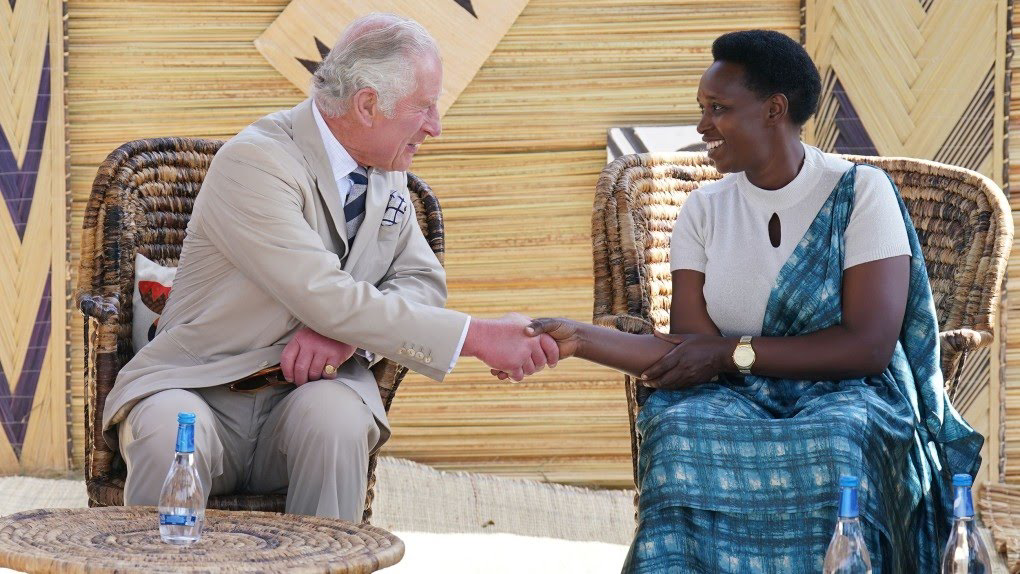
Survivors are forced to mingle with the very people who shattered their lives, encountering them in the mornings as they sweep the yard or at night during home chores. Many homeless survivors are coerced to share a roof with their perpetrators in order for the government to score political points, parading traumatized victims hand in hand with their attackers to international dignitaries like King Charles as supposed “success stories.
This state-sanctioned suffering treats vulnerable survivors as guinea pigs, sacrificing their dignity for hollow photo opportunities that whitewash grave atrocities. One wonders how such disgusting political theater could possibly help reconciliation, whether forced cohabitation is truly necessary to achieve reconciliation, and if compelling victims to publicly forgive is an appropriate precursor to reconciliation at all. No survivor should ever endure such forced, repeated encounters with the very people who ruined their lives.
True justice will come not by coercing victims to publicly forgive genocidaires, but by building an equitable Rwanda where all citizens are guaranteed basic rights and dignity, regardless of ethnicity. This is the only viable path to break entrenched cycles of violence.
Persevering for Justice
Though my personal path seeks not unconditional forgiveness or spiteful vengeance, I am determined to honor the over one million lives destroyed, including my dear family’s. Their spirits give me the resilience to contribute build Rwanda defined not by past divisions or some political allegiance, but by shared humanity, empathy, and justice.
I persevere to comprehend the phenomenon of blind obedience and political fanaticism that normalized the extermination of the “other”. My hope is that by uncovering the truth and strengthening accountability, we can unite as Rwandans to proudly write a new chapter beyond the grip of fear.
After losing my entire world as a child, blanket forgiveness does not resonate with my truth. Yet neither does bitter refusal to forgive define my perspective. I forgive no one, forget nothing, while refusing to be consumed by hatred or corrupted by vengeance.
What deeply troubles me are those demanding victims like myself publicly forgive our attackers under governments that still weaponize division. Reconciliation cannot be coerced through trauma and fear.
Genuine reconciliation can only emerge organically when profound fractures heal, uniting us beyond fear’s grip. Until then, I forgive no one, forget nothing, yet refuse to be imprisoned by bitterness or corrupted by vengeance.
I desire to comprehend the roots of blind obedience and fanaticism that breed genocide. For only by understanding and exposing these dangerous patterns can we prevent such brutality from happening again.
As someone who grew up without parents in the formative aftermath of genocide, my deepest hope is that the next generation of Rwanda’s youth find the courage to think for themselves, question power and transcend the divisions instilled by previous and current tyrants. Ends.


 Justice4 Survivors
Leave a comment