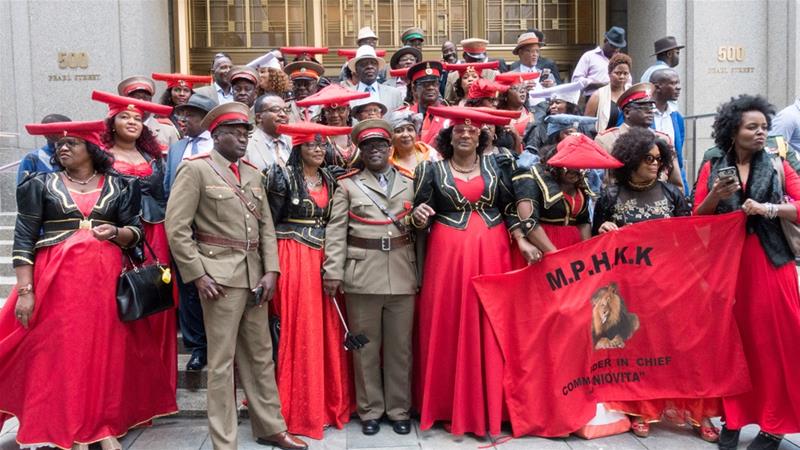
Today, Lawyers for Herero and Nama people and for the German government present argument in lawsuit demanding reparations for the first German- made Genocide. Think about this. Over 110 years since the Herero genocide by the Germans, descendants of the victims are still fighting for their right to justice in form of reparation. In comparison, It’s been only 24 years since the start of genocide of Tutsi in Rwanda. But our voices calling for reparation are becoming nearly silent than ever before.
As you may recall, I created this very platform 5 years ago in attempt to amplify our reparation campaign back then at the occasion of the 20th commemoration of Rwanda genocide in 2014. Our call went unheeded. I have to admit that our drive at some point stumbled too.
The Government of Rwanda which is the primary responsible legal entity, lacks the political will to recognize and ultimately materialize survivors’ right to reparation. And without political will from our own Government, the International community in return, lacks the appetite to revisit that ugly chapter that revives their guilty. The sense of guilty that they abandoned us at the hands of Hutu’s machetes. Yes Machetes not powerful German tanks or sophisticated gas chambers. The piece below should serve as an inspiration to all the genocide survivors across the globe that we must stand for justice until the last breath of our life.
In recognition of brave descendants of Herero and Nama people, I will dedicate the next couple of posts to the first Genocide of the 20th century–The Herero genocide by the Germans. You’re welcome to contribute by sending me an email at reparation4genocidesurvivors@gmail.com
Albert.
The Ovaherero and Nama delegation outside the District Court in New York [Kate Schoenbach/Al Jazeera]
New York, USA – A court in the United States has heard the first oral argumentation between representatives of the Herero and Nama people and representatives of the German government, in a case concerning damages for what has been termed the first genocide of the 20th century.
An estimated 100,000 Ovaherero and Nama people were killed between 1904 and 1908 as a result of a mass-extermination policy initiated by German colonial troops in South West Africa, currently known as Namibia, when the territory was a German colony.
US District Judge Laura Taylor Swain on Tuesday presided over the one-hour hearing in New York, where a delegation of 50 Herero and Nama people from around the world joined the plaintiffs in attendance.
“All we are asking for is restorative justice for the genocide,” said Ngondi Kamatuka, a Namibian-born American of Herero descent. “All we want is for there to be a jury who can weigh the preponderance of the evidence.”
The key question under consideration was whether a US federal court has the jurisdiction to hear the case, brought by the indigenous people who seek compensation for their ancestors’ suffering.
In order for there to be a firm basis for jurisdiction in the US under the Foreign Sovereign Immunities Act, the Herero and Nama need to demonstrate that wealth derived from the property taken during the German colonial period has a direct link to commercial property in the US.
Kenneth McCallion, the plaintiffs’ lawyer, argued that a number of German properties in New York were purchased as a direct result of the wealth accrued from slave labour and expropriation of property during the genocide.
He also argued that the sale of genocide victims’ human remains to the American Museum of Natural History (AMNH) demonstrates a valid commercial link between the genocide and American commercial interests.
Germany’s lawyer Jeffrey Harris argued plaintiffs had not sufficiently demonstrated a commercial link. He also said that the presence of skulls at the AMNH was the result of a private donation from German anthropologist Felix von Luschan, and not a commercial exchange.
Germany consequently argues that the US does not have jurisdiction to hear the case.
Swain concluded the session by adjourning the case. She will render a decision on whether the US has jurisdiction over the case in the coming weeks, without setting a date.
Fight for justice
The descendants of the victims, a diasporic group from at least four countries, have been fighting for restorative justice for generations.
In January 2017, plaintiffs Ovaherero Paramount Chief Vekuii Rukoro, Nama chief Johannes Isaack and head of the Association of the Ovaherero Genocide in the USA Barnabas Veraa Katuuo brought a class action lawsuit against Germany, accusing the state of genocide, theft, and expropriation of property when Namibia was under German colonial rule.
Plaintiffs demand reparations akin to those Jewish Holocaust survivors received after World War II. They also demand a seat at the table during bilateral negotiations between the Namibian and German governments concerning how to reckon with colonial-era atrocities.
This is the second time New York courts have considered the question of reparations for the Herero and Nama genocide. In 2001, the Herero People’s Reparations Corporation filed a civil lawsuit against German corporations. While unsuccessful in court, the Herero and Nama succeeded in sparking a debate that has continued to affect German and Namibian civil society.
Tuesday’s lawsuit goes further, forcing the German state to attend court and explain its position on a genocide that it has denied for decades.
Whether Germany now recognises the genocide as a crime under international law is still unclear. While German politicians have acknowledged the genocide in a series of public statements in recent years, the state continues to submit legal documentation to court that denies that the event constitutes genocide.
“The legal concept of genocide does not apply in this case,” states Germany’s motion to dismiss the case. End
Urukiko rw’Ibanze rw’i La Haye rwemeye kohereza mu RwandaJean Claude Iyamuremye ukekwaho kuba yaragize uruhare muri Jenoside yakorewe Abatutsi mu 1994.
Iyamuremye w’imyaka 37 y’amavuko yafatiwe mu Buholandi muri Nyakanga, hatangira gusuzumwa ubusabe bwa Leta y’u Rwanda bwo kumwohereza kuburanira mu Rwanda mu Ukwakira.
Iyamuremye ashinjwa kuba yari umwe mu nterahamwe zateye zikica Abatutsi bari bahungiye muri ETO-Kicukiro ubwo ingabo za Loni zari zimaze kubatererana.
Nubwo ariko uru rukiko rwategetse ko Iyamuremye yoherezwa mu Rwanda, aracyafite amahirwe yo kujurira mu Rukiko Rukuru rw’u Buholandi, ndetse na Minisitiri w’Ubutabera muri iki gihugu nawe akaba yabyemeza.
Dr Jean Pierre Dusingizemungu, Perezida wa IBUKA (Umuryango urengera inyungu z’abacitse ku icumu rya Jenoside, yabwiye The New Times ko bishimiye icyemezo cy’urukiko rrwategetse iyoherezwa rya Iyamuremye.
Yagize ati “Twakiriye neza uko urukiko rw’u Buholandi rwaciye urubanza, turifuza ko n’izindi nkiko zirukuriye zazabishimangira. Byaragaragaye ko . It has been inkiko z’u Rwanda zishobora guca neza urubanza urwo ari rwo rwose rwohererejwe, dufite icyizere ko u Buholandi buzohereza Netherlands will Iyamuremye.”
Abunganira mu mategeko Jean Uwinkindi ukurikiranweho ibyaha bya Jenoside yakorewe Abatutsi mu cyahoze ari Komini Kanzenze, muri cyari Kigali-Ngali, uburyo bahabwa amafaranga na Leta buri saha mu rubanza rw’umukiriya wabo bwasubiwemo, bagiye kujya bahembwa ku kwezi.
Iki cyemezo kije nyuma y’ibiganiro birebire byabaye hagati ya Minisiteri y’ubutabera n’abunganira Uwinkindi, aribo Me Gatera Gashabana na Me Jean Baptiste Niyibizi.
Iki cyemezo kandi gifashwe nyuma y’aho uruhande rw’Ubushinjacyaha, bwavugaga ko abunganira Uwinkindi baba batinza urubanza kugira ngo igihe kibe kirekire, nabo bakomeze guhabwa akayabo k’amafaranga atangwa na Letay’u Rwanda kuko Uwinkindi ari utishoboye.
Ubusanzwe uwunganira uregwa ahabwa amafaranga ibihumbi 30 buri saha, mu gihe urubanza rurimo kuba cyangwa mu gihe bagiye mu kiruhuko. Aha kandi Leta y’u Rwanda ikaba ariyo itanga amafaranga kuri Uwinkindi dore ko afatwa nk’umuntu utishoboye.
Mu itegeko rirebana no gucira imanza abakoze Jenoside bavanwe mu Rukiko Mpuzamahanga Mpanabyaha rwashyiriweho u Rwanda i Arusha(ICTR) n’izindi manza zavuye hanze y’igihgu, Leta niyo igomba guhemba abahagarariye uregwa ariko mu gihe adafite ubushobozi.
Abunganira Uwinkindi barahawe amafaranga menshi mbere y’uko urubanza rutangira mu mizi, bikaba aribyo byatumye uruhande rw’Ubushinjacyaha bwamagana iki cyemezo cy’abunganira Uwinkindi, aho bavuga ko bakomeza gutinza itangizwa ry’urubanza nk’uburyo bwo gukomeza kwishakira amafaranga atagira ingano. Umunyamabanga uhoraho muri Minisiteri y’ubutabera, Pascal Ruganintwali, yatangarije The New Times ko amsezerano yo kwishyura ku kwezi abunganira Uwinkindi agomba gusinywa mu minsi mike.
Yagize ati “Turacyari mu biganiro ariko tugomba kubirangiza vuba, bityo tugirane ayo masezerano.”
Abunganira Uwinkindi biteguye gusinya
Me Niyibizi wunganira Uwinkindi we yagize ati “Twarangije kumvikana ku bintu bimwe, dusigaje ibindi bike byo gukemura, nyuma duhite dusinya amasezerano, kandi dushobora gusinya aya masezerano mashya isaha iyo ariyo yose.”
Jean Uwinkindi yahoze ari Pasiteri mu cyahoze ari Komini Kanzenze, ubu ni mu karere ka Bugesera, araregwa ibyaha bya Jenoside yakorewe Abatutsi, uruhare muri Jenoside, kuyishyira mu bikorwa, n’ibyaha byibasiye inyoko muntu. Urubanza rwe mu mizi rugomba gutangira muri Mutarama 2014.
Uwikindi Jean ukurikiranweho ibyaha bya Jenoside yakorewe Abatutsi
Kigali: Mme Sperancie Karwera Mutwe, suspectée de génocide, a été arrêté à Cergy en France selon une lettre de l’Ambassade du Rwanda à Paris adressée à l’Autorité des poursuites pénales du Rwanda (NPPA, National Public Prosecution Authority).
Sperancie Karwera Mutwe a été arrêtée sur base d’un mandat d’arrêt international émis le 26 novembre 2004 par le Rwanda qui la recherche pour son rôle présumé dans le génocide des Tutsi du Rwanda en 1994.
Selon cette lettre, le Ministère français des Affaires étrangères demande à Kigali de fournir les documents officiels et requêtes nécessaires pour l’extradition de Sperancie Karwera Mutwe afin qu’elle soit jugée au Rwanda où les crimes ont été commis.
Sperancie Karwera Mutwe a été conseillère principale au Ministère rwandais des Affaires étrangères pendant le génocide de 1994. (Fin)
Le collectif des organisations et associations œuvrant pour les intérêts des survivants du génocide, Ibuka, s’insurge contre l’ONU, accusant l’organisation des nations unies de ne pas injecter de subsides substantiels dans le fonds d’assistance des rescapés du génocide, FARG.
Le collectif Ibuka nuance toutefois son propos et rappelle qu’il a salué la reconnaissance par l’ONU dès 1995 que le crime perpétré en 1994, était bel et bien un crime de génocide et crime contre l’humanité commis contre les batutsi du Rwanda. Ibuka s’indigne à nouveau lorsqu’il faut voir dans quelle moindres proportions l’ONU s’investi dans la réparation des victimes dudit génocide. Albert Gasake, juriste et membre du conseil d’administration du collectif Ibuka monte au créneau en dénonçant ce constat qu’il qualifie d’injuste : « Lorsqu’on fait des calculs, l’Onu a alloué aux rescapés du génocide a peu près 30 millions de dollars, ce qui est l’équivalent juste d’un dollar par rescapé ; et en le comparant au budget que l’ONU dépense pour les génocidaire détenus à Arusha, l’ONU dépense plus de 180 millions de dollars chaque année, ce qui veut dire 30 millions pour chaque génocidaire ; nous trouvons ça injuste ! » Pour ce collectif de droit Rwandais, le principal garant des droits de l’homme qu’est l’ONU se devait plutôt d’être à l’avant-garde de la communauté internationale à s’investir dans l’indemnisation des survivants du dernier génocide du 20eme siècle. IBUKA en appelle donc à l’organisation des nations unies à faire des allocations exclusives et consistantes au FARG, dans lequel, elle n’intervient que dans certains de ses programmes de soutien aux vulnérables, alors que dans ses maigres moyens, constate encore le collectif, le gouvernement Rwandais contribue à hauteur de 5% de son budget annuel. Ibuka dénonce cette prise de position onusienne qu’il qualifie de plus deux poids deux mesures Des statistiques officielles datées de 2002 dénombraient les survivants du génocide commis contre les batutsi du Rwanda en 1994 à plus ou moins 374 mille, mais jusqu’à ce jour il n’y a jamais eu de chiffres à etre rendus public par le collectif.Ibuka