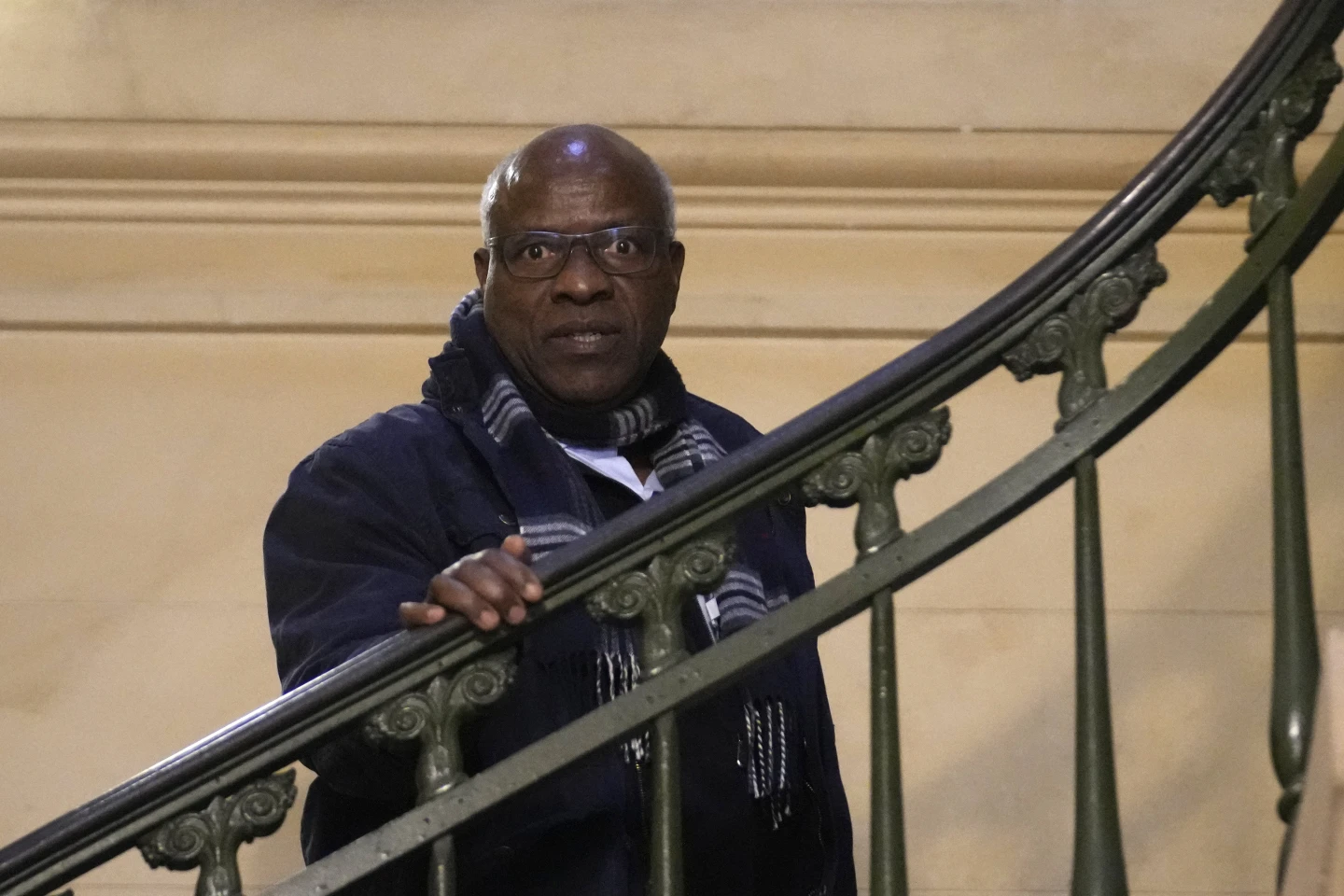
Sosthene Munyemana, a Rwandan doctor arrives at Paris court house. (AP/Photo/Christophe Ena)Sosthene Munyemana, a Rwandan doctor arrives at Paris court house. (AP/Photo/Christophe Ena)Former Rwandan doctor Sosthene Munyemana was jailed for 24 years by a French court for his involvement in the 1994 genocide of Tutsis. By Benoit PEYRUCQ (AFP)
Sosthene Munyemana – a doctor turned genocidal villain – shielded by French indifference, is finally convicted. This achievement is largely thanks to the heroic efforts of Alain and Daphrose Gauthier from the ” Collectif des Parties Civiles pour le Rwanda” (CPCR).
While only a small measure of justice, it marks a significant victory in the ongoing fight to end impunity for those responsible for the Rwandan genocide. Munyemana’s conviction sheds light on systemic failures that protect perpetrators and overlook survivors.
Munyemana, 68, was found guilty on charges of genocide, crimes against humanity, and aiding in preparations for genocide. As a gynecologist in April 1994, Munyemana gave a speech inciting the killing of Tutsis in Tumba and later participated directly in attacks, commanded soldiers, and oversaw the extermination of Tutsi civilians. His conviction received extensive media coverage; case details are on the CPCR website.
The case’s progress was hindered since its inception in 1995 due to political and legal challenges in prosecuting Rwandan genocide suspects in France. Such reluctance in France to pursue accountability for these crimes is regrettably common.
The 2021-2022 report from Rwanda’s public prosecution office reveals that France harbors the most genocide fugitives in Europe, with 92 individuals convicted in absentia by the Rwandan Gacaca courts, followed by Belgium with 88. The United States and Canada shelter 60 and 9 fugitives, respectively.
France, however, is not unique in this regard; other countries, including Rwanda, the DR Congo, Uganda, Burundi, and Tanzania, also drag their feet in prosecuting fugitives.
In 2022, the NPPA’s fugitive mapping initiative could only gather information on about half of these criminals (35,680), hindered by tracking difficulties and case duplications. Of these, 21,950 are thought to be abroad, with only 1000 having international indictments. Approximately 7055 are believed to be in Rwanda.
Although Rwanda has prosecuted around 1.2 million cases from 2005 to 2012, the urgency in tracking and prosecuting these fugitives has diminished over time. The conviction of Munyemana should reignite efforts to seek justice for the one million lives lost in the 1994 genocide against the Tutsi.
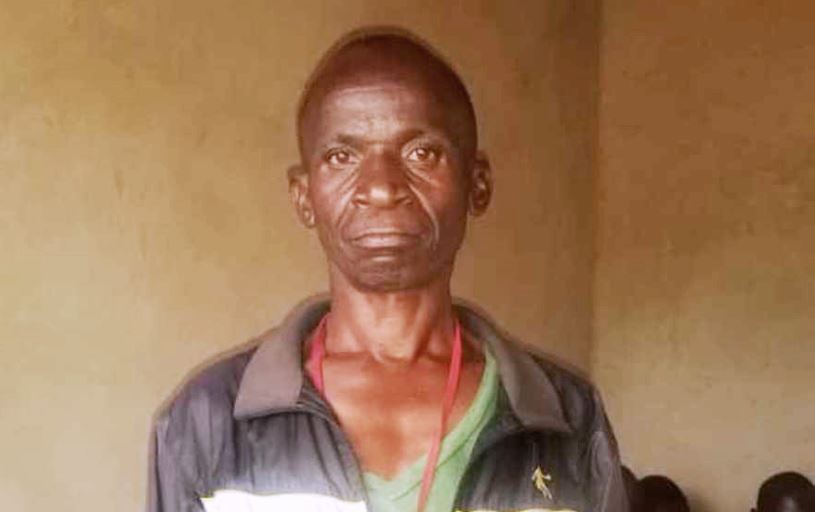
Genocide convict Gervais Hategekimana, arrested on 8/24/2018 in Rwanda. Photo: Igihe.com
Since 1994 Hategekimana Gervais had eluded authorities that had been looking for him in connection with committing genocide in the current Muhanga district.
During the 1994 genocide against Tutsi, the suspect was very instrumental in the gruesome murder of Tutsi at former Nyabikenke Commune.
After the genocide, Hategekimana fled to neighboring DRC. He was later in 2008 charged and sentenced to 15 years in prison by the Gacaca community courts in his absence.
Hategekimana later returned to Rwanda and settled in Nyamasheke district and obtained a national ID under new name Ndayambaje Gervais.
With the faked name and new district away from where he committed the genocide crimes, he continued to elude authorities that had always pursued him to serve his sentence.
However, Ndayambaje Gervais ran out of luck on Friday when he decided to visit his ancestral village at Gasagara in Muhanga district and was arrested by community members on night patrol.
He was asked to produce identification documents and found to bear very different names from what he is actually well known of in this village. He was arrested and taken to the Sector office which later forwarded him to Kiyumba Police station.
Ndayisaba Aimable the Rongi Sector Executive Secretary confirmed to IGIHE that indeed Ndayambaje was being held pending further investigations.
“We have handed him to prosecution for further investigations of the previous case in which he was found guilty and sentenced in absentia”.
Ifoto/Daily mail: Donathila, uwarokotse jenoside yakorewe abatutsi i Nyamata
Imyaka irenga makumyabiri n’umwe abacitse ku icumu babuze ababo barenga miliyoni, n’imitungo ibarirwa mu mamiliyari menshi y’amanyarwanda isahuwe indi igasenywa muri jenoside yakorewe abatutsi mu 1994. Icyumweru cyasojwe ku itariki 29/06/2015, kitiriwe icyumweru cy’ubufasha mu mategeko , Leta n’abafatanyabikorwa ba sosiyete sivile bari barahiriye kurangiza imanza hafi ibihumbi 50 Leta ivuga ko zitegereje kurangizwa.
Iyi mibare icyakora ntivugwaho rumwe. Minisitiri w’ubutabera bwana Busingye Johnston yatangarije RBA ku itariki 24/05/201 ko imanza zitararangizwa ari hafi ibihumbi 10. Iyo mibare yaje guterwa utwatsi n’abayobozi b’uturere munama bagiranye na minisiteri y’ubutabera ku itariki 22/062015 bavuga ko abacitse ku icumu batarishyurwa ari benshi cyane. Aba bayobozi b’inzego zibanze icyumweru gishize bagaragaje imanza zirenga ibihumbi 50 zitararangizwa bemeza ko hari n’izindi. Ntibyoroshye kumenya umubare nyawo w’abacitse ku icumu batarishyurwa dore ko n’imiryango yabo itabasha gukora iryo barura kubera amikoro make.
Bahatirwa kubabarira
Abacitse ku icumu benshi mu bice bitandukanye by’igihugu bavuga ko bahatiwe n’ubuyobozi kubabarira ababasahuye bakanabasenyera ngo ntibabishyuze mu rwego rw’ubumwe n’ubwiyunge. Abacitse ku icumu bakangurirwa kandi kubabarira ngo kuko benshi mu bakoze jenoside ari abakene cyane. Abarenga 1250 icyumweru gishize cyonyine basoneye ababasahuye imitungo muri Jenoside ahanini kugirango abo bacitse ku icumu batarebwa ikijisho n’abayobozi na bo bari ku gitutu cyo kwesa imihigo. Igihangayikishije ni uko abarokotse jenoside bahatirwa kubabarira na bo ubwabo ari abasizwe iheruheru na jenoside badafite ubushobozi buhagije bwo kwibeshaho. Bamwe basanga kuba abayobozi bahatira abacitse ku icumu kubabarira ababasahuye ari uburyo Leta nk’umufatanyacyaha muri jenoside iri guhunga inshingano zayo zo gutanga indishyi uwo mutwaro ikawushyira ku bacitse ku icumu bakorewe icyaha. Abakoze jenoside bafite ubwishyu benshi barigishije imitungo yabo abandi bayigurisha rwihishwa mu rwego rwo guhunga inshingano zo kwishyura ibyo basahuye muri jenoside.
Abatazabasha kwishyura bazakorera Leta TIG aho kwishyura abo basahuye
Zimwe mu mpamvu nyamukuru zituma iki kibazo cyo kurangiza imanza za gacaca gikomeza kuba ingorabahizi ni uko benshi mu bagomba kwishyura bivugwa ko ari abakene cyane nta bushobozi bafite.
Leta kugeza ubu nta buryo irashyiraho bwerekana uko abacitse ku icumu basahuwe imitungo bazishyurwa mu gihe ababasahuye nta bwishyu bafite cyangwa batamenyekanye. Ku rundi ruhande Leta ivuga ko abatazashobora kwishyura bazakora TIG.
Umuryango IBUKA mu nyandiko washyikirije inteko ishinga amategeko mu mwaka wa 2012 wari wagaragaje ko uburyo burambye bwo gukemura iki kibazo kimwe n’ibindi bibazo by’indishyi za jenoside ari uko Leta yashyiraho ikigega cy’indishyi. Ubundi buryo uwo muryango wasabaga ko bwakwifashishwa bwari ugukoresha imirimo nsimburangifungo (TIG) abatabashije kwishyura, amafaranga avuyemo agahabwa abacitse ku icumu batishyuwe. Kugeza ubu, iyi mpuruza ya IBUKA n’indi miryango y’abacitse ku icumu ntabwo irashyirwa mu bikorwa.
Indi mbogamizi yagaragaye ni iy’abayobozi b’ibanze ari na bo bafite inshingano zo kurangiza imanza banga kwishyuriza abacitse ku icumu kubera amasano bafitanye n’abasahuye bakanakora jenoside. Ibi bituma abacitse ku icumu bahora basiragizwa ku mirenge, no muzindi nzego z’ibanze basaba kurangirizwa imanza. Ibindi bibazo nI ibijyanye n’uko abacitse ku icumu basabwa kubanza guteresha kashe mpuruza ku rukiko rw’ibanze ibyo bikagorana cyane dore ko rimwe na rimwe amarangiza rubanza hari ubwo aba afite udukosa tw’imyandikire kuko yakozwe yihuta mu gihe cy’inkiko gacaca.
Abacitse ku icumu bagaruka kandi ku gaciro k’ibyishyurwa, aho basanga harimo akarengane kuko amafaranga bishyurwa yarabazwe mu myaka irenga icumi ishize uyu munsi ifaranga rikaba ryarakomeje kugenda rita agaciro kandi nta nyungu z’ubukererwe bahabwa.
N’ubwo bigaragara ko Leta yashyize ubushake mu kurangiza imanza z’imitungo zaciwe na Gacaca nta gushidikanya ko inzira y’ubutabera bwuzuye ku bacitse ku icumu basizwe iheruruheru na jenoside ikiri ndende. End
Minisitiri w’Intebe Anastase Murekezi yagaragaje iki kibazo cy’abatsinzwe imanza z’imitungo binangiye kwishyura ku bagize Inteko Ishinga Amategeko, imitwe yombi, kuwa Mbere tariki 6 Mata; Yabagezagaho ibijyanye n’ibimaze kugerwaho n’urwego rw’ubutabera muri gahunda za Guverinoma.
Minisitiri w’intebe yagaragaje ko mu Rwanda ubushobozi bwo guca imanza bugenda bwiyongera buri mwaka, aho Imanza zasigaye zitaburanishijwe mu mwaka wa 2013/2014 zingana na 24,338 ni ukuvuga igabanuka ringana na 42,9% ugereranyije n’izasigaye zitaburani-shijwe mu mwaka wa 2011/2012 zageraga ku 42,670.
Yagaragaje ko inkiko Gacaca zashoje imirimo yazo muri Kamena 2012 zaciye imanza zigera kuri 1,958,634. Imanza 1,320,554 ni zo zaciwe ku bijyanye n’imitungo, muri zo 1,266,632 ni iz’abahamwe n’icyaha bakaba barategetswe kwishyura imitungo bangije.
Minisitiri yavuze ko ubusesenguzi bwakozwe ku manza zaciwe n’inkiko Gacaca bwerekanye ko hari izigoranye kurangizwa bitewe n’impamvu zitandukanye.
Yagize ati „Isesengura ry’imanza zaciwe n’Inkiko Gacaca zigomba kurangizwa ryagaragaje ko hakiri ibibazo bigomba kwitonderwa mu irangiza ryazo: Hagaragaye ko imanza 5,298 zaburiwe ubwishyu, imanza 1,277 ntizujuje ibisabwa kugira ngo zirangizwe (zimwe ziburaho imwe mu mikono y’abari inyangamugayo, izindi nta kashi mpuruza, n’ibindi’’.
Abadepite babajije Minisitiri w’Intebe icyo leta igiye gukora kugira ngo iki kibazo kirangire kuko hari n’abatsinze izi manza ariko basa n’abibagiwe kubona ibyo batsindiye.
Yabasubije ko abanze kwishyura imitungo bangije ku bushake bishyuzwe ku ngufu za Leta, kandi ababishinzwe bihaye igihe kitarenze umwaka ngo babe barangije ibi bibazo.
Yongeyeho ko mu byo Guverinoma izitaho mu buryo bwihariye mu gihe kiri imbere harimo gukomeza gukurikira irangizwa ry’imanza zaciwe n’Inkiko Gacaca n’izaciwe burundu n’izindi Nkiko.
Minisitiri w’Ubutabera Johnson Busingye yongeyeho ko abatsindiye imitungo mu nkiko Gacaca badakwiye gucika intege kuko hari ibirimo gukorwa kuri iki kibazo.
Yagize ati “Abatsindiye imitungo mu nkiko Gacaca ntibakwiye gucika intege ngo bazibukire ibyo batsindiye, twatangiye kwegeranya amadosiye y’abatsinzwe ngo bishyure.’’
Abadepite kandi bagarutse ku kibazo cy’ababuze ubwishyu basaba ko hakigwa uko bakishyura binyujijwe mu gukora imirimo ifitiye igihugu akamaro(TIG).
Better late than never! The New Times Rwanda published two consecutive articles on the need to provide reparation for survivors. It is very encouraging that the state media is now covering sensitive topics such as reparation for survivors. The issue of reparations including compensation was considered as a taboo subject in the Rwandan pro- state media. Survivors organisations have been campaigning for a reparation fund for over two decades. Their call remained unheeded and some times categorically rejected by the government of Rwanda via the ministry of Justice. As a result, many survivors especially elderly, those who have been raped, and those who were severely handicapped during the genocide passed away before they receive justice in form of reparation. The biggest problem was and remains only one—The Government’s political will to set up the framework for reparation.
Kigali 21/03/2015, by New Times Rwanda: When the Gacaca courts closed their doors in 2012, close to two million suspects of the 1994 Genocide against the Tutsi had passed through its system.
The Genocide was not just about physical elimination of the Tutsi, it went far beyond; the killers went as far as trying to eliminate their very existence by destroying their homes and banana plantations and killing their animals.
The scars that were left by the Genocide have not gone away. Stark reminders of where once stood a home and its inhabitants are abandoned homesteads with twenty-year old trees sprouting out of what were once bedrooms.
Survivors have for the past two decades been busy trying to piece their lives together, and any hope of being compensated for their loss has slowly ebbed away as court orders to that effect have fallen on deaf ears.
Some high profile cases of prominent personalities, such as Frodouard Karamira, one of the architects of the Genocide, ended with the court ordering that his victims be compensated from his vast property. The orders remained a dead letter and that was 15 years ago.
While it is understandable that the judicial system had other priorities, such as undergoing a complete overhaul, sometimes being rebuilt from scratch, it has now come of age and can tackle the issue of Genocide compensations.
As commemorations of the 21st anniversary of the Genocide are just around the corner, survivors should be given a new lease of hope that, finally, their patience was not all in vain.
Ubutabera bw’u Rwanda buremera ko hari abakoze Jenoside mu Rwanda, kugeza ubu baburiwe irengero kandi bari imbere mu gihugu. Kuva inkiko Gacaca zisoje imirimo yazo gukurikirana ba ruharwa bakoze Jenoside bisa nkaho bitagishishikaje Leta. Hari n’abacitse ku icumu bavuga ubushake bwa politiki buke. Kamali Jean Damascene avuga ko uwishe umuryango we agakatirwa na Gacaca yamubonye i byumba mu karere ka Gicumbi aho yimukiye nyuma yo gukora jenoside i Gikondo mu mugi wa Kigali. Uyu wacitse ku icumu avuga ko yabimenyesheje polisi nyamara na magingo aya ntacyo yamufashije ngo uwo mwicanyi afatwe.
Bamwe mu bakoze Jenoside bari imbere mu gihugu ngo baba bakoresha uburyo bwo kwihisha, nko mu gihe batumwe ibyangombwa by’aho bari batuye mbere, bo bagahitamo kujya kubishakira aho batazwi.
Urwego rw’Umushinjacyaha rushinzwe gukurikirana abakekwaho gukora ibyaha bya Jenoside bari hanze y’igihugu, ruravuga abantu barenga ibihumbi 70 baburanishijwe na Gacaca badahari, ko kandi bamwe muri aba bihishe imbere mu gihugu imbere.
Ubwo ikinyamakuru Izuba Rirashe cyabazaga uru rwego niba rutarashyize ingufu mu gukurikirana abakekwaho gukora Jenoside bari hanze y’igihugu bityo abari imbere mu gihugu bakibagirana, Umuyobozi w’uru rwego yavuze ko ibi atari ukuri.
Jean Bosco Siboyintore yagize ati “Inzego z’igihugu zishinzwe ikurikiranacyaha zirabizi, mu isoza ry’Inkiko Gacaca ryarangiye kuwa 18-6-2012, mu madosiye zashyikirije ubushinjacyaha harimo n’abo zaburanishije badahari 71 .658 kandi birazwi ko bamwe bari mu Rwanda.”
Siboyintore yavuze ko aba bantu kuba badari babonwamo ibyiciro bibiri, aba ngo barimo abahunze u Rwanda bakajya hanze, ariko hakaba n’abandi baravaga aho batuye bakimukira mu tundi Turere mu gihe bumvaga barimo guhwihwiswa mu gihe cy’iburanisha rya Gacaca.
Yagize ati “Hari abahinduye Uturere bakajya mu tundi kandi yewe batanahinduye n’imyirondoro, umuntu akaba yava nka Rusizi akajya mu Karere ka Nyagatare agatura.”
Siboyintore aravuga ko nta kuntu wabuza umuntu kujya ahandi kandi n’ubusanzwe Itegeko Nshinga ry’u Rwanda rivuga ko Umunyarwanda atura aho ashatse.
Ubutabera bw’u Rwanda buravuga ko n’ubwo ngo aba bantu bagenda gute bakazimira, ariko ngo ku bufatanye bwa Polisi y’Igihugu, ubushinjacyaha n’abaturage, bazatabwa muri yombi.
Ubushinjacyaha kandi buravuga ko ku bufatanye bw’abaturage, aribo bagomba kugaragariza Inkiko aho abo bantu bihishe mu gihugu, kuko n’ubundi hari itegeko rivuga ko ibizagaragara mu gihe inkiko Gacaca zasoje bizakurikiranwa n’Inkiko zisanzwe.
The International Criminal Tribunal for Rwanda (ICTR) must in theory close its doors on December 31. On November 8, it celebrated twenty years of existence. While the Tribunal’s contribution to fighting impunity is clear, observers point to remaining grey areas of its legacy. These include the failure to prosecute alleged crimes by one of the parties to the 1994 conflict in Rwanda; lack of any mechanism for victim reparations; acquitted persons with nowhere to go; and nine top suspects still on the run.
The ICTR was set up under UN Security Council Resolution 955, which gave it a mandate to hunt down and bring to justice those most responsible for “genocide and other serious violations of international humanitarian law committed in the territory of Rwanda, and Rwandan citizens responsible for genocide and other such violations committed in the territory of neighbouring States, between 1 January 1994 and 31 December 1994.”
Twenty years on, observers agree on one point: most, if not all the individuals tried by the ICTR would still be free if the international community had not created this Tribunal, based in Arusha, northern Tanzania.
Since its first trial started in 1997, the ICTR has convicted 60 people (of whom seven are still on appeal) and acquitted 14 others accused of having played a leading role in the anti-Tutsi genocide. One witness and one investigator have also been tried and sentenced for contempt of court. Those convicted include former Prime Minister Jean-Kambanda and other members of his government, army generals, businessmen, clergy and members of the media.
But some analysts, like French sociologist André Guichaoua who has testified as an expert in several ICTR trials, think the Tribunal has not fully implemented its mandate. “Choosing to focus on prosecuting and trying the authors of the genocide was justified in the conditions that were those of the ICTR when it was set up, as well as a duty towards the victims and survivors,” he said in a recent interview with Hirondelle News. “But the fact that successive Prosecutors subsequently bowed – with the blessing of the UN Security Council – to the refusal of the military men in power (in Kigali) to have the whole of the Court’s mandate carried out has weakened its credibility and the scope of its judgments, truth telling and most certainly the appeasing of passions and controversies between parties to the conflict,” he said. “So the task given to the ICTR has not been completed,” added Guichaoua, in reference to crimes allegedly perpetrated by members of the RPA, former armed wing of the ex-rebel Rwandan Patriotic Front (RPF) now in power in Kigali.
Current ICTR Prosecutor Hassan Bubacar Jallow refutes this allegation. At a press conference on November 5 at the Tribunal headquarters, the Gambian lawyer said his team had “never been prevented from investigating” allegations against the RPF. Jallow thus rejected claims that some Western powers, notably the United States, have blocked the “special investigations” started by Swiss former Prosecutor Carla del Ponte, who was Jallow’s predecessor. “We have conducted investigations and concluded that there was a case, the case concerning the killing of (Catholic) bishops” in June 1994 in Kabgayi, central Rwanda, Jallow said.
“Mandate not fulfilled”
Among the 13 clergy killed – almost all Hutus – were three bishops. The case was entrusted to Rwanda by the ICTR Prosecutor. In October 2008, following a trial, a Rwandan court acquitted General Wilson Gumisiriza and Major Wilson Ukwishaka and sentenced the two other co-accused, both of lesser rank, to five years in prison.
But Human Rights Watch (HRW), which says it helped Jallow’s team in this investigation, does not think justice has been done. “The case was not vigorously prosecuted and did not pursue the evidence suggesting a planned military operation ordered by more senior level commanders,” HRW Executive Director Kenneth Roth said in a letter to Jallow on August 14, 2009. “The prosecutor did not pursue more senior commanders who had been involved in the military operation and against whom evidence exists.”
“We continue to believe that your mandate as Chief Prosecutor at the ICTR will not be fulfilled until you pursue all senior commanders responsible for atrocities committed in Rwanda in 1994,” Roth also said in the letter to Jallow.
For genocide survivors, their main criticism of the Tribunal is the absence in its governing texts of any mechanism to provide reparations for victims. This is a criticism not so much of the ICTR itself but of the UN Security Council which set it up. “The ICTR still lacks this important component of reconciliation because it doesn’t have a fund to compensate victims,” said Naphtal Ahishakiye, Secretary General of the main survivors’ organization Ibuka (meaning “Remember” in the Rwandan language), on November 8.
Ibuka President Jean-Pierre Dusingizemungu launched the same appeal on April 10 this year as he was attending a genocide remembrance ceremony at the ICTR’s headquarters. “As we commemorate the 20th anniversary of the genocide, reparations are at the heart of what Ibuka is asking for,” he said. “And we think this is the moment for the (Rwandan) government and the international community to redouble their efforts to put in place a reparation mechanism for victims.”
Whereas the ICTR Statutes do not provide for any reparation or participation mechanism for victims, those of the International Criminal Court (ICC) do. At the ICC, victims have a right to present their observations and question witnesses through their representatives. At the end of a trial, they can ask for reparations for harm suffered. The Rome Statute which founded the ICC also set up a Trust Fund for Victims, which is independent of the Court. “Our recommendation now is that an international Fund be set up for victims,” the Ibuka president concluded.
Three “big fish” still on the run
The Collective of survivors’ associations is also calling for the international community to continue hunting for the nine ICTR accused still on the run so that “the closure of the ICTR does not signal the end of justice”. Six of those still at large have had their cases transferred to Rwanda, which now has the first responsibility to track them down. The three others, including rich businessman Félicien Kabuga said to be the financier of the genocide, will be tried if they are caught by the residual Mechanism for International Criminal Tribunals (MICT). In a press statement on November 8, as the ICTR was celebrating its 20th anniversary, the Security Council called on all member states to “cooperate with the ICTR, the Residual Mechanism, and the Government of Rwanda in the arrests and prosecutions of the remaining nine indicted fugitives”. ICTR Prosecutor Jallow made the same call from Arusha. “The nine fugitives who remain at large (…) need to be arrested and brought to justice,” he said. “This can be done only through the active collaboration of all states to secure the arrest and transfer of these fugitives for trial.”
Billionnaire Félicien Kabuga, accused notably of having ordered the machetes used to kill Tutsis, is believed by the ICTR to be hiding in Kenya, only six hours by road from the seat of the Tribunal in Arusha. The second “big fish”, former Defence Minister Augustin Bizimana, is said to be in eastern Democratic Republic of Congo (DRC). The third is former presidential guard commander Protais Mpiranya. He was in charge of the élite protection unit of ex-president Juvénal Habyarimana, which was active in the massacres. Mpiranya, who was a commanding member of the FDLR Rwandan Hutu rebels in the eastern DRC, is being protected, according to the ICTR, by senior Zimbabwean officials. However, some Rwandan sources say Bizimana and Mpiranya have died of natural causes. ICTR Prosecutor Jallow contests this.
On another issue, the ICTR recognizes it has had enormous difficulty finding host countries for the people it has acquitted, and for convicted persons who have served their sentences. Of the 14 acquitted so far, only six have found host countries while the others are still in an ICTR “safe house” in Arusha, along with three people who have served their sentences. “I humbly call on all governments present to see how they can assume this international responsibility and agree to host persons acquitted or freed by the ICTR after serving their sentence,” said ICTR Tanzanian Deputy President Mohammed Gharib Bilal at the November 8 ceremony. According to the agreement between Tanzania and the UN, people who have been definitively tried by the ICTR must leave Tanzanian territory.
The fact that acquitted persons cannot leave Tanzania represents a “failure” for the ICTR and a “big human rights challenge”, according to ICTR Registrar Bongani Majola.
Mukaroza Laurence wo mu Murenge wa Kigina, Akarere ka Kirehe, warokotse Jenoside yakorewe Abatusi yishwe urw’agashinyaguro mu gicuku cyo kuwa 15 Ukwakira 2010.
Nyina na murumuna we bishwe n’abo mu muryango yashatsemo, ndetse ngo umugabo we Kanyangoga ni we wamusohoye aho yari yihishe muri Mata 1994.
Mukaroza yari umutangabuhamya mu Nkiko Gacaca mu rubanza rw’abishe nyina na murumuna we, atotezwa kenshi n’abo mu muryango yashatsemo, ndetse ngo n’umugabo we yamutegetse kudashinja bene wabo, bitaba ibyo agapfa
Mukaroza yaje gusangwa ku gasi, yambaye ubusa iruhande rw’ahataburuwe imibiri ya nyina n’uwa murumuna we, basanze ahirita
Kuwa 30 Werurwe 2010, Urukiko Rukuru, Urugereko rwa Rwamagana rwanzuye ko umusore witwa Bikorimana Simon ari we wishe Mukaroza. Abandi bakekwagaho uruhare bahanaguweho icyaha, Ubushinjacyaha bujuririra Urukiko rw’Ikirenga.
Urukiko rw’Ikirenga rwaburanishije mu bujurire, kuri uyu wa Mbere, urubanza ruregwamo Bikorimana Simon, Hakizimana Sylvatus, Ngomije Elysee (muramu wa nyakwigendera) na Kanyangoga Edouard wari umugabo wa Mukaroza.
Ubwo urubanza rwatangiraga kuburanishwa mu mizi, Bikorimana wunganirwa na Me Musafiri Jerome, yamenyeshejwe ibyaha bibiri ashinjwa, ari byo gusambanya ku gahato n’ubwicanyi. Hakizimana, Ngomije na Kanyangoga bo bashinjwa gucura umugambi wo kwica Mukaroza, n’ubufatanyacyaha mu ishyirwa mu bikorwa ryawo.
Ubushinjacyaha bwahise bujuririra icyo cyemezo, ariko na Bikorimana ahita akijuririra. Ubushinjacyaha bwavuze ko bwajuriye bitewe n’uko Urukiko Rukuru rwavuze ko Bikorimana yemeye icyaha rukamugabanyiriza igihano, kandi nyamara ingingo ikuraho igihano cy’urupfu yaragisimbuje icya burundu y’umwihariko ku cyaha cy’ubugome nk’icyakorewe Mukaroza.
Impamvu ya kabiri y’Ubujurire bw’Ubushinjacyaha ni ukuba Bikorimana yaremeye ibyaha mu mabazwa ye ya mbere, yagera mu rukiko agahindura imvugo, akavuga ko yari yarabyemeye kubera kuzahazwa n’inkoni yakubiswe n’Abapolisi.
Uwari uhagarariye Ubushinjacyaha yasoje asaba ko Urukiko rwakwemera hakumvwa umutangabuhamya witwa IP Niyomugabo Emmanuel, Umupolisi wageze aho icyaha cyabereye, akaba atari yarumviswe mu Rukiko Rukuru, ibi akaba abyemererwa n’ingingo ya 62 y’itegeko ry’Ibimenyetso (Law of Evidence).
Ubwo yasabwaga gusobanura impamvu y’ubujurire bwe, Bikorimana yasubije ko yarenganyijwe, gusa byari bigoye gufata nk’ukuri ibyo yavugaga, kuko yari afite ubwoba bwinshi bwatumaga icyo avuze ahita akivuguruza ako kanya.
Nyuma yo kuyoborwa n’Inteko iburanisha, yasubije ibibazo yabajijwe, aho yagaragaje ko Mukaroza yishwe na Berinyuma Pierre wabanje kumusambanya, nyuma Bikorimana amuhereza igiti cy’umwumbati ikimujombagura mu gitsina, bamusiga aho ari intere.
Nubwo adasobanura neza uwabatumye ngo umuryango wa Mukaroza uve mu gihirahiro, Bikorimana yavuze ko ibyo Berinyuma yakoze atari yabyibwirije.
Me Musafiri umwunganira, yahise asaba Urukiko ko hashingirwa ku myanzuro yashyikirije urukiko igahuzwa n’ibyavuzwe n’abatangabuhamya, kuko ibyo Umukiliya we avugiye mu rukiko birimo guhuzagurika no kuvuguruzanya.
Haba hari isano hagati y’Urupfu rwa Mukaroza n’ubuhamya yatanze kuri muramu we muri Gacaca?
Ubushinjacyaha bwagaragaje ko Mukaroza yaba yarishwe nyuma y’igihe kitari gito atotezwa n’abo mu muryango yashatsemo ndetse n’umugabo we bwite, bamubuzaga gutanga amakuru ku rupfu rwa nyina na murumuna we.
Ibi binashimangirwa n’umwe mu bo mu muryango we wabwiye IGIHE ko muramu we witwa Bugingo washinjwe uruhare mu rupfu rwa nyina na murumuna we yigeze gufungurwa, aza kumubwira (Mukaroza) ko agiye kuzamwica nk’uko yishe nyina.
Mbere yo gushiramo umwuka, Mukaroza hari amazina yasize avuze
Ubushinjacyaha bwagaragaje ko mbere yo gupfa, Mukaroza yavugaga ko azize umugabo we Kanyangoga na muramu we Ngomije, ariko biza gushidikanywaho ndetse bigibwaho impaka ubwo umutangabuhamya IP Niyomugabo yavugaga ko ahagera yasanze nyakwigendera avuga amazina y’abantu batatu, aho yavugaga ngo “Nzize Berinyuma, Ngomije na Kanyangoga.”
Nyuma yo kumva umutangabuhamya, no kwibutsa Bikorimana ko mu mabazwa ye mu Bugenzacyaha no mu Bushinjacyaha yari yavuze ko Mukaroza yambuwe imyenda na Berinyuma afatanyije na Hakizimana Sylvatus, hahise hahabwa umwanya buri wese uregwa kugira icyo avuga, bose bahakana ibyo baregwa.
Abunganira abaregwa bashimangiraga ko nta bimenyetso bifatika Ubushinjacyaha bugaragaza uretse amagambo yavuzwe na nyakwigendera mbere y’uko apfa, ariko basaba urukiko kudaha agaciro ayo magambo, ngo kuko uwayavugaga yari yamaze guta ubwenge.
Ubushinjacyaha bwahise busaba kutitiranya inyandiko za muganga, aho yasobanuye ko “Traumatisme” (ihungabana) ivugwa muri raporo ya muganga ari uburyo ibikomere yari afite byari bimeze, ikaba yari “Traumatisme physique” (ibikomere by’umubiri byari mu gitsina) byaganishaga kuri “Traumatisme Psychique”(ihungabana ryo mu mutwe).
Nyuma yo kumva impande zose zivugwa muri uru rubanza, urukiko rwasubitse iburanisha, rwanzura ko rizasubukurwa kuwa 23 Mutarama 2015 saa yine za mu gitondo (10:00 am) hasomwa imyanzuro ya rwo mu Bujurire.
Icyo gihe ni ho Umuryango wa Mukaroza Laurence avukamo n’abana be, bategereje kuzamenya ukuri ku rupfu rw’uwo mubyeyi, ahanini bakaba bashaka kumenya uwatumye Bikorimana na Berinyuma, kuko ari bo bagaragaza uruhare rudashidikanywaho mu rupfu rwe, ariko akaba nta kindi cyabahuzaga, kuko aba basore bombi bari abapagasi bakomoka mu Burundi.
Gen. Paul Rwarakabije, Head of Rwanda correctional services (RCS) PHOTO/Igihe.com
In April, this year, a friend, who is a senior journalist in one of the biggest media houses in the United Kingdom, was in the country as Rwandans prepared to commemorate 20 years after the Genocide against the Tutsi.
He was, however, not just on an ordinary assignment like the hundreds of foreign journalists that descended on Kigali around the same time. For him, it was an emotional return to a country he last covered in 1994, fresh from the horrors of genocide, with streets strewn with dead bodies, and the country on its knees.
One of the places he was keen to visit was the Kigali Central Prison, also referred to as ‘1930’.
The last time he had visited the place, going by the video clips he had with him of 20 years back, the facility was drenched in filth, children lumped therein because they had to stay with their parents, while others were juveniles who had participated in the Genocide.
He did visit ‘1930’ briefly and even as he could not go beyond the compound, what he saw, and when you juxtapose the images taken there 20 years ago and now, the difference is unimaginable.
Inmates he managed to see from outside were leisurely playing basketball on a decent court inside the premises, while the environment around the place is worlds apart from the one he saw in1994.
This is not unique to the correctional facility. It is the same story at all the ‘prisons’ countrywide, partly a reflection of Rwanda’s transition from the penal to correctional system.
However, despite this milestone, I think Rwanda Correctional Services is getting it wrong in the keeping a lid on the few cases of prison breaks that have occurred over the past few years – as indicated in a story published in this newspaper yesterday.
The recent case of the man who is believed to have escaped from prison in the Southern Province only to wipe out an innocent family that had taken him in is a rude reminder of how dangerous escapees from jail can be to the public.
Similar incidents have previously taken place with the most prominent being the escape last year of five people from the Karubanda Prison in Huye town, whose identities the public never got to know.
The world over, even from the most fortified prisons, we have for years heard of prison breaks and this is by no means indicative of the inefficiency of the prisons’ authorities. Inmates today are as sophisticated as the rest of society and once in a while can beat even the most sophisticated security and escape.
But the smartest and honourable thing for correctional authorities to do is to inform the public of any inmate that has escaped, and to do so timely, to ensure the public is aware of the presence of such characters in their midst. This would not only lead to their re-arrest but would also prevent crimes that these escapees may commit in the process.
For instance, the photos of escapees can be published in the media so the public can be on the lookout and help in efforts to re-arrest them.
Rwandans have proven they are more than willing to cooperate in this regard, at least going by the success of the community policing programme.
As such, Rwanda Correctional Services should act swiftly to make public the identities of those that have escaped from jail if the prisons authorities are to get the full support of the public which they badly need in such circumstances; but also not to endanger people’s lives.
Needless to say, the correctional approach of handling convicted criminals could go a long way in averting such unnecessary prison breaks.
Once inmates get to understand that their incarceration is not to punish them, but rather a means to rehabilitate them and make them more responsible members of society (upon completion of their sentences), they will opt to cooperate and quietly serve their time. END
The writer is an editor at The New Times Publications Ltd
In a country with no tradition of institutional care for the elderly, Rwanda’s widows and survivors of the 1994 mass killings seek dignity at the end of their lives.
SAVE, Rwanda — In the remote hillside village of Save in eucalyptus-covered southern Rwanda, Emmaculate Niwemfite sits on a straw mat near the entry to her two-room apartment. Her door stands ajar, halving the room with a beam of light. She sits in the shadows.
Niwemfite lives by herself, surrounded by stark walls taped with photos of Christian iconography. It’s been 20 years since her husband, children and entire family were killed in the genocide. Afterwards, unable to live in proximity to their killers, she moved into this village. “I’m just alone,” she now laments.
Niwemfite is 65, suffers from asthma, and is unable to walk much due to problems with her legs sustained in a bad beating during the war. She says she spends two weeks a month in a hospital. She has no family left, so the daughters of her friends come to help with household chores and she earns an income from renting another home she owns. But she fears solitude as she ages.
“Imagine I die in my bed,” she says. “No one will know.”
In a culture with no tradition of institutional elder care, Rwanda’s large families have watched over their aging parents since time immemorial. But during the genocide, at least 800,000 Rwandans were killed—300,000 of them children. As many as one-sixth of the genocide survivors were widowed. Today a Rwandan woman can expect to live until 65, but many of these women, who’ve spent years displaying unimaginable self-sufficiency, have been left without children to care for them as they grow old.
Nina Strochlic/The Daily Beast
Niwemfite is a member of a widows collective called Duhozanye, a group that assembled after the genocide to reconstruct a decimated society. They began by building themselves houses and planting seeds in their fields. Two decades later, the organization’s leaders have focused their efforts on constructing a senior care center to assist women like Niwemfite, aging genocide survivors whose families were wiped out in the genocide, leaving no children, or just one, to care for them in old age.
The effort is led by Daphrose Mukarutamu, a statuesque figure in a red embroidered dress and short, sweeping hairdo. Mukarutamu is the founder and president of Duhozanye—which means, “Let us console one another”—and as she moves through the villages where Duhozanye’s members are spread, her formidable presence draws a trail of chattery women.
Mukarutamu clutches both hands to her heart when asked about those early days during and after the killing. She had left on a 2.5-hour trip for the capital of Kigali the night before war broke out. It was the last time she’d see her family. When she returned, a neighbor told her that her husband and eight of her 11 children had been killed.
“Imagine I die in my bed. No one will know.”
“At that time we thought that even death doesn’t like us,” Mukarutamu says of the survivors.
Barely five months later, Mukarutamu gathered fellow widows to start Duhozanye.
Some 330 of them attended that first meeting and became the group’s founders. For the first two gatherings they wept together. At the third, they stopped crying and started rebuilding. They broke off into groups of a dozen and got to work collecting bricks and salvageable materials from the rubble. From donated seeds, they slowly built back the agriculture they once lived off, and later incorporated sewing and craft cooperatives. “We were living schools,” she remembers.
Today, Duhozanye has 3,000 members scattered over the southern district of Gisagara, organized into small local chapters of two or three dozen women and a central body of leaders from the various villages.
But now, at 67, Mukarutamu worries about herself and her fellow widows. After two decades of hardship and self-sufficiency, another factor beyond their control is creeping up on Duhozanye’s leadership: old age. The organization’s founding members range from late 50s to early 90s. “We’re getting old and will be beneficiaries instead of partners,” she says.
Nina Strochlic/The Daily Beast
Outside the organization’s headquarters, a couple dozen young adults are lounging on the lawn. These are orphans that were taken in by the organization 20 years ago. The majority are now in school elsewhere but return each year during commemoration. After the genocide, more than a hundred orphans were collected and cared for by the women, many of whom had lost most, if not all, of their own children.
Mukarutamu quotes a Rwandan adage about an old, slow rabbit being fed by its children, and then posites the question: “But what if it has none?”
Down the street, Langwida Kanyange sits on the floor of her friend Emmaculate Niwemfite’s small home. She’s younger than the others at 48, but her skin hugs a face so gaunt she looks much older. Kanyange has AIDS, a byproduct of a gang rape she suffered during the genocide. After the bloodshed in Rwanda, an estimated 70 percent of the 200,000 women raped were infected with HIV. Her son was also a result of the attack; he’s now a 20-year-old student finishing secondary school.
She too spends the days at home alone, weakened by the medication she takes. It’s freely provided by the government, but she has trouble getting special food that doesn’t make her ill. “When I don’t have enough to eat it reminds me of the genocide,” she says.
If the members of Duhozanye realize their goal to build a senior center, Kanyange, and Niwemfite would be the first to reap its rewards.
“I will immediately agree because I will be with others—I’d agree the same day, then the group looking after me would be free to do whatever they want,” Niwemfite says.
The center Mukarutamu imagines will provide a safe environment for the elderly, and offer hospice care for those at the end of their days or survivors from the hard-to-reach areas in need of constant medical attention. She foresees a project manager, nurses, social workers, and guards, along with an on-call doctor and legal advisor. Another widows cooperative, Avega, is also currently attempting to open a retirement home for widows of the genocide.
“It’s a moral obligation to take care of elderly people in our society, but now these elderly people are expecting to be taken care of by children, and their children are no longer there because they were killed in genocide,” says Claire Umubyeyi, a Rwandan survivor and 17-year veteran employee of the United Nations. “You’re denied this security of aging in dignity because you don’t have family to take care of you.”
After a generation wiped out by genocide, an age gap has left the country’s elderly population overly reliant on its small labor force. In Rwanda, an unbalanced ratio leaves 83 of every 100 citizens dependent on the leftover 17 for survival.
In Save, the single road running through town is quieter than usual, as most of the residents have gathered at an outdoor genocide remembrance meeting, held in every Rwandan village for a few hours per day during the national week of mourning in April. During these gatherings, survivors and perpetrators alike share their stories—many horrendous—to preserve the national memory and educate future generations.
Even though it was only two decades ago, most of Rwanda’s citizens don’t remember the time of war—61 percent of the population is under the age of 24. But memories of the killing don’t come to light only in yearly national ceremonies. On the drive into the single-road village, a mass grave is said to hold the remains of 3,000 people. Just before commemoration week, the province had uncovered another body and was preparing it for burial.
It will also offer a program for survivors to relay their memories into shards of history as part of a belated healing process many were never offered. “When those people die its like a library is gone,” Umubyeyi says. She was particularly upset when an 84-year-old woman named Mary whom she had grown fond of passed away last year in her rural home with no one there. “We could have benefited off her wisdom.” This center, Umubyeyi says, will “make sure these survivors who have suffered so much get some sort of care and die in peace.”
Duhozanye has the land and the need, but lacks the $300,000 it will cost to build and sustain. In the hopes of raising the money, the organization is writing up grant proposals to send across the world. In January, Umubyeyi and Mukarutamu hope to bring a group of volunteers and potential investors to see Duhozanye’s headquarters and meet its members.
In a dim backroom of a mud hut in Save, 82-year-old Teresa Nyirabutunda sits propped upright in bed by her daughter, Francine. Francine says caring for her mother, who can’t process solid food or move by herself, is similar to having a baby. She was the only survivor of the genocide among her siblings and now worries about caring for both her mother and herself because she, too, is aging. “I live by miracles you can’t believe,” she says.
But even for children struggling to care for elderly parents on their own want to abide by tradition. Francine is adamant that her frail mother stays in her house—“She is my mom. Even if she’s very sick I will look after her until she dies. I wouldn’t let them take her,” she says of having her mother live in the center. She admits, though, that she could desperately use the health care services.
In a country where an almost paradisical landscape somehow hosted the fastest genocide of the 20th century, hurdling such seemingly unconquerable challenges is now woven into the national identity, and Duhozanye’s leaders are confident that battle-worn women like Teresa will have their hardships alleviated before the end.
“Rwanda is country of thousand hills, a thousand problems, and a thousand solutions,” Umubyeyi says




 Nyina na murumuna we bishwe n’abo mu muryango yashatsemo, ndetse ngo umugabo we Kanyangoga ni we wamusohoye aho yari yihishe muri Mata 1994.


