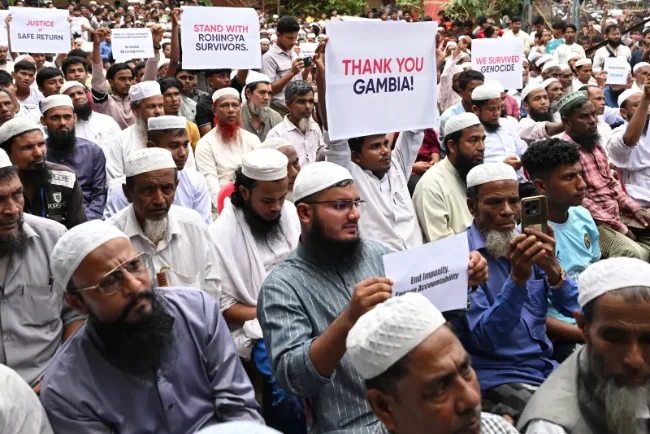
The UN’s top court ruled on November 19, 2026, that Myanmar committed genocide against the Rohingya, a Muslim minority, in a 2017 army campaign that drove more than 700,000 people into Bangladesh. In its 80 years, the International Court of Justice (ICJ) had never before found a state responsible for committing genocide.
As a survivor of the 1994 genocide against the Tutsi in Rwanda, I find the day bittersweet. It is historic for survivors everywhere, because a campaign of extermination has been given its rightful name by the world’s court. It also hurts, because that name keeps being needed.
When some of us came out of 1994 alive, I hoped and wished the world had seen its last genocide. I have lost count since: Srebrenica, Darfur, the Yazidis, the Rohingya, and Sudan again as I write. I have followed the Rohingya case for years and have invited Rohingya friends to our commemoration.
What excites me most is who made this happen. The Gambia, a thin strip of a country and the smallest on mainland Africa, went to court in 2019 for a people thousands of miles away in Asia. Myanmar said Gambia had no right to sue. Genocide is one of the hardest crimes to prove, and the judges split 9 to 6. Gambia won anyway.
I only hope South Africa’s case against Israel at the same court, over the genocide against Palestinians in Gaza, ends the same way.
For the full story, read NPR’s report on the ruling.
Photo: Rohingya refugees watch the court’s ruling on a screen at a camp in Cox’s Bazar, Bangladesh, on November 19, 2026. Salahuddin Ahmed/AFP via Getty Images.




Leave a Reply