Tag: Rwanda

  • Masudi na Yusufu, Abayisilamu Ntazibagirwa

    Masudi na Yusufu, Abayisilamu Ntazibagirwa

    Uyu munsi abayisilamu bizihiza umunsi mukuru wa Eid al-Fitr natekereje ku basilamu babiri bangiriye neza mu bihe bikomeye, hashize imyaka 30.

    Byari  ibihe bigoye cyane, nyuma y’ibyumweru bike jenoside yakorewe abatutsi irangiye. Nta mwenda, nta nkweto, nta babyeyi, nta n’aho kuba hafatika. Inzu nakuriyemo abakoze jenoside bari barayisenye n’ inka z’iwacu baraziriye. Twari tutarashobora no gusubira ku matongo yacu kuko umutekano wari utaragaruka neza. Icyo gihe ntawajyaga ku matongo cyangwa gusagata ( ijambo ritagikoreshwa risobanura gushaka ibiribwa mu mirima y’abahunze) adafite umusirikare w’inkotanyi umuherekeje kuko hari hakiri abicanyi ku misozi.

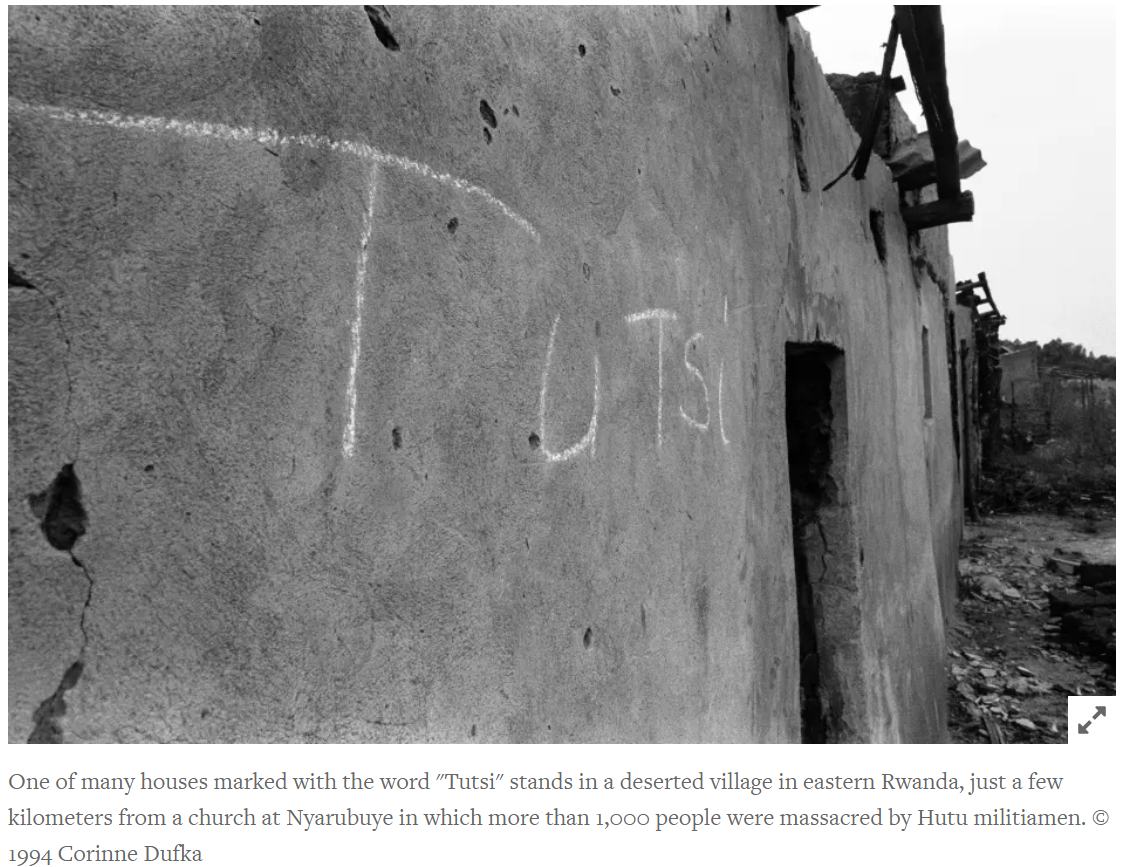
    Mu ma saa cyenda, saa kumi z’igicamunsi navuye mu nzu twari ducumbitsemo, ngana ku isoko rya Kinazi kuzerera. Iyo nzu twabanagamo na babyara banjye ndetse na mushiki wanjye, nayo ibyayo ni urwenya gusa gusa iyo mbitekereje ubu.Yari inzu ubusanzwe yagenewe kuba ububiko (Depot) bw’ imifuka y’amasaka n’ibishyimbo bitegereje kugurishwa, ariko niyo twari dutuyemo. Ku irebe ry’umuryango ry’iyo nzu hari handikishijeho ikara, amagambo ari mu nyuguti nini agira ati:  ‘’iyi nzu yarafashwe’’!  Abari mu Rwanda muri ibyo  bihe nta gushidikanya ko  iyo shusho muyibuka! Ngo hari n’umufande wafashe stade amahoro niba atari urwenya!

    Ubwo  navuye ‘’mu rugo’  ntembera ngana ku kibuga cy’isoko ridatwikiriye, aho nasanze Masudi, umuyisilamu  wampaye impano ntazibagirwa. Ntabwo yari anzi. Nanjye ni ubwa mbere nari mubonye.

    Masudi yari yambaye akagofero k’abayisilamu gafite ibara ry’umweru harimo uturongo tw’umukara dutambitse. Uwo mugabo w’igikara wari mu kigero cy’imyaka nka 40, yacuruzaga ibintu bitandukanye, byose birambuye kuri shitingi hasi. Harimo inkweto za plastiki, intambi z’udutara twa peterori, ibiziriko by’ihene, amasogisi, ibitambaro abagore batega mu mutwe n’ibindi. Nabonaga ari umukire cyane!

    Kandi koko Masudi yari mu bakomeye kuko abandi bacuruzi bacuruzaga muri iryo soko bari bafite agatebo k’ibijumba bejeje cyangwa avoka zihiye ngo bagurishe maze babone udufaranga twa peteroli, amamesa cyangwa akunyu ko guteka!

    Masudi rero yabonye akana k’agahungu ko mu kigero cy’imyaka 10, kambaye ibirenge gusa , n’ivumbi rigera mu mavi, aterura umuguru w’inkweto za kamba-mbili zifite ibara ry’ubururu ahereza ako kana! Akana kamubwiye ko nta mafaranga gafite, maze Masudi akareba mu maso, ahari agira impuhwe. Aragasubiza ati: ‘’ndabizi’’.  Zitware nziguhereye ubuntu.

    Kamba Mbili

    Inkweto za kamba mbili

    Ako kana k’imyaka 10 icyo gihe, ubu ni umugabo ubyaye w’imyaka 40, ari we uri kwandika aka gakuru! Iyo mpano idasanzwe Masudi yampaye, na magingo aya, nyuma y’imyaka 30, yankoze ku mutima. Uko mbonye abayisilamu bo mu Rwanda ndabyibuka.

    Amaze kumpereza izo nkweto, icyo gihe zaguraga inoti ebyeri cyangwa eshatu z’ijana, namanutse niruka n’ibyishimo byinshi, nanga guhita nzambara ngo ntazanduza! Nazirimbye bukeye ku cyumweru!

    Naherukaga kwambara inkweto ababyeyi banjye bakiriho. Kuva ubwo izo Kamba-mbili zanjye nazirazaga ku musego uko mbyutse nkaziteraho akajisho!

    Masudi si we muyisilamu wangiriye neza gusa. Amezi ane mbere ya Masudi hari undi mugabo witwa Yusufu utarahigwaga muri jenoside, twanyuze iwe dushonje cyane hagati muri jenoside, aduha isukari yo kurigata, ntiyanatuvugiriza induru ahubwo aturangira aho guca hatari bariyeri mbi. Yusufu nawe ntiyari atuzi.

    Abayisilamu bose mbifurije umunsi mukuru mwiza!  Murakagira ibyo mutanga n’ibyo musigarana. mbafiteho urwibutso rwiza. Eid Mubarak! Ends

  • Kwibuka30: My Personal Journey Through Genocide

    Kwibuka30: My Personal Journey Through Genocide

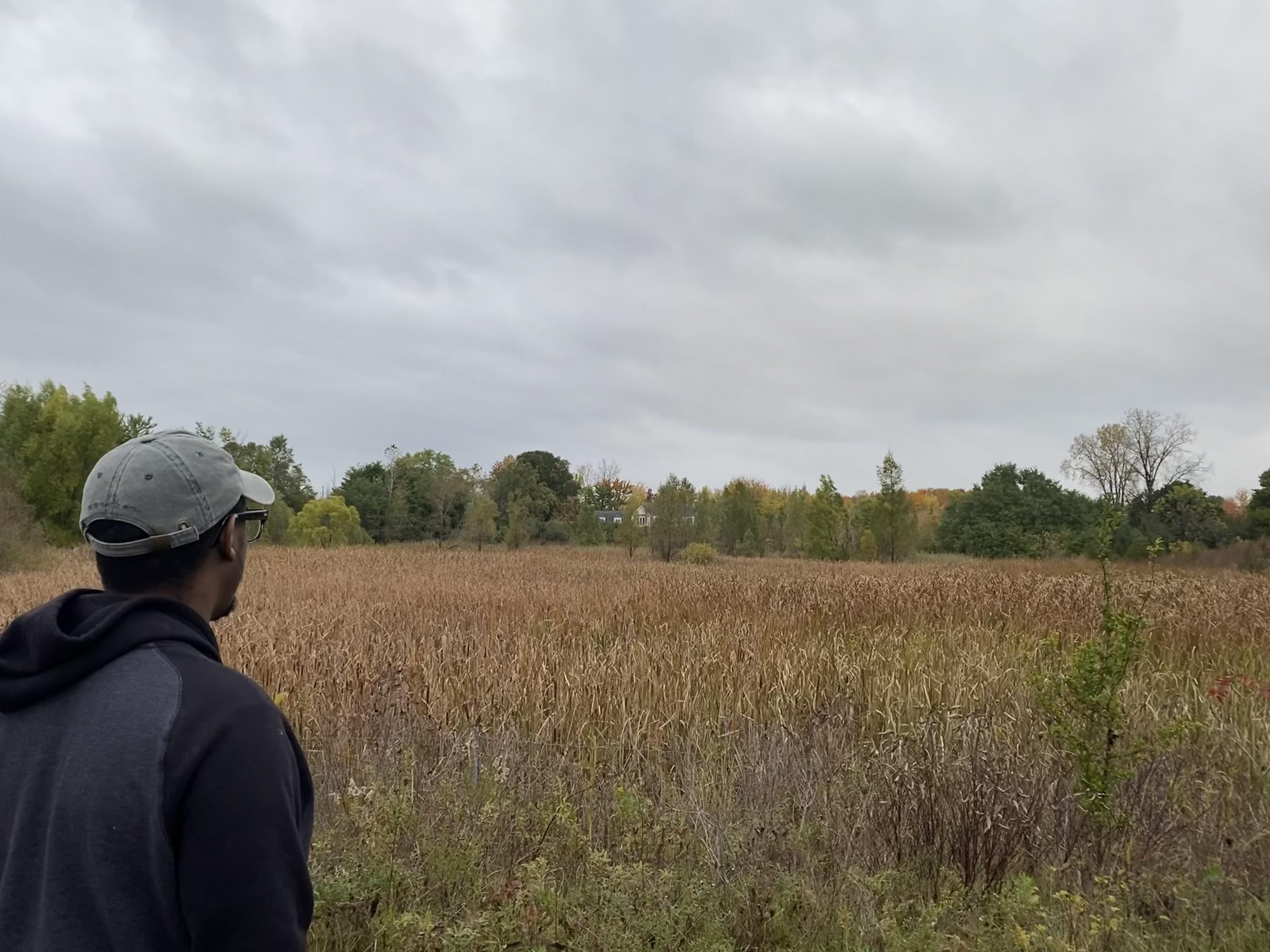
    Photo: Author

    On April 7, 1994, the fastest genocide of the 20th century began – the genocide against the Tutsi ethnic group in Rwanda. I was there. Initially naive, I eventually pieced everything together, especially when my parents were gone, leaving my 14-year-old sister and me on our own. The details of how we happened to survive are a very long story for another time. As a 10-year-old child at the time, I remember the horror and confusion I felt watching my world crumble around me.

    At first, I couldn’t understand why my Tutsi family was being targeted and murdered by our own Hutu neighbors. It made no sense when my mother desperately packed a few belongings and bundled us children in layers of clothing, while our Hutu neighbors remained untouched. I saw a gust of smoke of Tutsi houses burning on the other side of the hill adjacent to our home. The truth soon became clear – being Tutsi was a problem. And was now considered a crime punishable by death, while being Hutu granted a free pass to life.

    The Rwandan extremist Hutu government had meticulously coordinated this systematic slaughter through a highly hierarchical and vertical structure of the Rwandan government administration. Orders to exterminate the Tutsis flowed rapidly from the top president’s office down to the smallest administrative entity, the nyumbakumi.

    In just 3 months, over 1 million lives were massacred – making it the fastest genocide in recorded history. The killers showed no mercy, butchering entire families including pregnant women like my 8-month pregnant cousin Kayitesi and young children. My own parents, three sisters including our 18-month-old baby sister, cousins, aunts, uncles, and countless other relatives were among the victims.

    Determining who was Tutsi became a twisted obsession. Every Rwandan over 16 had an ID card labeling them as Hutu or Tutsi. But even without that, the killers had other disturbing and sometimes bizarre ways to identify their targets – judging someone’s looks (no offense, but if you were generally good looking you were likely to be killed as Tutsi), the shape of their nose (if your nose was straight or not flat enough), they would even go as far as counting the number of ribs (it was said Tutsi have many long ribs) or checking shapes in the palm of one’s hand, or the length of their fingers.

    My sister and I would try to make our noses look bigger at checkpoints at one of the checkpoints to look Hutu! The Hutus in our area also wore visible markers to set themselves apart, such as a banana leaf around their head or law grass, known as umucaca in Kinyarwanda. These markers would change every day, and anyone found on the street without the correct marker was likely to be killed, as they would not know the secret sign agreed upon during the killers’ daily meetings.

    The Hutu militia held daily meetings in every nyumbakumi (Rwanda’s smallest administrative entity consisting of 14 homes at the time) to assess how many Tutsi had been killed, who was still in hiding, and which Tutsi women they would rape.

    We once overheard one of these meetings, hiding in a bush located in the backyard of righteous Hutus who had hidden us in the early weeks of the genocide. The meeting was not far from where we were concealed. A couple dozen Hutu killers sat around a bonfire, roasting beef meat from slaughtered cows belonging to Tutsis. There was not a single sign of remorse among them. Instead, they would take turns talking about what had happened during the day, celebrating their “work.” To kill Tutsi was code-named “gukora” or “to work” in Kinyarwanda.

    While I was too young to fully grasp the political dynamics, the sheer cruelty and devastation seared into my memory. I remember the state media playing songs that dehumanized Tutsis as “cockroaches” and urged Hutus to “exterminate” us. Checkpoints were set up everywhere to identify and target Tutsis, and our homes were demolished.

    Our cattle were also targeted during the genocide. Cattle hold deep cultural significance for us. Each cow we owned had its own unique name. Indangamirwa and Mucyo were two of my father’s favorite cows. Indangamirwa was a distinctive, light brown Ankole-Watusi cow. She had majestic, ivory-colored long horns that pointed upwards and curved as they went up. Indangamirwa was known to be temperamental, only allowing my father to milk her and fighting off others who tried. The milk from Indangamirwa (the legend) was especially delicious, more so than any other milk I have tasted so far. In contrast, Mucyo (the luminary) was a chubby, white cow with small horns. Mucyo had only recently become pregnant just before the genocide began, but tragically never got to see her long-awaited calf born.

    Both our beloved cattle and their master, my father (who took immense pride in our herd beyond their economic value), suffered the same fate. Interestingly, Two moderate Hutu men who hid me and my sister during the genocide had an amicable bond with my father, as he had gifted them a cow. I often wonder if this supreme symbol of friendship influenced their decision to hide us, despite the risks they faced.

    When my sister and I returned to the house we grew up in shortly after the genocide, we were struck by the devastation. Our home compound had been demolished, and everything in it was looted. Meanwhile, our Hutu neighbors lived next door, in the same shoddy conditions as before.

    I always wondered why our Hutu neighbors did not occupy one of our houses, which were much better than theirs, instead of destroying them and looting. They knew no one from our family had survived the killing. Were they afraid of our angry abazimu ( ancestral spirits) haunting them in the house, as Rwandan tradition suggests? I do not know. Or maybe they wanted to erase any evidence that we had ever existed?

    However, what was most jarring was the emptiness – no people, no cows, and no familiar smell of milk. That once ever-present presence was now just a distant memory.

    Even 30 years later, the memory of this genocide remains a painful, ever-present reality for survivors. The memories of our loved ones so brutally taken, and the treasured moments we can never reclaim, continue to haunt us. There is simply not enough time to heal wounds as deep as these. The genocide against the Tutsi is a history we must never forget. Ends

    By Albert Gasake April 7, 2024.

  • Kwibuka30: Ubutumwa Bw’IGICUMBI-Ijwi ry’Abarokotse Jenoside Yakorewe Abatutsi

    Kwibuka30: Ubutumwa Bw’IGICUMBI-Ijwi ry’Abarokotse Jenoside Yakorewe Abatutsi

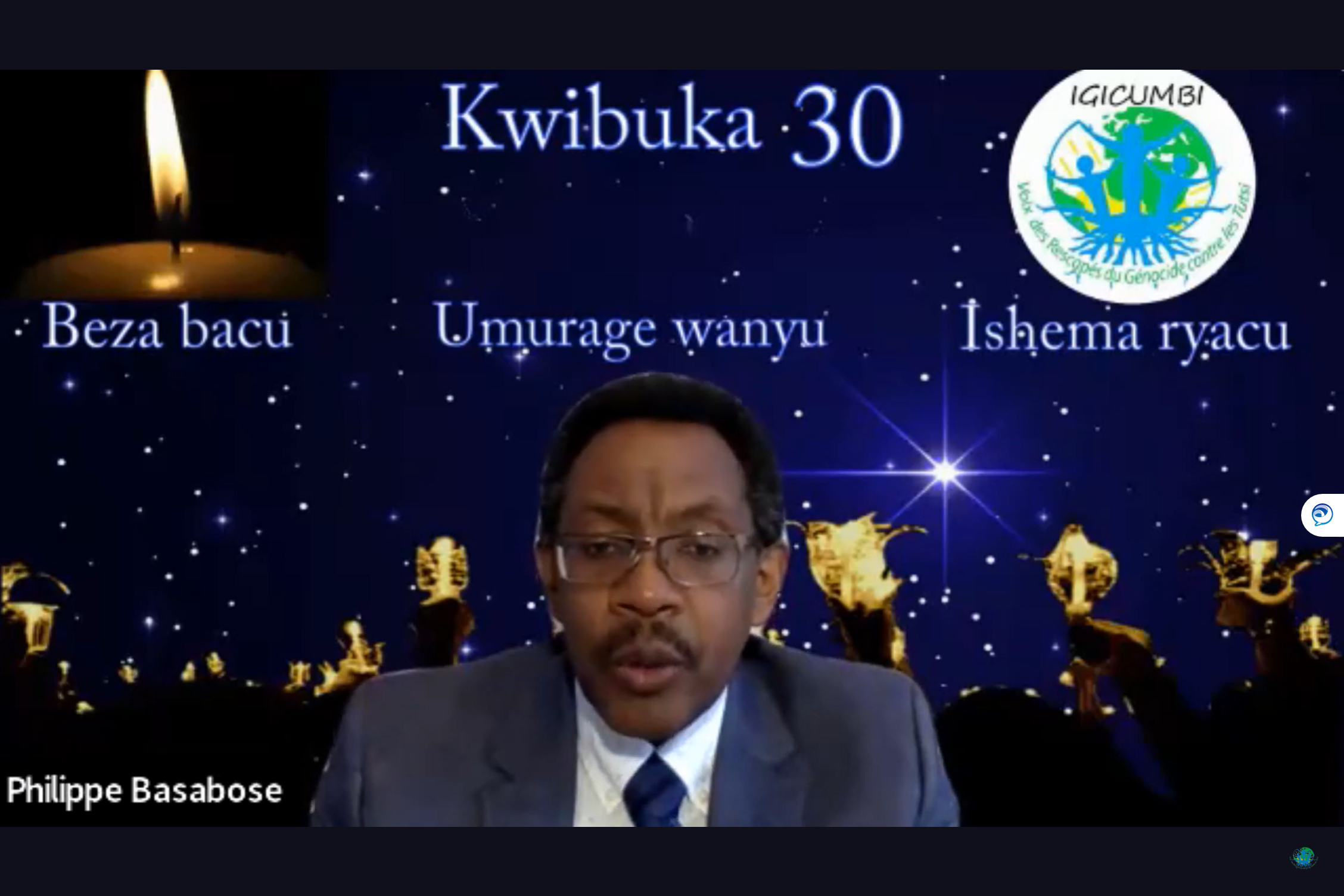
    Mu ijambo rye, Dr. Filipo Basabose, umuyobozi w’ishyirahamwe Igicumbi, arasesengura amateka ya jenoside n’ingaruka zayo ku bacitse ku icumu mu magambo atomoye, ariko abenshi dukunda kuvugira mu matamatama!

    Uyu mwarimu wa kaminuza muri Canada, agaruka ku bintu 5 ahamya ko byahumye amaso abatutsi bari mu gihugu, ntibabashe gusoma neza ibimenyetso bya Jenoside yategurwaga.

    Dr. Basabose aragira ati:

    1. Twizeye ko imishyikirano yaberaga Arusha igiye kurangiza intambara amahoro akaboneka
    2. Twizeye imbaraga z’amashyaka atavuga rumwe n’ubutegetsi mu kurwanya ubuhezanguni bwa MRND na CDR.
    3. Twizeye imbaraga inkotanyi zari zimaze kugaragaza n’icyizere zahaga abatutsi bazigeragaho zibizeza ko hagize ikiba zabatabara.
    4. Twizeye amahanga yari yaratangaje ko icyago gishoboka ikibona ndetse n’ingabo zayo (UN)zari mu Rwanda
    5. Twizeye abaturanyi twumvaga ntacyo dupfa nubwo twari tuzi amateka, ku buryo babyuka bagaterura imipanga bakadutemagura.

    Ku munota wa 29‘, Dr. Basabose anenga bikomeye uburyo abacitse ku icumu bibasirwa mu itangazamakuru mu Rwanda nk’itsinda. Basabose atanga urugero rw’ikiganiro cy’umunyamakuru uzwi cyane witwa Mutesi Scovia na Samuel Mutungirehe bumvikanye bikoma abacitse ku icumu ngo ”kuba bararokowe n’inkotanyi ariko bakanga bakaba ikibazo ku gihugu”. Ngo n’ubwo baba bicwa ntibakwiye ”kurwanya ababarokoye”. Icyo kiganiro cya Scovia wakibona hano kuva kumunota wa 15 kugera ku munota wa 22.

    Muri iri jambo, Dr. Basabose asesengura kandi uburyo iyo indege idahanurwa, jenoside itari kugenda uko yagenze, bityo uwayihanuye ngo akaba ataragiriye nabi abari mu ndege gusa, ahubwo ko yanashyize mu kaga abatutsi bari mu gihugu abigambiriye. Dr. Basabose ashimangira ko ibyo bitavanaho cyangwa ngo byoroshye uruhare rw’abahutu bakoze jenoside nk’uko bamwe bajya babyitwaza.

    Reka nsoreze ku kandi kantu nakunze mu ijambo rya Dr Basabose. Yavuze ko iyo abantu bubashye ubutegetsi, aho kubaha amategeko n’umutima-nama wabo, ntakibuza amahano. Iyo inyungu z’abo bategetsi zijyanye abaturage gukora amahano, kuyakora byitwa gukunda no gukorera igihugu, bityo abaturage bakabiyoboka. Basabose arabaza ati: “Ese abanyarwanda mwumvira amategeko n’umutima-nama wanyu cyangwa mwumvira ubutegetsi?” Ends

  • The Lasting Legacy of Genocide in Rwanda: A Survivor’s Reflection 30 Years On

    Guest post by Jacques Gatutsi, a survivor of the 1994 genocide against the Tutsis in Rwanda.

    Photo: Genocide victims’ names at Ntarama genocide museum where five thousand people were killed in the Catholic church.

    When I was a child in elementary school, our religion teacher used to tell us that on Judgment Day, the mountains would drop their massive stones and destroy us. The purpose, he said, was for the righteous to be reborn into a new world free of suffering, while the wicked would be condemned to eternal hell.

    Growing up at the base of a mountain littered with large stones, I dreaded that fateful day, unable to fathom where I could possibly hide from such an apocalyptic event. The large rocks that loomed over our home filled me with a deep sense of fear about what would happen when that day of reckoning finally arrived.

    Tragically, that apocalyptic day did arrive – not from the heavens, but at the hands of our longtime Hutu neighbors. They surrounded my extended family, massacring them mercilessly from infants to the elderly. Rwanda had become the stage for unprecedented horrors, unlike any the world had ever witnessed. While mass killings of populations have occurred throughout history, never before had we seen neighbors so completely “phagocytize” one another with the intent of total extermination. Such abominable crimes were previously confined to armies annihilating the populations of foreign territories they sought to conquer.

    And yet, for 100 days starting on April 7, 1994, the territory of Rwanda transformed into a hunting ground where the prey was the Tutsi people. To have been born a Tutsi was to be “guilty” – even unborn Tutsi fetuses of Hutu women married to Tutsi men were not spared. These scenes of unspeakable horror played out day after day, week after week, on every hillside across Rwanda, while the world turned a blind eye.

    The macabre result: more than a million people were atrociously tortured and massacred in a monstrous frenzy by mobs of Hutu killers, during this genocide perpetrated in the indifference of the world. Another odious result: at the end of the genocide, over a million people were suspected of having been involved in the genocide. Because, according to the architects of this genocide, no Tutsi was to remain alive on Rwandan territory.

    Thirty years is the time of a generation. But for us, it is as if it happened yesterday, so vivid is the memory in our hearts and in our everyday thoughts. We remember and will always remember our own who were senselessly massacred. We will always remember the genocide that changed our lives so much that nothing is the same for us. There is the before, with all the pleasures of living as a family with our loved ones, and the after, represented by our lives as orphans, widows and widowers, in grief. We are forever marked.

    We will never forget. We will never forget that our family members were not swallowed up by mountains that collided on Judgment Day, nor by a tsunami or an earthquake, but rather that they were exterminated by those we believed to be human like them, who had decreed that we no longer had the right to live on this earth.

    Today we remember. We remember to pay tribute to our family members victim of the genocide against the Tutsis of Rwanda. But let us also remember those other victims, whether Hutus or foreigners, killed during the genocide against the Tutsis, who they because of their courage refused to dip their hands in the blood of innocents, who they because of their courage took the risk of seeking a hiding place for the Tutsis hunted down like beasts of prey. We also pay tribute to those among these valiant men who were able to survive with or without their protégés. To all these righteous people, we say thank you, and ask God to give them the reward they deserve for their humanity.

    Today we remember our family members to honor their memory, but we must also remind the world, starting with Leaders of Rwanda’s neighbouring countries, mainly the Presidents Museveni, Mobutu and Mwinyi, and the Leaders of Great Powers, mainly the Presidents Clinton of US and Mitterrand of France, as well as the Prime Ministers Major of UK and Chretien of Canada, that they shamefully abandoned us, turning away their eyes and plugging their ears when we needed their help. This reproach also goes to the leaders of the RPF, who let this happen, with the clear aim of exploiting this tragedy to their advantage towards their war and political success. Our distress was of no concern to them. Shame on all of them.

    Today we also remember, and salute with pride, those among the survivors who were able to overcome pain and grief to arm themselves with resilience and optimism. We salute the bravery of all those among the survivors who were able to bounce back despite all the ups and downs of their lives. We tell them to keep up!

    Today we remember, because we must keep intact the memory of our family members so that we can pass on the torch of remembrance to the next generation so that they can do the same with the generations that follow. We have no other choice.

    It is our duty as survivors of the genocide against the Tutsi of Rwanda to remember. Not to brood over grudges that feed vengeance, but to remind the world that it happened, that this genocide took place, alas, 30 years ago. We must do so, all the more so as today, genocide deniers of all stripes spare no effort in trying to falsify the history of the genocide against our family members.

    We therefore must thwart their despicable plans. We have to bear witness, so that our family members never die, either in our hearts, which are their graves, or in the memory of mankind. Anything less would be a victory for their executioners. Ends.

  • RWANDA: 2,200 “GÉNOCIDAIRES” BEING RELEASED IN 2024, WHO ARE THEY?

    RWANDA: 2,200 “GÉNOCIDAIRES” BEING RELEASED IN 2024, WHO ARE THEY?

    Muhanga Correctional Facility in Rwanda houses a staggering 737 “génocidaires” – inmates convicted of crimes during the 1994 Rwandan genocide against the Tutsi. Of these, 728 have been sentenced, with 71 receiving life imprisonment sentences.

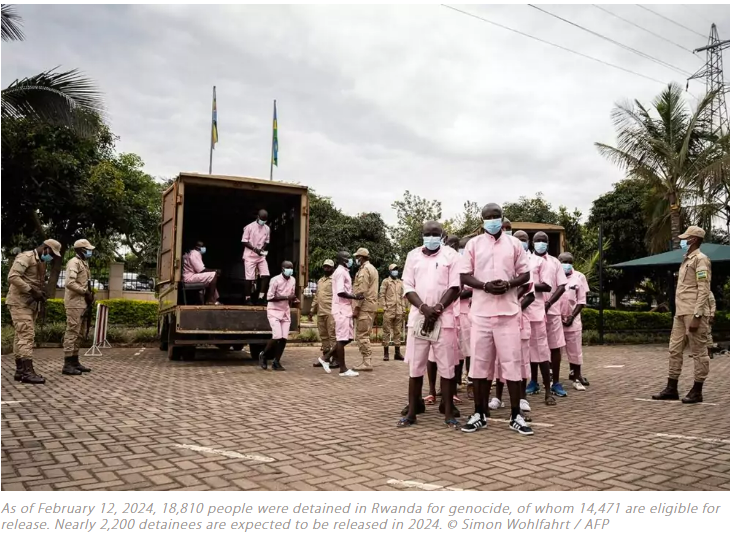
    The numbers across Rwanda’s prisons are even more striking. As of February 2024, out of 87,621 total inmates, 18,810 (21.4%) are imprisoned for genocide crimes, including 6.3% women. Of the génocidaires, 4,339 (23.06%), with 1.7% women, have life sentences. This leaves 14,471 eligible for release after serving their terms.

    Remarkably, the Rwanda Correctional Service estimates that around 2,200 of these genocide convicts will be released across the country in 2024 alone. This continues a trend of releases – in 2012 there were 39,572 people convicted or awaiting trial for genocide crimes.

    The génocidaires come from all walks of life – prefects, mayors, military, teachers, clergy, journalists and the poor. Only one member of the interim government during the genocide, Agnès Ntamabyariro, has been convicted in Rwanda, receiving life imprisonment in 2009. Another 15 ministers were tried by the International Criminal Tribunal.

    At Muhanga, out of 7,346 total inmates, the 737 génocidaires live alongside ordinary prisoners with no discrimination. One inmate, 67-year-old Emmanuel Ruzigana, a former mayor who gave genocidal orders, calls his 30-year sentence “light compared to the crime of genocide.” After decades, he believes most génocidaires have been humbled by the consequences of their horrific actions. Ends

    ***

    By Emmanuel Sehene Ruvugiro, JusticeInfo.net Special Envoy to Muhanga Correctional Facility, Rwanda (Originally published in long form on Justiceinfo.net on April 02/2024).

  • Human Rights Watch Releases Harrowing Rwanda Genocide Archives

    Human Rights Watch Releases Harrowing Rwanda Genocide Archives

    Today, Human Rights Watch announced the release of a series of archives highlighting the efforts of human rights defenders to warn about and attempt to stop the 1994 genocide against the Tutsis in Rwanda. The documents painfully illustrate how leading international actors refused to acknowledge and act to halt the slaughter of over one million people.

    The archives cover March 1993 to December 1994, demonstrating the extensive advocacy by groups like Human Rights Watch as the genocide was first planned and then unleashed. Records include strategy documents, statements, and letters showing how global leaders rejected even modest interventions against the genocidal regime.

    Despite repeated warnings from human rights groups and others about the impending genocide, the UN largely withdrew peacekeepers, leaving civilians defenseless as the massacres occurred. Alison Des Forges, senior adviser to the Africa division at Human Rights Watch for almost two decades, published the authoritative account of genocide, “Leave None to Tell the Story,” and documented the international community’s indifference and failure to act.

    I encourage everyone to read the full details on the harrowing archives released by Human Rights Watch at this link : https://www.hrw.org/news/2024/04/02/rwanda-genocide-archives-released. Ends

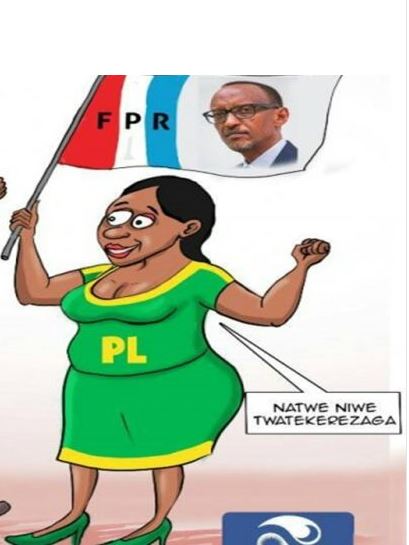
  • How Paul Kagame Crushed the Survivors’ Longtime Political Party (PL) in Rwanda

    How Paul Kagame Crushed the Survivors’ Longtime Political Party (PL) in Rwanda

    If you ask any genocide survivor about their family’s political affiliation before the genocide in Rwanda, one name rings out – Parti Liberal (PL). For many of us, PL was once a vibrant party that courageously championed democratic rights in the face of oppression. It was a beacon of hope.

    But the news this week that PL failed yet again to field a presidential candidate to compete with the long-ruling Paul Kagame in the 2024 elections is saddening, though unsurprising. It begs the question: How did this brave, nostalgic party that our parents belonged to fall so far from its former stature as a champion of democracy?

    Let me take you back to my childhood in the 1990s when my father, like most Tutsis inside the country back then, was a devoted PL member. I recall adults proudly wearing the party’s iconic green baseball caps and polo shirts, while our family shop flew its green flag adorned with three yellow stars. My father would enthusiastically distribute PL membership cards to young people hungry for freedom, although little did they know then how elusive that freedom would remain, even three decades later.

    Once a proud defender of political rights, PL today barely survives. It managed to endure Habyarimana’s oppressive regime only to be suffocated by Kagame’s dictatorship. Habyarimana strategically divided PL and other opposition parties, creating a Hutu-power faction and independent members loyal to democratic ideals. However, the current regime went further – physically eliminating or forcing into exile PL members who refused to toe the RPF line.

    Just five years after the genocide, prominent figures like Assiel Kabera were killed, while others like former speaker Joseph Sebarenzi narrowly escaped assassination and fled to the USA via Uganda following a list of fabricated charges as trivial as rebelling survivors against the government, disseminating music cassettes by a critic singer known as Sankara, or supporting the exiled King Kigeli V and his alleged, but fictitious, army.

    In reality, Kagame, who was then the Vice President with ambitions for the presidency in 2003, feared Sebarenzi’s rising influence, which could challenge his grip on power. When PL planned to elect the popular Sebarenzi as president in 1999, the vote was abruptly postponed many times on Kagame’s orders. If Sebarenzi had won, his strengthened standing could have boosted his chances in the 2003 presidential election. However, from that pivotal moment, the real PL became a relic confined to history books, as a hollow puppet version took its place.

    As a friend accurately remarked while I was writing this piece, PL now exists in name only – a mere shadow of its former self.

    Critics argue that Rwanda under Kagame is essentially a one-party state, if not a one-man regime, much like the pre-genocide era. The only difference? Kagame maintains an array of cosmetic opposition parties like PL that exist solely as empty facades. All parties must agree to be part of the “RPF-controlled platform,” the so-called National Consultative Forum of Political Organizations (NFPO) – a thinly veiled farce.

    Founded in 1991 after intense pressure forced the Habyarimana regime to reluctantly end the MRND’s monopoly, PL’s ideals of freedom and justice resonated with countless Rwandans who had endured two decades of dictatorship. PL swiftly rose to prominence, securing cabinet seats and attracting marginalized Tutsis and moderate Hutus to its democratic vision.

    In its early years, PL teamed up with other progressive forces like PSD, MDR, PDC, and PSR to form the FDC coalition, directly confronting Habyarimana’s regime while collaborating with the RPF’s armed rebellion based in Uganda. But this very alliance with the RPF proved fatally dangerous, as Habyarimana’s regime retaliated by corrupting opposition parties, splitting them along ethnic fault lines.

    Within PL itself, Hutu founders like Justin Mugenzi formed the pro-MRND “PL power” faction, while the remaining members (Lando faction) allied with parties like PSD, promoting the Arusha Accords and openly supporting the RPF – a decision that would seal their doom under Habyarimana’s brutal crackdown before the genocide.

    Branded a party of “Tutsi traitors,” PL’s Lando faction witnessed its prominent leaders and their entire families massacred during the genocide’s horrors – including Lando himself, Kayiranga Charles, Kameya Andre, Rebero Laurent, Ngagi Justin, Kabageni Venantie, Dr. Kurawige, and Jean Baptiste Habyarimana (Former Prefect of Butare), among countless others cut down. Similar Hutu power factions emerged to splinter other opposition parties from within.

    After 1994, surviving members like Joseph Nsengimana, Prosper Higiro, Esdras Kayiranga, Laurent Nkongori, and Tharcise Mutake resurrected PL, hoping that the new RPF government would finally open the long-awaited political space that Habyarimana’s MRND had denied. They were wrong!

    Mirroring the oppressive tactics of its predecessor, the RPF systematically corrupted PL from within, using proxy figures like Pio Mugabo, Odette Nyiramirimo, Higiro, and Protais Mitali to destroy the party’s independence and conspire against those seeking true democracy.

    By the year 2000, all remaining dissenting voices had been killed, jailed, or exiled. PL made its last attempt to be independent from the ruling RPF manipulation in 2007. During this time, three senior PL officials—Elie Ngirabakunzi and Isaie Murashi, both members of parliament, along with Dr. Laurien Nyabyenda—contested in court the RPF’s intrusion in the election of Mitali as the president of the PL. Their courageous opposition resulted in all three being expelled from the party.

    Today, 33 years since its creation, PL has not recovered from this blow. Unsurprisingly, it lacks the courage to challenge the status quo or seek genuine political freedoms. It exists in a symbiotic relationship with the RPF – a party that primarily serves the ruling party’s interests, often at the expense of Rwandans and survivors who once saw PL as a counterweight to unchecked power.

    The PL we see today is a mere shadow of its former self. If my parents and others who embraced its initial ideals were alive to witness its downfall, they would be deeply disappointed by how their hopes for a vibrant multi-party democracy have withered. Ends

    By Albert Gasake March 29/2024.

  • Eric Nshimiye, A Genocide Suspect Hiding in Plain Sight for 30 Years Arrested in Ohio

    Eric Nshimiye, A Genocide Suspect Hiding in Plain Sight for 30 Years Arrested in Ohio

    Photo: Genocide fugitive Eric Nshimiye, former engineer at the Goodyear Tire & Rubber Company, Akron, Ohio.

    A Rwandan medical student identified as one of the “most vicious” perpetrators of the nation’s 1994 genocide was arrested Thursday morning in Uniontown, Ohio, where he had been posing for the past three decades as a victim of the very atrocities he is accused of carrying out, the feds said.

    Eric Tabaro Nshimiye, 52, joined the brutal Interahamwe militia while studying medicine as an undergrad at the University of Butare in the early 1990s, according to a federal complaint charging him with perjury, obstruction of justice, and scheme to conceal. One fellow militia member told U.S. investigators that Nshimiye, a member of the Hutu ethnic majority, used “a machete and spiked club to murder [a] 14-year-old Tutsi boy a short while after Nshimiye and others had killed his mother,” the complaint states.“

    Witness 1 recounted another instance in which Nshimiye was with a group of Interahamwe who rounded up 25-30 Tutsis who had been hiding in the forest near the University,” the complaint continues. “The group, including Nshimiye and others, killed all of the captured Tutsis and then burned their bodies in the forest.”

    Another fellow perpetrator recounted an instance in which Nshimiye “instructed other members of the Interahamwe to rape and then kill six young women who were University students,” according to the complaint, which says Nshimiye personally executed one of the victims “by striking her in the head with a nail-studded club, and then hacking her to death.”

    “Witness 2 also recounted an incident in which he saw Nshimiye capture a Tutsi tailor who made coats for doctors at the [Butare University] Hospital,” the complaint goes on. “Nshimiye and others took the tailor away. According to Witness 2, Nshimiye returned not long after, bragging that he had killed the tailor. Nshimiye was carrying a blood soaked nail-spiked club.”

    The complaint says a survivor of the genocide independently confirmed seeing Nshimiye “beat and hack the tailor to death in a field adjacent to the Hospital entrance.” Another survivor told authorities she had been “raped repeatedly by Nshimiye,” and that she escaped from his clutches “when he was taking her and two young children to one of the killing pits to be hacked to death. The children did not survive.”

    Reached by phone on Thursday afternoon, Nshimiye’s wife confirmed his arrest to The Daily Beast but declined to comment further. Nshimiye has worked as an electrical engineer since arriving in the U.S., according to public records. He does not yet have an attorney listed in court filings.

    Many Tutsis sought refuge at the university hospital in Butare, the second-largest city in Rwanda, according to the complaint. Because of this, the hospital turned into a killing field for Hutu genocidaires, with Tutsi patients, nurses, staff, and others fleeing the violence being beaten or hacked to death, the complaint states.

    “Among other things, Nshimiye assisted in the identification of Tutsis among hospital patients and personnel; he searched for, and exposed, Tutsis sheltering at the hospital and other locations at the University and in Butare; and he assisted in the forcible removal of Tutsis from the hospital grounds, from locations at the University, and from other locations in Butare,” the complaint alleges.

    It says Nshimiye guarded several roadblocks in Butare, where he “assisted in the identification and killing of Tutsis.”

    “During much of this time, Nshimiye was armed with a wooden club spiked with nails and a machete,” the complaint states. “At times, he was also armed with a hatchet and grenades… Both persons who participated in the genocide as perpetrators, and survivors of the genocide, recently identified Nshimiye as among the most vicious University students who were members of the Interahamwe during the genocide.”

    Nshimiye fled Rwanda in 1994, making his way to Kenya, according to the complaint. The following year, Nshimiye applied for refugee status, claiming on U.S. immigration forms that he and his family had been threatened by the Interahamwe, which Nshimiye falsely claimed had murdered his father, the feds say. In May 1995, Nshimiye sat for an interview with a U.S. immigration official at the American Embassy in Nairobi, where, the complaint alleges, he “falsely swore that he had never committed a crime involving moral turpitude,” and that he had “never ordered, assisted or otherwise participated in the persecution of any person because of race, religion or political opinion.”

    Nshimiye was granted admission to the U.S. on Dec. 1, 1995. He arrived in New York, then “took up residence in Ohio,” according to the complaint. On Sept. 11, 2001, Nshimiye applied for citizenship, again erasing his bloody past, the complaint says, adding that he was sworn in as an American on April 18, 2003. In the years to follow, Nshimiye lived a quiet Midwestern life, at one point allegedly testifying on behalf of another Hutu charged with lying on immigration forms, once again perjuring himself in the process, according to the complaint.

    More than 30 years passed before the alleged violence in Nshimiye’s past would finally catch up with him.

    On March 11, 2024, a special agent with Homeland Security Investigations (HSI) met with Nshimiye at his workplace in Akron, and asked him “a number of questions” about his activities and affiliations during the Rwandan genocide. Nshimiye “persisted in concealing” the truth, claiming to have left the country prior to the bloodshed.

    “When ultimately asked if he had been involved in raping or killing anyone during the genocide, Nshimiye first responded by shaking his head, laughing nervously, and asking for a drink of water,” the complaint states. “When I persisted by asking again, he falsely denied any involvement in raping or killing anyone during the genocide.”

    If convicted, Nshimiye faces up to five years in prison on the perjury charge, up to 10 years on the obstruction of justice charge, and up to five years on the scheme to conceal charge.

    By Justin Rohrlich/First published in Daily Beast, Mar. 21, 2024

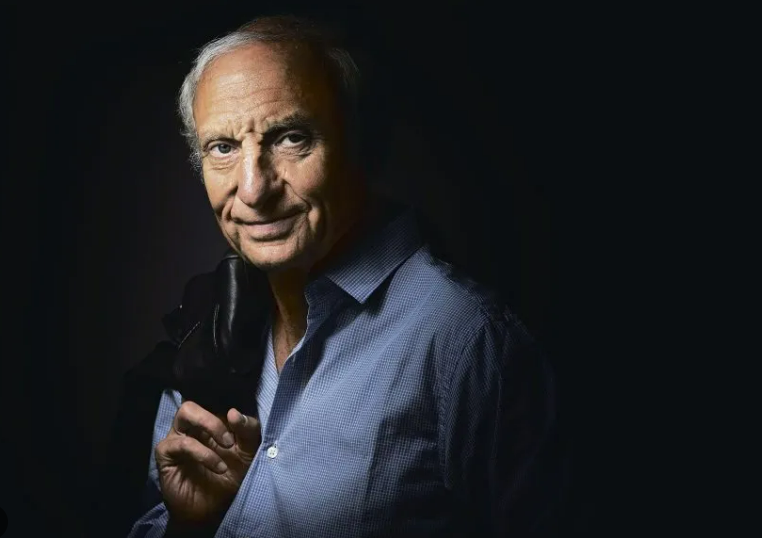
  • Rwanda Genocide Survivor Stories: The 30-Year Journey of Writer Jean Hatzfeld

    Rwanda Genocide Survivor Stories: The 30-Year Journey of Writer Jean Hatzfeld

     Jean Hatzfeld. Photo : Joël Saget/AFP

    For three decades, French writer and journalist Jean Hatzfeld has been tirelessly seeking answers to the horrors of the 1994 genocide against the Tutsi in Rwanda. Through countless interviews with survivors in the Nyamata region, Hatzfeld has produced a series of searing books that grapple with the metaphysical questions left in the wake of one of humanity’s darkest moments.

    In a revealing new interview with Jeune Afrique (read the full interview here), Hatzfeld reflects on his journey to penetrate the silence surrounding the genocide and understand how ordinary people could transform into brutal killers of their own neighbors and families. He describes the immense challenges of getting survivors like Sylvie Umubyeyi, Jeannette, and others to open up about their unimaginable trauma.

    ”Survivors grappled with shame, guilt over lost faith, spotty memories, and above all, an inability to forgive perpetrators unwilling to disclose the full truth of what happened.” Unlike the current regime in Rwanda, Hatzfeld realized early on that the genocide story could not be fully told without focusing intently on capturing the perspective and voices of those who endured its atrocities firsthand.

    While interviewing jailed perpetrators provided some insight into the mechanics of the killings, Hatzfeld sees the survivors’ accounts as more essential – if also more psychologically fraught.

    As he states: “Today, the survivors are not making it. The day after a war, we can leave again, we have lost a dad, a grandparent, a leg, but we can get through it. They can’t get out of it. They still have a metaphysical fear of eradication. We wanted to eliminate them from the earth, God abandoned them. Their best friends could turn into monsters. We don’t have an answer.”

    Survivors’ inability to find true closure is part of what makes Rwanda’s genocide such an enduringly haunting event without satisfactory explanations. “If every week you have a new book on the Shoah in the bookstore, it’s not for nothing, it’s because we still don’t have the answers,” Hatzfeld says.

    After 30 years, Hatzfeld knows the questions will never end. Each return visit yields new revelations as memories shift and survivors work through complex layers of trauma. His books have become an indispensable body of work documenting one community’s struggle to reckon with events that, as Hatzfeld says, leave us without answers for “how people could become bloodthirsty in this way.”

    For those seeking to understand the lingering wounds of genocide against the Tutsis, Jean Hatzfeld’s insightful interview and book chronicles are a must-read! Find the full Jeune Afrique interview here.

    By Albert Gasake March19, 2024.

  • Open Letter to President Paul Kagame from the IGICUMBI Association – Voice of the Survivors of the Genocide Against the Tutsi

    Open Letter to President Paul Kagame from the IGICUMBI Association – Voice of the Survivors of the Genocide Against the Tutsi

    As we prepare to commemorate the 30th time of the Genocide against the Tutsi, the IGICUMBI Association – Voice of the Survivors of the Genocide against the Tutsi – has written an open letter, available here in Kinyarwanda, French, and English, to President Paul Kagame.

    In this letter, they request him to stop and prevent the killings and other abuses committed against survivors of this tragedy.

    These acts often occur shortly before or during the commemorative period and have persisted without interruption over the last 30 years, to the point of becoming an accepted cultural norm.