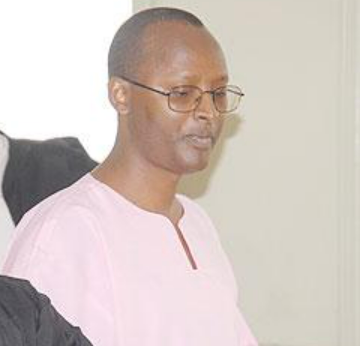
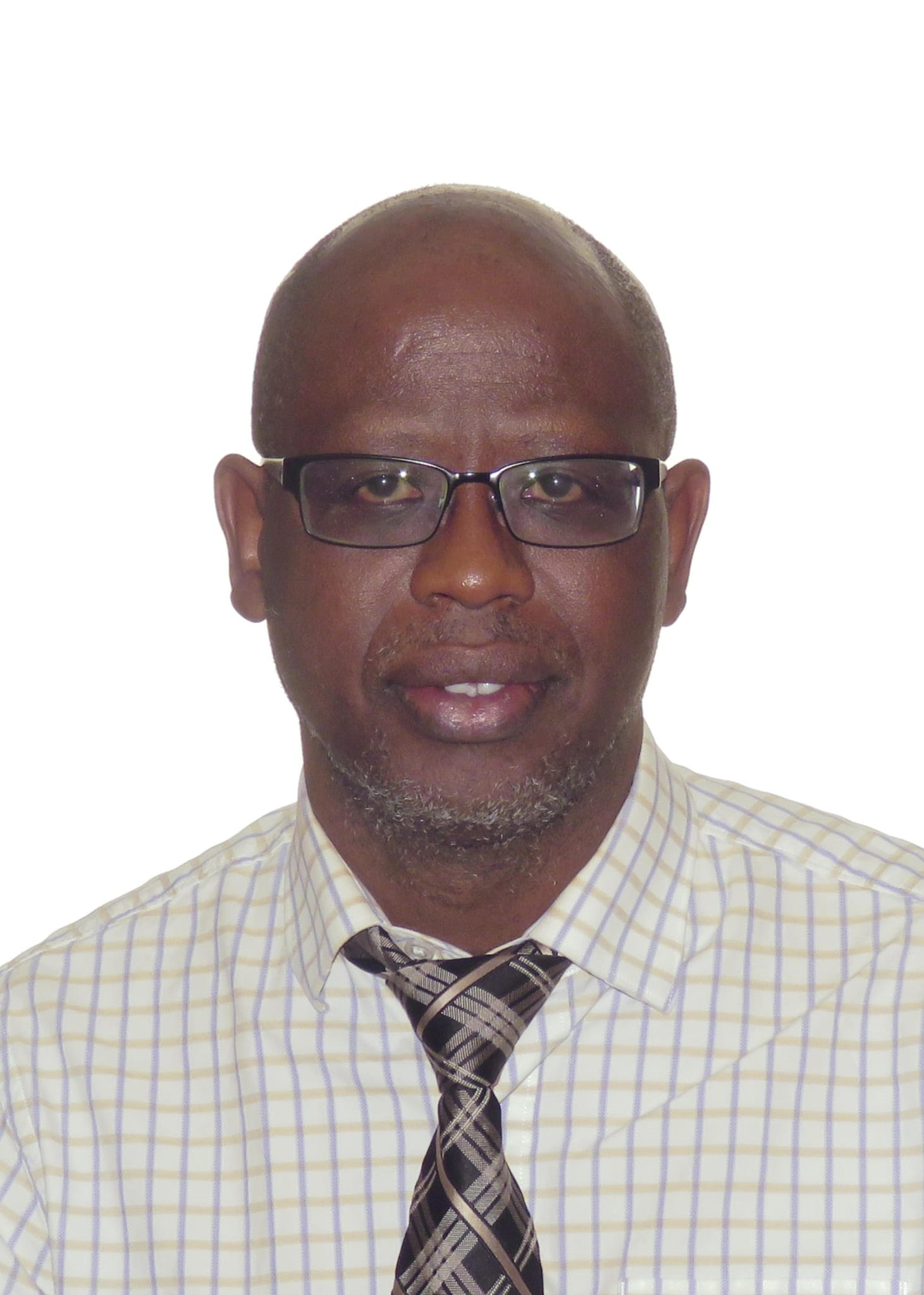
It may come as a surprise, but Rwanda’s longest-serving political prisoner is a survivor of the 1994 genocide against the Tutsi—a man who lost his entire family in the atrocities. His name is Deogratias “Deo” Mushaidi.
At 63 years old, Mushaidi remains behind bars, serving a life sentence handed down exactly 14 years ago today. His charges? Bizarre and politically motivated offenses, including “genocide ideology” and denying the very genocide against the Tutsi that he survived.
On this sad anniversary, Igicumbi—Voix de Rescapés du Génocide contre les Tutsis, the only independent survivor organization in Rwanda, has issued its annual statement drawing attention to the situation of survivors like Mushaidi.
The organization is calling on President Paul Kagame’s regime to release Deo Mushaidi and other survivors who are incarcerated on politically motivated charges.
Dr. Philippe Basabose, President of Igicumbi, emphasizes that Mushaidi is serving a life sentence simply because he exercised his right to engage in politics through a party other than the ruling Rwandan Patriotic Front (RPF).
The statement also highlights other survivors facing similar fates. Among them is Aimable Karasira Uzaramba, a university professor and YouTube political commentator who has been imprisoned since 2021. Another is Yvonne Idamange Iryamugwiza, who is serving a 15-year prison sentence for her statements on YouTube criticizing the regime’s treatment of survivors.
Dr. Basabose asserts that these individuals are detained because they have spoken out about the injustices they and their loved ones have experienced under the Kagame regime, the challenges faced by survivor organizations, or broader human rights issues in Rwanda.
“Igicumbi calls for their immediate release,” Dr. Basabose states. “Their only ‘crime’ is refusing to remain silent in the face of injustice.”
Mushaidi is imprisoned in Mpanga International Maximum Security Prison in Nyanza, located in Rwanda’s southern district. This facility is notable for housing notorious genocide perpetrators, including individuals who may have been involved in the killing of Mushaidi’s own family. The prison also accommodates eight Sierra Leonean inmates convicted of war crimes and crimes against humanity.
Similarly, Aimable Karasira and Yvonne Idamange are incarcerated in Mageragere maximum Security Prison, a few miles outside Kigali City. Karasira has reported to the court that he is in constant distress because his cell is next to that of Denis Kazungu, a notorious serial killer who murdered 14 women and was sentenced to life in 2023.
The full statement (VIDEO) from Igicumbi is also available HERE
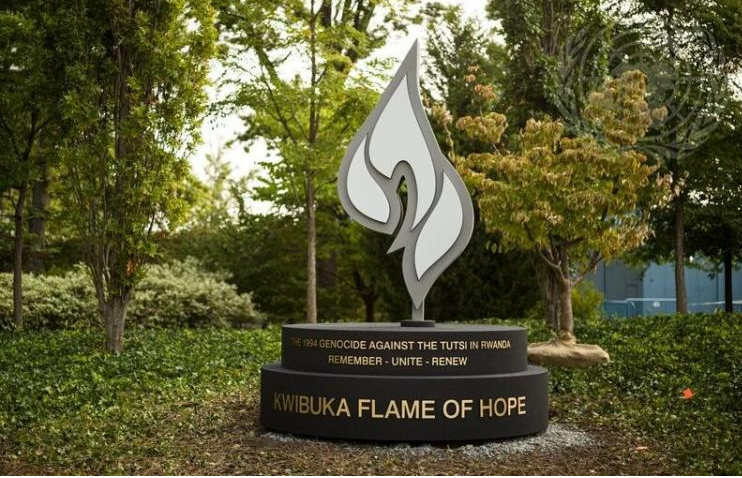
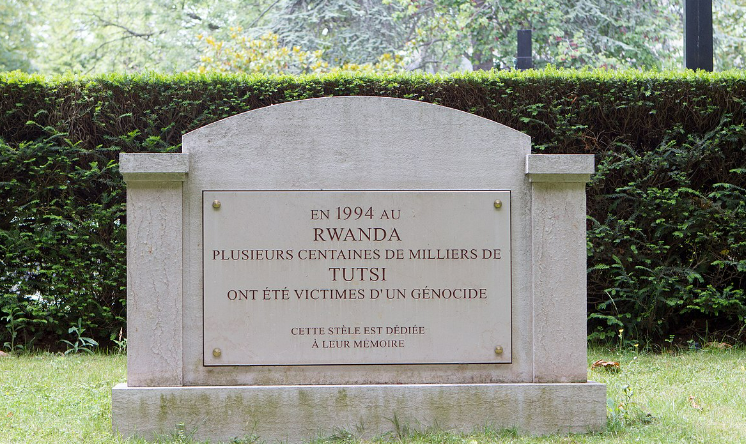
Yesterday marked a significant moment at the United Nations with the installation of the “Kwibuka Flame of Hope.” This is the first permanent tribute to the 1994 Genocide against the Tutsi in Rwanda at such a prominentd institution. Though it didn’t make major headlines, this monument now stands as a lasting reminder of the more than one million lives lost in just 100 days.
For those of us who survived, this is deeply meaningful. It acknowledges our pain, our resilience, and the lives of our loved ones taken simply because they were Tutsis.
According to the UN press release from September 12, 2024, the statue is located in the north garden area at the UN Headquarters in New York. It is visible from the Visitors’ Plaza, near the entrance at 46th Street and First Avenue.
This monument is not just for us but for the world. Much like the Holocaust, the Genocide against the Tutsi often faces denial and revisionism. Placing this memorial at the UN Headquarters hopefully helps counter these dangerous distortions.
For me, seeing this tribute in New York, USA—a place that once ignored our cries—is both bittersweet and somewhat healing. It means our story is now recognized and preserved far beyond Rwanda. It is especially poignant given that just a few years ago, we had to fight to ensure that the genocide against the Tutsi was acknowledged by its rightful name at the UN, rather than being obscured by vague terms like “Rwandan genocide.” This new monument, which uses the correct terminology, represents a significant step in honoring our history and ensuring it is remembered accurately.
For more details, you can read the full press release here. Ends
After months of difficulty finding members willing to join its leadership committee, Ibuka-USA, a non-profit organization incorporated in Delaware, announced last week a new team of six dynamic leaders to guide the organization for the next four years. This diverse group brings fresh perspectives but faces challenges, including criticism that they, like other Ibuka chapters, are seen as extensions of the Rwandan ruling party (RPF) and are too closely aligned with the regime. This alignment complicates efforts to advocate effectively for survivors, especially when the regime’s interests conflict with those of the survivors. Can this new leadership overcome these hurdles and drive meaningful change?
At the helm of the new committee is President Marcel Mutsindashyaka, an IT executive at a college in Cleveland, Ohio. Marcel, who has been actively involved in survivor organizations in Rwanda, like AERG and GAERG, is known for his entrepreneurial drive, and as I know him, he doesn’t shy away from engaging in difficult conversations. His leadership style marks a shift from his predecessor and definitely makes him a promising choice for Ibuka-USA.
The rest of the team includes Vice President Favorite Iradukunda, a professor at the Elaine Marieb College of Nursing at the University of Massachusetts Amherst; Mireille Ishimwe, a Doctor of Pharmacy in Indianapolis, who will serve as the Social Affairs officer; Luck Ndunguye from Phoenix, Arizona, as secretary; Nicole Karekezi Umurerwa from Portland, Maine, as a committee member; and Paul Rukema as treasurer.
Ibuka-USA, founded in 2020 as a 501(c)(3) non-profit, aims to support and advocate for the genocide survivors who now live in the United States. The organization aspires to be an umbrella body for other survivor non-profits and individuals in the U.S., similar to its parent organization, Ibuka-Rwanda. This goal is not, however, universally accepted by local survivor groups in the U.S., which have long organized commemoration events and other activities for survivor welfare and genocide education independently.
Globally, there are many Ibuka chapters operating independently from each other, including in Europe, where the first Ibuka was established in 1995 in Brussels, Belgium. These chapters are credited with sustaining the commemoration of the genocide against the Tutsi by organizing annual events, working with host countries to erect memorials, combating genocide denial, and promoting genocide education through conferences and other initiatives.
However, critics argue that Ibuka groups, both in Rwanda and abroad, often align too closely with the Rwandan government, even when this alignment conflicts with the interests of survivors. For instance, Ibuka has been known to support government actions against critics but remains silent when a survivor in their membership is harmed, whether by the regime for dissent or by released genocide perpetrators.
Ibuka chapters abroad are also accused of being influenced by the Rwandan government through its embassies, which exert tight control over these groups. This relationship challenges their independence and hampers their ability to advocate effectively for survivors, especially when Ibuka-Rwanda itself operates under severe political constraints.
These dynamics have led many survivors to be hesitant about actively engaging with Ibuka chapters, often limiting their involvement to annual commemoration events. A common perception is that the group is politically aligned and lacks independence, which may explain why Ibuka-USA had difficulty attracting survivors to its leadership committee, despite considerable outreach efforts. Survivors critical of the government often face ostracism and even loss of membership, reinforcing a belief that supporting the RPF or the current government is expected, while dissent can put one’s survivor status at risk.
Additionally, Ibuka has been used to attack fellow survivors who have formed independent organizations, such as Igicumbi – Voix des Rescapés du Génocide des Tutsis, which the Rwandan regime opposes due to its lack of control. Nearly all Ibuka groups were pressured to align against this new organization, which highlights again the regime’s influence on Ibuka.
Despite these challenges, the new Ibuka-USA committee has a unique opportunity to strive for its independence and bridge political divisions among its members. They can work with the government without compromising the solidarity that binds survivors who share the immense loss and trauma of genocide.
The name “Ibuka,” meaning “remember” in Kinyarwanda, was coined by Eugene Mutabazi, a Rwandan living in Belgium during the genocide who lost many family members.
As Ibuka-USA begins this new chapter, its leadership will need to navigate these complex dynamics to effectively advocate for survivors and honor the memory of those we lost. The big question is: can these new faces on the committee overcome the longstanding challenges that have hindered Ibuka’s progress? Ends
This year marks the 30th anniversary of the 1994 Genocide Against the Tutsi in Rwanda.
Recent developments, including in the United States and within the United Nations, have been celebrated as indicating the successful pursuit of justice for the genocide. The truth, however, is more complicated.
On May 15, the UN International Residual Mechanism for Criminal Tribunals (IRMCT) announced that all fugitives indicted by the UN International Criminal Tribunal for Rwanda (ICTR) had been “successfully accounted for.” (The IRMCT is the combined successor to the only two ad hoc international criminal tribunals that the UN Security Council has established: the ICTR and the UN International Criminal Tribunal for the Former Yugoslavia (ICTY).)
In the same announcement, the IRMCT’s chief prosecutor, Serge Brammertz, characterized the result as “a testament to the United Nations’ unwavering commitment to bring to justice all persons indicted by the ICTR and the ICTY. This is a tangible demonstration that the international community can ensure accountability is achieved.”
The IRMCT issued its declaration after recently concluding that the final two ICTR fugitives, Ryandikayo (who had no first name) and Charles Sikibwabo, were dead. The ICTR indicted both of these genocide suspects in 1995 (a year after the UN Security Council established the ICTR) and now we know that both of them died in 1998. It thus took the UN 26 years to determine the fate of these fugitives.
It took almost as long—23 years—to finally catch one of the ICTR’s most notorious indictees, Félicien Kabuga. Kabuga is accused of facilitating and financing much of the genocide, including by co-founding and leading the radio station, Radio Télévision Libre des Mille Collines, that helped incite and orchestrate the genocide as well as by importing hundreds of thousands of machetes that were used to perpetrate the genocide.
The extreme delay in apprehending Kabuga led the IRMCT to rule that, given what the IRMCT concluded to be Kabuga’s declining health, he was now “unfit to participate meaningfully in his trial and is very unlikely to regain fitness in the future,” and thus that he could not be convicted.
To be sure, the ICTR did contribute significantly to justice for the 1994 Genocide Against the Tutsi in Rwanda by holding accountable many of the 93 individuals it indicted. The ICTR convicted some of the most egregious perpetrators of the genocide and established significant legal precedents.
It was the first international court to have jurisdiction over atrocity crimes committed during an internal conflict, to receive a guilty plea for genocide, to impose a genocide conviction, to indict and subsequently convict a head of government for genocide, to clarify the definition of rape in international law and hold that it could constitute genocide, and to hand down a genocide conviction of journalists.
In the course of these meaningful achievements, however, the ICTR was criticized for nepotism, mismanagement, incompetence, inefficiency, waste, insensitive treatment of witnesses, and early release of convicts.
The few dozen genocide perpetrators the ICTR held accountable is a small fraction of the number of such individuals. As the IRMCT itself has acknowledged, more than 1,000 individuals suspected of participating in the 1994 Genocide Against the Tutsi in Rwanda remain at large in foreign countries.
The United States has been one such destination for genocide offenders from Rwanda, as arrests over the past few years of Beatrice Munyenyezi and Jean Leonard Teganya illustrate. Indeed, it was only in March that another genocide suspect from Rwanda, Eric Tabaro Nshimiye (also known as Eric Tabaro Nshimiyimana), was finally arrested, this time after living in Ohio for almost 30 years.
Contrary to Brammertz’s framing of the IRMCT’s recent milestone, the fact that Kabuga, Ryandikayo, Sikibwabo, and so many other alleged fugitive genocide perpetrators were not or still have not been prosecuted demonstrates a massive failure: the international community cannot or at least will not necessarily ensure that accountability is achieved.
These and other suspects are “successfully accounted for” not because the ICTR or IRMCT successfully enforced accountability but only after the suspects successfully eluded accountability.
Of course, the UN’s decades-long delay or outright failure in obtaining custody of or even determining the whereabouts or fate of some ICTR indictees is not all its fault. International criminal tribunals have always relied on state governments to enforce their arrest warrants.
Too often the countries to which fugitives flee are uncooperative, despite many of these states’ obligation to be so under the UN Charter or the tribunals’ statutes. In addition, some fugitives have employed sophisticated means to disguise their identities, hide their location, and obscure whether they are even still alive.
The recent arrest of Nshimiye is a reminder that genocide suspects, including from Rwanda, live in the United States. In an era of many actual or alleged genocides, the U.S. and all other governments should redouble their law enforcement, diplomatic, and intelligence services’ efforts to enforce valid warrants from foreign and international courts to arrest and transfer suspected genocide offenders.
Doing so would represent a meaningful legacy of the 1994 Genocide Against the Tutsi in Rwanda.
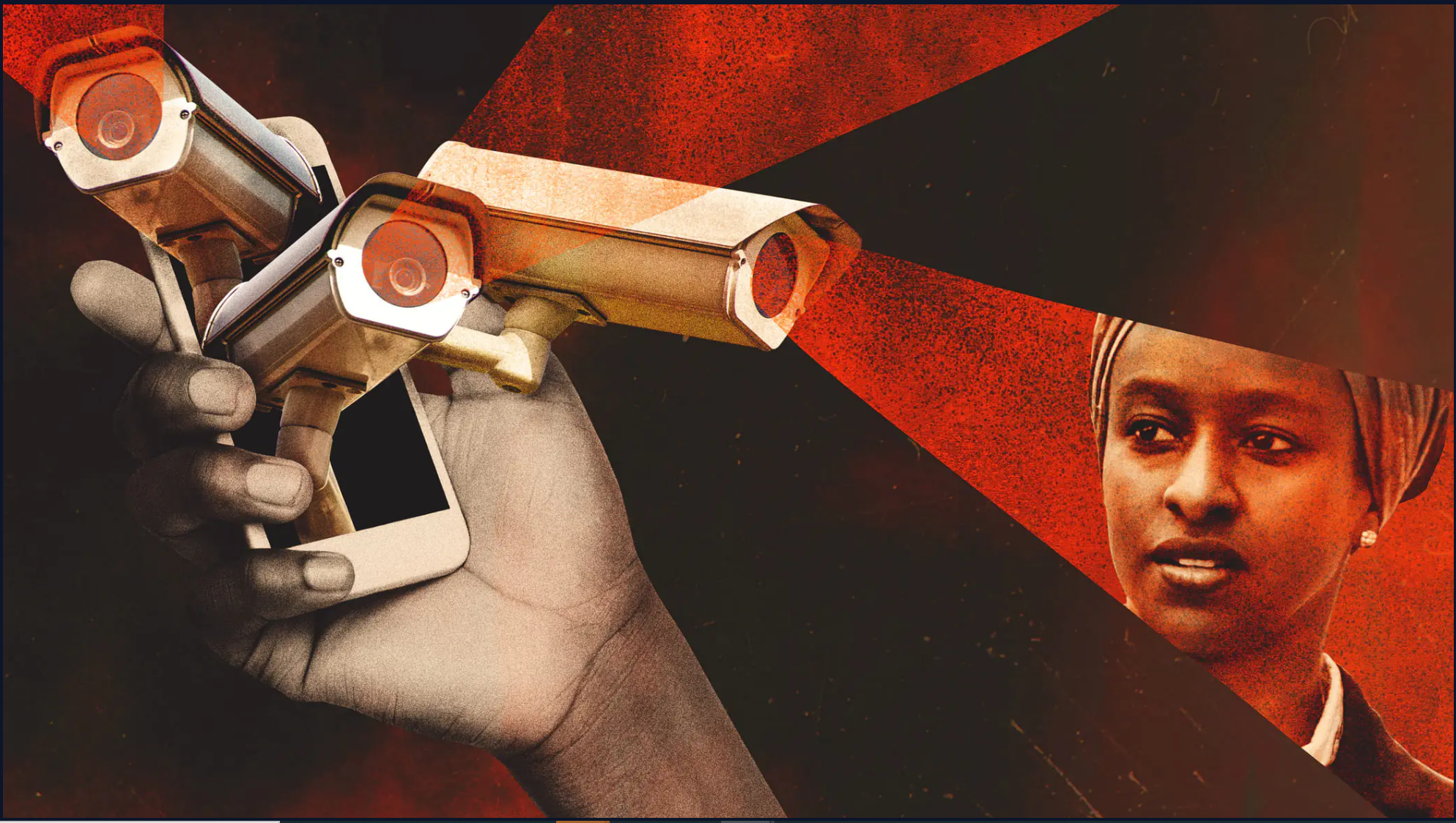
In a disturbing revelation, the investigative work of Forbidden Stories has uncovered that Anne Rwigara, a 41-year-old genocide survivor and sister of Rwandan opposition figure Diane Rwigara, was targeted by Pegasus, a powerful spyware tool sold by the Israeli company NSO Group to state intelligence services. Anne died unexpectedly in California on December 28, 2023, after a brief complaining of stomach pain.
These findings raise serious concerns about the safety of all Rwandan citizens, including genocide survivors who may have previously believed they were immune to the repressive tactics of Paul Kagame’s regime. The revelations also show the urgent need for increased scrutiny of the government’s actions and the importance of protecting the rights and lives of all individuals, regardless of their background or political affiliations.
The Rwigara family’s tragic history, which includes the mysterious death of their father Assinapol in 2015 and the imprisonment of Diane and her mother Adeline following Diane’s attempt to run for president in 2017, appears to be part of a larger pattern of persecution by state forces. The targeting of Anne Rwigara’s phone with Pegasus spyware in February 2019 suggests that this persecution extended to invasive surveillance measures.
As someone who had previously expressed suspicions about the circumstances surrounding Anne Rwigara’s death, I find these latest revelations deeply troubling. The deployment of sophisticated tools like Pegasus to monitor her activities points to a disturbing level of scrutiny that may have played a role in her untimely death, which I believe could have been the result of state-orchestrated violence.
The fact that Gatera Gashabana, the lawyer who represented the Rwigara family, was also targeted by the spyware further illustrates the lengths to which the Kagame regime appears willing to go to intimidate and silence perceived threats or opposition.
It has been thirty years since the genocide took you from me. The journey since then has been challenging, caught between the perpetrators and their descendants who deny the genocide, as well as our supposed liberators who have turned into oppressors. In this suffocating environment, the memory of all we lost is constantly under threat.
On one hand stand the Hutu extremists, their collaborators, and tragically, some of their descendants who shamelessly deny and downplay the genocide they committed with such fervor. You recall how these perpetrators openly proclaimed their intent to exterminate us, celebrating each murder with bonfires on the hills, toasting on crates of Primus beer, and triumphant tunes on the radio after long days of work (gukora)- their euphemism for the merciless slaughter of Tutsis.
As they hunted us down, mobs cheered like excited sports fans, while our Hutu neighbors, either indifferent or pleased, participated eagerly, and keen to stripe us any last possession we had. Amidst this horror, only a few brave souls like Simeoni and Munyurangabo who hid me, dared to stand against this extermination campaign.
Now, the killers’ descendants exploit social media to spread their venom, distorting the truth and questioning the very existence of the genocide. They paint themselves as victims, blaming the RPF for Habyarimana’s assassination to justify genocide. Meanwhile, as the RPF tightens its grip on power, it cynically weaponizes the genocide to silence dissent, even targeting us survivors. They engage in futile wars, like in Congo, claiming to protect Congolese Tutsis from “ethnic cleansing” while plundering resources. Their actions only encourage the extremists, who now claim moral equivalence and demand we move on.
Thirty years later, the genocide is still disputed. We unfortunately still have to explain that you and other Tutsis were victims of a crime not of your doing but of your being. You were murdered simply for being Tutsi—a crime of existence, not of action, unrelated to any events like a plane being shot down or an invasion by the RPF rebel group then. Our little one, barely a year old, was also a victim. She did nothing to deserve such a brutal fate; she was murdered simply because she was Tutsi. The perpetrators sought to exterminate the future she represented, not because she posed any present threat. It was nothing more than that.
The deniers now treat the facts of the genocide as though they are complex equations or rocket science. They claim there were no victims, no perpetrators as if you were killed by aliens and not the ordinary Hutus with whom we shared everything. They say it was committed by faceless Interahamwe militia, even though there was no Interahamwe in Butare where we were.
Simple lived experiences and common knowledge like this have become so uncommon because the deniers are so many, and their toxic voices are so much louder than our weak ones. I see no signs of this diminishing anytime soon. They may have murdered your physical body and countless other Tutsis in 100 days, but they now seem determined to erase your memory for many years to come.
On the other hand, the RPF, once seen as our saviors, has betrayed our trust and exploited our suffering for political advantage. They present us to the world as trophies of ’their victory’while ignoring our daily hardships and withholding desperately needed reparations. They have placed impoverished survivors in “villages of reconciliation,” and force them to live alongside their killers in shared homes. These villages serve as staged spectacles for dignitaries and tourists, who are invited to photograph survivors and perpetrators embracing as if to validate the RPF’s controversial social experiments. In these cruel displays, survivors are reduced to mere exhibits in a human zoo.
Father, you are likely better off where you are now than being subjected to the inhumane experiments our supposed saviors conduct to entertain their foreign guests and political masters in the West. Interestingly, the RPF officials who engineered these villages also claim to have lost family in the genocide, yet they never placed their own relatives in these villages, which house about 5,000 survivors across six locations.
Beyond this moral outrage, the oppression extends far beyond these forced reconciliations. Any dissent is met with harsh suppression, targeting those inside Rwanda or abroad who dare to question the official narrative or expose the RPF’s wrongdoings. It reminds me of when you had to secretly listen to the RPF’s Radio Muhabura during Habyarimana’s rule. Today, survivors must be cautious about who they confide in, as even relatives are often pitted against each other based on their political affiliations (intore vs. ibigarasha, pro-RPF vs. critic).
During Kwibuka, no one dares to play Kizito Mihigo’s beautiful songs, which were once synonymous with genocide commemoration itself, due to his assassination by the regime in 2020. Survivors must also be careful about what they share on social media, how they tell their stories, mourn their loved ones, and express their true feelings, all to avoid retribution from those in power.
Marginalized
Thirty years later, we remain marginalized. Inviting a survivor representative to lay a wreath on your grave at ceremonies honoring our dead, like the 30th commemoration, seems a luxury we don’t deserve as if our presence is offensive. There may be fear of overshadowing the strongman’s fame, though fame from genocide is the last thing we want.
The remembrance of you and other Tutsi victims has become a tightly controlled state affair. Your remains may be displayed in a glass cabinet at a government-run memorial site, as I never had the chance to locate your body. No one bothered to consult me or other survivors about whether they should display parts of your remains in those cabinets or grant you a dignified burial. Official events make it seem like there’s only one recognized Genocide survivor in Rwanda—the strong man at the center of Kwibuka, a term coined by his Jewish consultants in 2014.
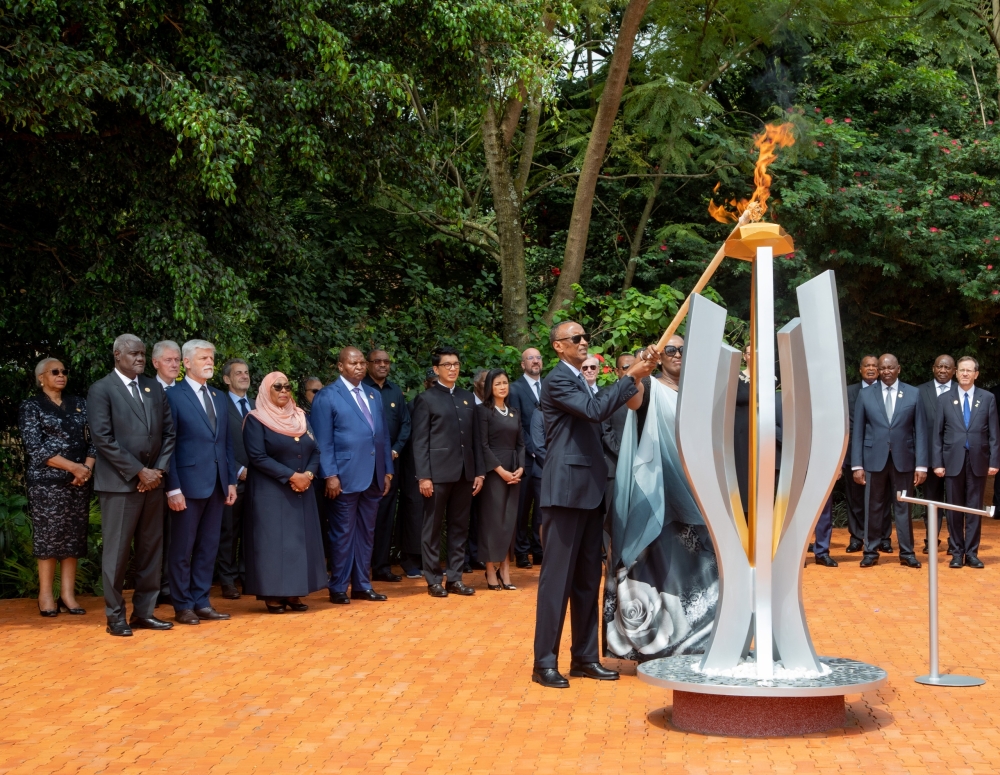
This one man invites dignitaries who gather around him as he lays wreaths on your graves, as they stand beside him when he lights a flame called the “flame of hope,” and speaks in a language that only his guests understand—a foreign language unfamiliar to you and many other survivors and Rwandans. Through this one-man show, no other survivor is invited to lay wreaths or play a significant role in this otherwise important tribute.
Father, despite the hardships since your loss in 1994, I don’t want to dwell on the darkness. In my next letter, I’ll share the brighter moments that sustain me – my incredible wife, whose support has been my anchor, and our beautiful children, who embody the hope and strength you fought for. They are eager to learn about you, the grandfather they never knew.
I am fortunate to have found safety abroad, where I can write without fear, but my heart breaks for those still in Rwanda. They are caught in a dire predicament, forced to live alongside those who killed their families and under an authoritarian government that demands unquestioning loyalty.
In a forceful open letter sent to UK Secretary of State James Cleverly today, the IGICUMBI association, one of the organizations representing survivors of the 1994 Genocide against the Tutsi in Rwanda, has accused the UK government of exploiting their tragedy to justify its controversial asylum seeker agreement with Rwanda.
The strongly-worded letter comes as a response to Cleverly’s recent comments during a visit to Italy, where he claimed that “Rwanda is slightly underpopulated because of the genocide it suffered 20 years ago, and its economy will benefit from the migrants that are due to be sent from Britain.”
IGICUMBI denounces these remarks as “inaccurate” and an attempt to “exploit contemptuously the Genocide for political gains.” The association presents facts contradicting Cleverly’s claims:
The Genocide against the Tutsi occurred 30 years ago in 1994, not 20.
Rwanda, with 584 people/km², is the most densely populated mainland African country (Statista).
Rwanda’s population has nearly doubled from 7.6 million in 1991 to 14.1 million today, despite the genocide.
Rwanda’s unemployment rate is 14.9%, one of Africa’s highest and far above the UK’s 4.4% (World Bank, 2023).
IGICUMBI questions how unskilled asylum seekers “forced out of the UK” could address Rwanda’s need for qualified workers, highlighting the hypocrisy in the UK’s immigration policy requiring skills equivalent to an A-level. The survivors express outrage at a UK cabinet member “misinforming the world” about the genocide to justify an immigration policy, alleging that genocide survivors have been forcibly evicted from a hostel to accommodate UK asylum seekers.
Demanding a retraction and apology, IGICUMBI has sent an open letter to King Charles III, the British Prime Minister, and Rwandan officials. The full letter is available in English, French, and Kinyarwanda. Ends
Ce discours de lancement, prononcé à la première heure du 7 avril, 2024, par Dr. Philippe Basabose, président en exercice de l’Association Igicumbi, revient, sans détours, sans tabous ni complaisance, sur les axes principaux de la terrible tragédie du génocide contre les Tutsi et de la période de 30 ans qui l’a suivie. Il lance aussi une invitation à entrer dans cette période commémorative avec calme, courage et tolérance.
Au nom d’Igicumbi, Dr. Philippe Basabose saisit également cette occasion pour sonner l’alerte contre une campagne de stigmatisation et de diabolisation des rescapés du génocide contre les Tutsi orchestrée par les partisans du pouvoir de Kigali et dans le silence complice de ce dernier. Le discours était en kinyarwanda ; nous vous proposons ici sa version intégrale en français:
Le génocide perpétré contre les Tutsi au Rwanda reste un événement tragique difficile à nommer. Des appellations comme “le génocide au Rwanda” ou “le génocide rwandais” semblent inappropriées, irritantes même.
Quant à dire “génocide perpétré contre les Tutsi” ou “génocide des Tutsi”, bien que plus précises, ces formulations restent incomplètes, ne nommant pas les bourreaux. Ce génocide est véritablement un crime sans nom, dans un double sens tragique. C’est ainsi que l’auteure-survivante Adélaïde Mukantabana parle quant à elle de l’Innommable – Agahomamunwa.
Lors de la préparation d’une marche commémorative, ma fille alors âgée de six ans m’aidait à écrire des slogans sur des pancartes. Un slogan familier, “Plus jamais ça”, a retenu son attention. Avec l’innocence de l’enfance, elle m’a posé une question simple mais profonde : “C’est quoi ‘ça’ ?” Pantois, je réalisai alors que je n’avais jamais réfléchi à la signification ni à l’origine de ce slogan pourtant familier.
Après insistance de ma part, elle a pointé du doigt le mot “ça”, réclamant une explication complète sur ce qui ne devait plus jamais se répéter. Intriguant, venant d’un enfant curieux de tout comprendre. Selon l’auteure Murielle Paradelle, le “ça” renvoie initialement au cri lancé après la Seconde Guerre mondiale face à l’horreur des camps d’extermination : “Plus jamais ça !” Cela sous-entendait l’engagement solennel des dirigeants à tout mettre en œuvre pour empêcher de tels massacres de masse planifiés. Mais comme l’écrit amèrement Paradelle, “cette exclamation n’était que pure rhétorique”.
Avant que le juriste Raphael Lemkin n’invente le néologisme “génocide”, Winston Churchill avait qualifié ces actes d’un “crime sans nom”. Faute de mot pour le nommer, on désignait alors ce crime innommable par le vague pronom démonstratif “ça”. Grâce à Lemkin, le “ça” porte désormais un nom précis : Génocide.
Curieusement, en kinyarwanda, langue du Rwanda, le génocide reste aujourd’hui encore un crime sans nom. Dès juillet 1994, on l’appelait “Itsembabwoko n’itsembatsemba” (littéralement “génocide et massacres”), amalgamant ainsi de façon confuse le concept de génocide – visant l’extermination d’un groupe ethnique – avec celui de massacres sans intention exterminatrice, comme il y en a malheureusement lors de nombreux conflits. Cette appellation aux allures de phrase fourre-tout omettait sciemment de nommer les victimes tutsi.
Un tel verbiage confus visait à rester “politiquement correct” dans le Rwanda d’après-génocide, alors doté d’un gouvernement dit d’unité nationale où figuraient des Hutu dits “modérés” aux plus hauts postes. Dans cette atmosphère délétère, on apprenait à ne plus dire ce qu’on pensait réellement et à penser ce qu’on ne pouvait plus dire tout haut. Il devenait ainsi interdit de nommer clairement les victimes tutsi d’un côté, et les bourreaux hutu de l’autre.
Un nom ou plutôt une phrase fourre-tout sera trouver, faisant des Hutu et des Tutsi, tous des bourreaux et des victimes, sans les nommer bien évidemment! Dans un ce langage imagé propre du Kinyarwanda, il est difficile d’appréhender qui fut victime du génocide par qui et qui fut victime des massacres par qui.
Ceci donnera un pays d’accueil aux mots de la chanson « Tout le monde est coupable » d’Afia Mala. Le propre du Rwanda sera que non seulement « tout le monde est coupable », mais aussi et surtout que « tout le monde est victime »! Ainsi la table sera mise pour une réconciliation forcée.
On attendra une décennie avant d’ abandonner la formulation d’”Itsembabwoko n’itsembatsemba” pour le simple terme “jenoside” (génocide), toujours sans nommer bourreaux et victimes, par ce même souci de rester “politiquement correct”. Une autre décennie devra s’écouler avant d’adopter appellation actuelle de “jenoside yakorewe abatutsi” (génocide perpétré contre les Tutsi), nommant enfin les victimes mais pas leurs bourreaux, par peur ou par stratégie d’évitement.
Comme l’explique le professeur Eugene Nshimiyimana, survivant et fin connaisseur de la langue française, “jenoside yakorewe abatutsi” est une phrase à la forme passive mais incomplète, sans complément d’agent désignant clairement l’auteur de l’action génocidaire. On devrait logiquement dire “Le génocide perpétré contre les Tutsi par…” mais les autorités rwandaises refusent systématiquement de nommer ouvertement les bourreaux hutu, par peur, par traumatisme ou par la sempiternelle et sacro-sainte volonté d’être politiquement correct!
Remarquons que trois décennies après, ce tabou persiste. Nous léguons ainsi aux générations futures la tâche cruciale de nommer enfin ouvertement nos bourreaux. Si nous parvenons désormais à identifier plus clairement les victimes, en tant que rescapés nous devrions aussi faire l’effort de bien nommer le crime lui-même, son appellation. Lorsqu’on parle de la Shoah ou de l’Holocauste, nul n’ignore qu’il s’agit du génocide perpétré contre les Juifs d’Europe par les nazis. Un nom unique et explicite désigne à la fois le crime et ses victimes. Mais qu’en est-il du génocide perpétré contre les Tutsi du Rwanda ? Aucun nom unique et complet, seulement des périphrases plus ou moins claires voire des phrases délibérément incomplètes.
Accordons-nous donc avec feu le Frère Dr Jean-Damascène Ndayambaje, enseignant et linguiste, qui avait forgé le néologisme “Tutsicide” pour nommer ce crime, n’en déplaise à l’Académie Française. Nommons ainsi le génocide contre les Tutsi du Rwanda “Tutsicide” en français comme en anglais, et “Irimburabatutsi” en kinyarwanda. Nous aurons ainsi le mérite de donner à ce crime un nom unique et explicite, désignant en lui-même le crime et ses victimes. Nous éviterons qu’un tel génocide reste encore, trente ans après, un crime tragiquement sans nom. Ends
Photos: Kwibuka30 ceremony on April 7, 2024 at Kigali Genocide memorial where President Kagame and his several dignitaries laid wreaths. Survivors not invited here.
Kwibuka, the annual commemoration of the 1994 Genocide Against the Tutsi in Rwanda, has become a far cry from its original purpose. What was once a solemn occasion to honor the victims and stand in solidarity with the survivors has now been transformed into a one-man show, used by President Paul Kagame to legitimize his regime, justify his wars in the Democratic Republic of the Congo, and air his personal grievances.
The word “Kwibuka” means “to remember” in the Kinyarwanda language, but in the three decades since the genocide, the official Kwibuka ceremonies have strayed remarkably far from this core mission. Kagame, the long-reigning president of Rwanda, has made the commemoration an annual platform to serve his own political interests, with little regard for the true victims and survivors.
Kagame’s Kwibuka speeches, delivered in English (a language spoken by less than 1% of Rwandans), are not meant for the Rwandan people, let alone the survivors. They are instead intended for an international audience. In these speeches, Kagame does not focus on honoring the memory of the genocide victims or supporting the survivors. Instead, he uses the occasion to vent his frustrations about former allies who have grown weary of his 30-year grip on power, and to justify his military interventions in neighboring countries, all under the guise of preventing another “genocide of the Tutsi” – but this time, the Tutsis in the Democratic Republic of Congo.
The survivors of the genocide, who endured the horrors and lost their loved ones, have been systematically sidelined from the Kwibuka ceremonies. In the immediate aftermath of genocide, survivors were left to bury their dead alone, with little support or recognition from the government and fellow Tutsi returnees who had fled the country before 1994. Today, Kwibuka seems to have become fashionable among some of these returnees, though it’s unclear if this is due to the government’s hijacking of the events or a genuine interest.
On social media, this group of Tutsi returnees (though not all) has recently become ardent champions of Kwibuka, even labeling survivors who criticize the RPF government as “genocide deniers.” In Kagame’s Rwanda, the RPF is considered synonymous with the genocide itself, so any criticism of the party is equated with genocide denial—a severe charge that can even be leveled at survivors who speak out or join a different political party.
I’m not blaming these returnees for taking long to join us in remembering the genocide victims; in fact, I’m thankful they have eventually shown some interest, and I hope this trend continues beyond the regime’s cosmetic approach to Kwibuka. However, I wonder where these passionate Kwibuka supporters were when we survivors were searching for our dead and cleaning their bones from mass graves shortly after genocide. Many orphans had nowhere to go during school breaks, forced to stay in boarding schools while many our fellow Tutsi returnees owned big houses. Now, these returnees sing Kwibuka louder than us.
Over the years, the survivors’ role in the Kwibuka commemoration has been gradually diminished. From 2005 to 2015, they still had a limited presence, with a survivor representative occasionally allowed to lay a wreath or speak on behalf of the survivor community. During this period, a selected survivor would also be permitted to share their personal story of how they survived the genocide. However, even these survivor testimonies were heavily vetted by the authorities.
I recall the case of a fellow survivor named Marius, whose testimony was rejected during the Kwibuka20 commemoration in 2014. His testimony was rejected because he mentioned escaping to Burundi, rather than being “saved” by the RPF forces. This censorship of survivor narratives that did not align with the government’s preferred narrative was a troubling sign of the diminishing role of survivors in the Kwibuka ceremonies.
Since 2014, the survivor representative, typically the president of Ibuka (the umbrella organization for survivors’ groups), was removed from the Kwibuka wreath-laying ceremony and event organization.
By 2024, survivors were largely excluded from all official Kwibuka preparations. Reviewing the photographs and footage of these events, particularly the initial wreath-laying and “light of hope” ceremonies at the Kigali Genocide Memorial, there is a noticeable absence of survivor representatives.
While survivors’ organizations have internally expressed discontent with this exclusion, they are too afraid to voice their concerns publicly. The only exception is a brief 15-20 minute slot allocated to a carefully vetted survivor, who is expected to offer a testimony praising Kagame for the “rescue and help” provided after the genocide.
The commemoration has now become a political show for Kagame and the RPF party, who have the audacity to consider themselves the “victims” of the genocide, despite being a belligerent party in the conflict that led to the genocide.
Jean Damascene Bizimana, Kagame’s cabinet minister, claiming that RPF is a genocide victim!
The survivors, who were once the central focus of Kwibuka, have now been relegated to the status of abavumbyi, or uninvited guests, in the very commemoration meant to honor their loved ones and stand in solidarity with them. If the thousands of victims laid to rest in the memorial sites could speak, they would surely ask where their own families, the survivors, are in the spectacle of dignitaries parading at the graveyards in their absence.
Kwibuka has become a clear reflection of Kagame’s priorities. It has turned into a platform for political showmanship and self-promotion, rather than a solemn remembrance of the past and a genuine effort to support the survivors. As the country continues to grapple with the long-term impacts of the genocide, the question of how to ensure that Kwibuka truly serves the interests of the victims and survivors, rather than just the ruling elite, becomes more and more important.
The hijacking of Kwibuka is a troubling development, one that threatens to undermine the very purpose of the commemoration and the collective healing that it was meant to foster. As Rwanda looks to the future, it must find a way to restore the true spirit of Kwibuka, where the voices of the survivors are heard, their needs are addressed, and the memory of the victims is honored with the respect and dignity it deserves. Ends.